Reducing costs at the design stage
 A CIMA report on the manufacturing sector from August 2010 highlights a number of current issues facing the sector. One of the issues mentioned is making products cost efficient by designing in cost effectiveness at the design stage – and this includes costs of designing in poor quality, just think of the issues with Toyota cars last year. So how can management accountants help at the crucial design stage. According to the report, a number of ways actually. First, the report states that a significant proportion of product costs (up to 80%) are determined at the design stage. Therefore manufacturers will benefit from the management accountant modelling costs for the prototypes or revisiting costs when testing is complete. Another way
Energy efficiency delivers real returns on investment.
 When I worked in a paper company, health and safety was always a big concern. The machinery used in paper making could be quite lethal in the case of an accident. Quite an amount of money was spent annually by my employer to ensure the safety of all staff, but in particular those exposed to process equipment and machinery. As an accountant, one comment made by a manager on health and safety always stuck in my mind, namely that “there is not return on investment in health and safety”. I’m not going into detail here, but I’m sure you can appreciate it may be difficult to put a financial return on health and safety expenditure.
Another hot topic in business for the past decade or so is energy efficiency. Investment in energy efficient ways of working and running a business, like health and safety, is a good thing to do and probably adds to the longer term survival of a business (and the planet!). But, unlike health and safety, for accountants the return and investment can be ascertained a lot easier. For example, a recent article in The Guardian reports that many well-known UK companies are achieving definite returns on investment. DIY company B&Q saves 12% on CO2 emissions through education of staff and monitoring energy usage; hospitality group Whitbread can save 3% on energy costs just by changing behaviour. However the article also reports that companies may be seriously underestimating the return investment. recent research at the Carbon Trust in the UK took a close look at 1,000 energy efficiency projects it has been involved with and found that companies can expect to see an internal rate of return (IRR) of 48% on average and payback within three years. In the retail sector, the research shows the average IRR from energy efficiency projects leaps to 82%. Most “normal” investment projects would be happy to see a return of about 15%.
The full Carbon Trust report can be read here.
Cost accounting – a revisit and some history
 I read a piece in CIMA’s Insight e-zine last February, which mentioned a discussion on the CIMA website about cost accounting. It prompted me to remind myself (and you the reader) about the origins and sometimes forgotten simple basics of management accounting.
The history of cost accounting – which was the precursor to what we now broadly call management accounting – dates back to the Industrial Revolution on the 1700’s. As the steel, textile and pottery industries grew in England, economies of scale were realised. Around 1770, an economic depression occurred and many businesses failed. Those that survived were ones who had a handle on how much it cost to make their products.
The Wedgwood pottery firm is one often cited example of a successful firm of the time. At this time, firms like Wedgwood had no choice but to develop their own internal accounting systems as the accounting profession as such did not exist. Firms like Wedgwood used what were relatively advanced accounting techniques at that time, including cost control, overhead accounting, and standard costing. These techniques, although with shortcomings, helped firms to make decisions like dropping unprofitable products.
While any student, accountant or business owner might have a reasonable knowledge of these basic cost accounting techniques, I can’t help but think have some forgot the basics of cost accounting. Okay, I am writing this from an Irish perspective, but we are not the only economy where boom times seem to have led to a somewhat remiss attitude towards the basic ideas of cost accounting and cost control. Is it not interesting that firms like Wedgwood survived depressions (which were more frequent back then) by focusing on cost reporting? Of course, business nowadays is much more complex, but that doe snot mean we should forget the basics and keep costs under control. I cannot help but think about many Irish businesses who took on costs ways beyond their long term capability (e.g. high rents) who are now either struggling or gone out of business. Focusing on costs is not the only thing a businesses needs to do of course, but this very important task should not be forgotten about. So cost accounting is still very relevant in my opinion.
Cost centres – a useful tool in any business
 Managing your business costs and revenues is a challenge. To survive, you have to sell enough products/services, and collect money and manage your costs. The latter can be more difficult than you think, particularly when you don’t have good breakdown of costs.
Without careful monitoring of costs, any business can find that costs can spiral out of control quite rapidly. The old saying “keep an eye on the pennies and the pounds look after themselves” is a good starting point. This does not mean you spend hours and hours monitored costs in minute details, but you should be able to get an overview of all costs at any time. One way to do this is to use cost centres in your accounting system.
What is a cost centre?
A cost centre some section/portion/unit of a business for which costs can be identified and someone is accountable for these cost. Normally, a cost centre has a budget which includes all costs traceable to the cost centre. These cost could be anything from wages to telephone to motor expenses, once they can be traced to the cost centre
In a small business there may be only one or two cost centres. Because you will be looking at small numbers of transactions, there is no need to split things up into smaller cost centres as costs can be more readily monitored against budgeted figures. However, for larger businesses, operating as a single cost centre is probably not good enough. It is also not going to be an easy task to monitor whether those responsible for cost control are doing their job effectively. A breakdown of costs down into each cost centre helps control cost of each cost centre and the business as a whole.
Identifying cost centres
Some businesses are easy to split into individual cost centres – for example, a manufacturing company with six factories, a head office and a distribution warehouse could be split into 6 individual cost centres for each factory), a head office cost centre and a separate distribution cost centre. This example portrays what I call high-level cost centres. A business may need to go into more detail to keep a tighter control of costs – for example, each manufacturing plant might make several different products, with several different machines/processes for each product. It would be possible to treat each machine or process as a costs centre in this case. This would allow the business to keep a good eye of how profitable each product process is. Sometimes too, a business might treat support activities like human resources, finance and logistics as cost centres too. There is no end to how detailed cost centres can be [i.e. they can become very low-level], but remember to be a cost centre, it must be possible to trace costs directly and someone is responsible for the costs.
Use of learning curves in real-life

If you studied management accounting in the past, do you remember this formula:
Y=tXl
Y= average hours to produce product, t= time to produce first unit, X= cumulative units produced and l= rate of learning.
Of course, you don’t remember this – it’s the formula for a learning curve. A what? A learning curve, which is the relationship between the time taken to complete a task as an employee learns how to do the task. Management accountants learn this formula as it can be used to predict how costs might behave when production tasks are changed or new tasks introduced. I have to say I have never had to use a learning curve in my time in industry, and forgot the formula until I had to teach it to students again in recent years.
A CIMA research report recently shed some light on the use of learning curves. According to the research, about 6% of respondents to a survey actually used learning curves in some way, but a vast majority of management accountants considered the technique appropriate for the organisation they worked in. What’s interesting is that the main reason for not using learning curves is a lack of knowledge on the part on management accountants. I suppose this does not surprise me as if you don’t use any particular accounting technique, you’ll quickly forget it. Which is exactly what I done! Until now that is. The research report does not give detailed findings on the specific uses of the learning curve, but top of the list of uses in planning/budgeting and costing of products/services.
Risk management and management accountants
 The idea of accountants taking risks tends to go against the stereotype image that accountants get – you know, grey suit, drives a Volvo and so on. Businesses take risks everyday, based on information available and sometimes on experience or gut instinct. Management accountants provide a lot of the information needed by managers to make decisions on a daily basis. One wonders though what happened to assessing risk in banks in recent times. I am reading a book called Downfall by Joseph Stiglitz at the moment and he sure has a lot to say about the lack of risk assessment by US (and European) banks on recent years. In one passage he talks about how banks assumed the risk of other banks failing, or of a property-crash were seen as minimal. But look what happened.
I read a piece back in January in CIMA’s Insight on risk management and management accountants. The key message from this article was that management accountants need to get the message across about risk. They are after all providers of information for decision making, and are training in risk management. As noted in the piece, defining exactly what risk is is not that simple. It seems risk managers may not have been overly involved in decision-making at high levels in recent times. The author suggests that risk managers and managements accountants work closely together to get the message across about risk. I couldn’t agree more. Management accountants may have shook off the dull, boring stereotype and are now often part of the management team and/or board. Thus, as the article suggests, risk managers might piggy-back on the organisational knowledge of management accountants and get active in the areas where risky decisions are being discussed or taken – i.e. at board level.
Key metrics for your small business
 In management accounting, we often talk about Key Performance Indicators (or KPI). These are measures of business performance which catch the essence of how a business is doing. Choosing the right KPI is not an easy task, even for a business with accountants on the payroll. This leaves it tough on smaller businesses, who probably have little expertise in this area. Having said that, there are a number of key things you might focus on as a small business.
The first is cash, without it you are snookered. Accountants often refer to liquidity issues, meaning a business cannot generate enough cash. Liquidity issues lead to solvency problems, meaning you can’t pay debts as they fall due. Traditionally, accountants will tell you need the ratio of cash and receivables to payables to be about 1:1. To make this sort of metric even easier, why not think about it like this:
Cash in the bank/Monthly cash requirements = number of months until cash runs out.
You could easily work this measure out at any time and try to collect debts from customers before you run out of cash. If you have a bank overdraft which is within its limit, you could quickly alter the above to figure out how long until you hit the overdraft limit.
A second key metric is your cost structure. You could regularly compare you costs as a portion of sales revenue. Keeping a tab on this might help prevent cost overruns over a period of time. So if you see sales drop off, are costs remaining the same?
Finally, think beyond the traditional financial measures. Try to think of what it is that keeps your business ticking over. The key metric(s) here will vary by business but you should consider things like:
- number of new sales enquiries
- number of customer complaints
- how efficient is your production and/or purchasing
- what’s your market share.
- sales revenue by customer/product or segment
Estimating costs using multiple regression analysis in Microsoft Excel
I am writing a management accounting text book chapter at the moment and put together a short video on how to get Excel (2007) to do multiple regression. The multiple regression technique is often used to estimate costs that are influenced by several factors. Click here too see the video. Hope it helps
The key points on Key Performance Indicators
 Robin Tidd wrote a very concise article in Accountancy Plus recently (see the December 2010 issue here) on the subject of key performance indicators (KPI) in a business. According to Tidd, while around 90% of Fortune 500 companies utilise tools like the Balanced Scorecard to report on KPI, 70% are not happy with their reports. Tidd, rightly points out that this is not a problem with the tools used – such as a Balanced Scorecard – but more likely the application of the tools. He makes a few key points which I summarise below.
1. Don’t mix up KPI with key reporting indicators.
The best example of this is profit, which is a result or outcome.
Of course these results are essential, but tell nothing about what
caused the result. For example, have profits increased due to
improved productivity or customer satisfaction.
2. Use maps of your organisations processes to help find the best KPI.
3. Be careful to look at all processes and not just departmental ones. This avoids choosing KPI which may be sub-optimal.
4. Compare KPI on a regular basis, keeping the reporting interval short. This allows for faster corrective action.
5. Use the KPI on the front-line on a regular and routine basis. This fosters continuous improvement in all processes.
You can read the full article here http://is.gd/jLEn2
How to prepare an annual Budget
 I’m a bit stuck for time just now, so here’s a useful post I found on inc.com recently. It give good advice on setting an annual budget, a cash budget and tips on your first budget if you’re a start-up. Here’s the link: How to Set an Annual Budget.
Preventive maintenance – a good investment?
 This article on The Economist website brought me back to my days working as a management accountant in manufacturing firms. Maintaining manufacturing and process equipment was always a delicate balance. Spares and maintenance staff pay was quite a substantial cost in one plant I worked in over the years. This plant, like others, tried its best to engage in preventive maintenance programs. This usually implied using a mixture of following guidelines from equipment manufacturers and the experience of the maintenance staff. But, as I am sure you can imagine, preventative maintenance comes at a cost too. The arguments would always be “should we wait until it breaks, or fix it before it breaks”. Of course, letting a piece of equipment go unmaintained can create serious problems. A business needs to avoid its main manufacturing process being down – losses of revenue per day (or even per hour) rack up very quickly. So from an accounting and profit view, a balance needs to be achieved between the right level of preventive maintenance and the cost of same.
Of course modern technology can help. When I left my last manufacturing role back in 2004, process equipment could be remotely diagnosed and repaired by engineers. I always remember being amazed in or around 2001 when a production manager told me how the main machine at our plant had PLC’s (programmable logic circuits) with an IP address – the same as any PC or internet device. This meant the engineers from the equipment manufacturer could simply connect over the internet. At the time I was thinking, wouldn’t it be great if fault information could be sent out instead, or even better, that fault signs might be noted in advance.
So, reading the above mentioned piece from The Economist brought me back to those great days when I as an accountant was constantly amazed by how advanced machinery had become. But now it seems a “virtual engineer” may be on hand to predict if electrical equipment is showing early signs of failure (read the piece for more detail). No detail is given on the cost of such devices, but it would seem to be a great cost-saving idea. It could mean that preventive maintenance costs are incurred less frequently as equipment may be perfectly fine beyond it’s normal maintenance period
How to drive at 1,000mph – at what cost?
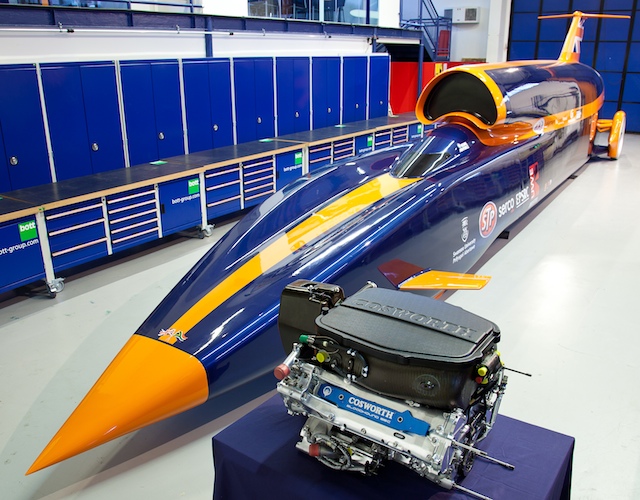 I’m a big fan of F1 and other motor sports. Putting on the accountants’ hat, sometimes the costs of the F1 industry astound me, but so too do the TV rights revenues and sponsorship deals. This article in The Economist caught my eye last November. It’s about a new attempt to break the land speed record. There are over 200 businesses involved in this. I’m thinking what is it costing them, and what revenues will they get back? Come on, a Cosworth F1 engine is needed to “kick-start” the jet engine that makes this thing go. I can imagine the roar of it, but the dent in someone’s bank account must be big too!
Brand valuation standard sets challenge to finance
 CIMA’s Insight e-zine from November 2010 (here) reports on a recent ISO standard which give guidelines on attributing a monetary value to brands. Under international accounting standards (IFRS3 in particular) brands are normally only valued when acquired as part of a new business (i.e. only when bought). According the CIMA piece, the new ISO standard suggests three well-known methods for valuing brands:
- Income approach: the objective of the income approach is to calculate the after-tax, present value of future cash flows attributable to the brand. These cash flows are the difference between the cash flows generated by the business with and without the brand. The standard outlines six key ways of doing this: the price premium, volume premium, income split, multi period excess earnings, incremental cash flow and royalty relief methods.
- Market approach: this methodology compares the brand with comparable transactions, looking at acquisition ratios that can be adjusted to consider the similarity of brand strength, goods and services or economic and legal situation.
- Cost approach: the cost approach calculates the amount invested in creating the brand and the cost of recreating it.
Investors call for clearer business reporting

CIMA commented recently (see here) on an IFAC report which suggests that financial reports have become too complex with the result that the underlying financial performance of a business is hidden. Add to this the increasingly complex nature of businesses and you get some idea if the problems in compiling clear concise and meaningful reports. The IFAC report quotes Tanya Branwhite, executive director of strategy research at Macquarie Securities in Australia: ‘If financial accounts are not prepared with the users in mind, then we risk a whole area of unaudited “shadow reporting” being provided directly to investors that doesn’t go through the rigorous financial accounting process,’ she warns.
I remember from my early accounting lectures that a ‘knowledgeable’ investor in seen as the defining user of accounting reports. If you are prepared to stick your money where your mouth is, you’ll want to know all the detail. But the problem is that financial statements just can’t provide this, or as the IFAC report highlights, are too complex. According to the IFAC report, business reporting suffers from a number of significant issues at present: information overload, fair value accounting, operational performance, convergence of accounting standards, real time reporting, management commentary and sustainability reporting. The big questions is how can financial reporting help solve these? One simple answer suggested is that investors might become more actively involved in the standard setting process (i.e. IFRS) and discussions about the presentation and content of financial reports.
Spreadsheet skills: waterfall charts

The Chartered Institute of Management Accountants (CIMA) publishes a regular e-zine called Insight. One of their regular postings is Microsoft Excel tips for accountants and finance specialists. This posting (Spreadsheet skills: waterfall charts)shows how to produce a graph in Excel which shows the variation in a variables (e.g. sales, profit, output) from one period to another. Click on the link to get a full walk-through example


 Martin's accounting blog