Preventive maintenance – a good investment?
 This article on The Economist website brought me back to my days working as a management accountant in manufacturing firms. Maintaining manufacturing and process equipment was always a delicate balance. Spares and maintenance staff pay was quite a substantial cost in one plant I worked in over the years. This plant, like others, tried its best to engage in preventive maintenance programs. This usually implied using a mixture of following guidelines from equipment manufacturers and the experience of the maintenance staff. But, as I am sure you can imagine, preventative maintenance comes at a cost too. The arguments would always be “should we wait until it breaks, or fix it before it breaks”. Of course, letting a piece of equipment go unmaintained can create serious problems. A business needs to avoid its main manufacturing process being down – losses of revenue per day (or even per hour) rack up very quickly. So from an accounting and profit view, a balance needs to be achieved between the right level of preventive maintenance and the cost of same.
Of course modern technology can help. When I left my last manufacturing role back in 2004, process equipment could be remotely diagnosed and repaired by engineers. I always remember being amazed in or around 2001 when a production manager told me how the main machine at our plant had PLC’s (programmable logic circuits) with an IP address – the same as any PC or internet device. This meant the engineers from the equipment manufacturer could simply connect over the internet. At the time I was thinking, wouldn’t it be great if fault information could be sent out instead, or even better, that fault signs might be noted in advance.
So, reading the above mentioned piece from The Economist brought me back to those great days when I as an accountant was constantly amazed by how advanced machinery had become. But now it seems a “virtual engineer” may be on hand to predict if electrical equipment is showing early signs of failure (read the piece for more detail). No detail is given on the cost of such devices, but it would seem to be a great cost-saving idea. It could mean that preventive maintenance costs are incurred less frequently as equipment may be perfectly fine beyond it’s normal maintenance period
How to drive at 1,000mph – at what cost?
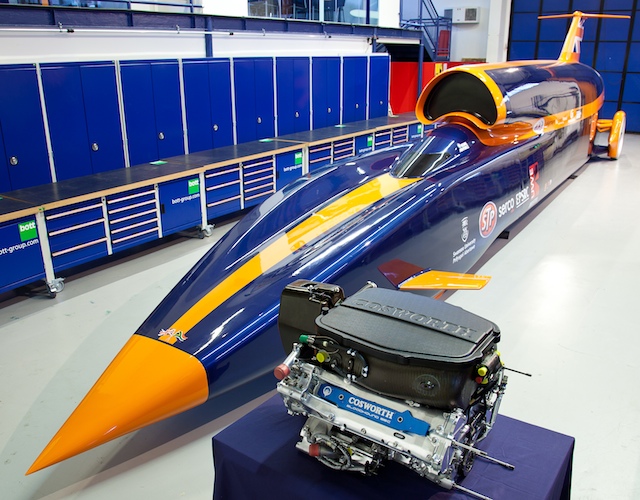 I’m a big fan of F1 and other motor sports. Putting on the accountants’ hat, sometimes the costs of the F1 industry astound me, but so too do the TV rights revenues and sponsorship deals. This article in The Economist caught my eye last November. It’s about a new attempt to break the land speed record. There are over 200 businesses involved in this. I’m thinking what is it costing them, and what revenues will they get back? Come on, a Cosworth F1 engine is needed to “kick-start” the jet engine that makes this thing go. I can imagine the roar of it, but the dent in someone’s bank account must be big too!
Brand valuation standard sets challenge to finance
 CIMA’s Insight e-zine from November 2010 (here) reports on a recent ISO standard which give guidelines on attributing a monetary value to brands. Under international accounting standards (IFRS3 in particular) brands are normally only valued when acquired as part of a new business (i.e. only when bought). According the CIMA piece, the new ISO standard suggests three well-known methods for valuing brands:
- Income approach: the objective of the income approach is to calculate the after-tax, present value of future cash flows attributable to the brand. These cash flows are the difference between the cash flows generated by the business with and without the brand. The standard outlines six key ways of doing this: the price premium, volume premium, income split, multi period excess earnings, incremental cash flow and royalty relief methods.
- Market approach: this methodology compares the brand with comparable transactions, looking at acquisition ratios that can be adjusted to consider the similarity of brand strength, goods and services or economic and legal situation.
- Cost approach: the cost approach calculates the amount invested in creating the brand and the cost of recreating it.
Spreadsheet skills: waterfall charts

The Chartered Institute of Management Accountants (CIMA) publishes a regular e-zine called Insight. One of their regular postings is Microsoft Excel tips for accountants and finance specialists. This posting (Spreadsheet skills: waterfall charts)shows how to produce a graph in Excel which shows the variation in a variables (e.g. sales, profit, output) from one period to another. Click on the link to get a full walk-through example

What is management accounting?
This is a question which as an academic I could spend a long time on, but let’s keep it simple. If you open a text book on accounting you’ll get something like ‘management accounting is the branch of accounting which provides information to managers to help them make business decisions’. It earlier times, the term cost accounting was used, as the provision of cost information was most prevalent in the work of what today we’d call management accountants.
In a larger business, it’s easy to imagine one or more internal accountants working to provide information on costs, revenues etc. to managers. In a smaller business it’s more difficult to picture this, and I believe the lack of management accounting is a major issue for lots of small businesses. Take a typical sole trader as an example. They typically trade away during the year and make the annual visit to an accountant to find out how much profit they made. But this routine trip is not about management accounting; it’s more about making sure accounts are prepared and taxes on profits calculated. Any business needs much more regular information than this to make key decisions. As mentioned, a typical management accounting task might be to have regular and detailed information on costs – without this a business might not even know if it is making a profit or not. While I admire the dedication and zeal of many budding business owners and entrepreneurs, sometimes a dose of reality is needed on business decisions. Management accounting information does this. For example, many businesses fail because they expand too quick. A typical scenario for a small business might be increasing the work force by adding another employee. Let’s assume the wages amount to £/€/$ 35,000. What management accounting would do is look at the effect of this extra cost of profits, revenues and existing costs e.g. are extra sales needed to cover the cost and how likely are they to occur. Let’s forget about the term ‘management accounting’ for a moment. The point I am making is that accounting (i.e. financial/monetary) information is an essential part of any business decision. What we call it does not matter. But, smaller and/or new businesses don’t seem to do enough of this. How can thus be improved? Well there’s a whole host of things, but in my view the simplest thing any small business can do is make full use of the data it already has. Rather than just going to an accountant annually, prepare accounts on a quarterly or monthly basis. While this may be a daunting task at first thought, there are plenty of accounting software packages out there to help e.g. Quickbooks, Sage and TAS. More regular accounts will at minimum identify losses or poor profits at an earlier stage.
Don’t loose sight of profits and cash flows – how Lego revived its outlook
 The Danish toy company Lego, has had to do a bit of re-building of late, according to Time (June 7th, 2010). Lego has been around since 1932 and has given many generations endless hours of fun (or peace if your a parent!). The product was created by an unemployed Danish carpenter (Ole Kirk Christiansen) and he patented it in 1958. Today, as anyone with kids knows, there are so many high-tech toys that compete with traditional toys like Lego, which has education and learning at its heart. This in fact was one of the contributors to Lego making large losses (e.g. $450 million in 2004) – focusing too much on the educational value of its 14,000 unique stock items. In 2004, a new CEO Jorgen Knudstorp, took the helm. He quickly reinvigorated the company by not forgetting one of the basic lessons of accounting and managing a business – the bottom line counts. There were lay-offs, plant closures and new licensing deals (Star Wars, Harry Potter for example) and some efforts to adapt the product to the digital age e.g. an online website where children can design their own creation and order a physical copy. The result – profits were $440 million in 2009. So don’t forget, now matter how good your product or service is, it can only survive if the bottom line is positive and generating cash!
Thinking about costs and revenues when setting a price
 Here’s a great example of how you need to think about costs when setting a price for a product or service. During the recent volcanic ash cloud over Europe (April/May 2010), many travellers were left with no option but to hire a car to drive home. One result of this was that 100’s of hire cars from Spain and Portugal ended up in places like Kiel and Rostock in Northern Germany as people from the Baltic states and Scandinavia tried to get home. To get these cars back to their places of origin was a problem. So what at least one major hire car company did was to offer cars for hire for €1 per rental period (incl. the fuel in the tank) once they were going south. Over a few weeks 70-80% of the fleet were back to where the needed to be or a lot closer. But surely no profit could be made at a price of €1. No, none was, but think about the costs saved by not having to hire additional car transporter trucks to carry the cars 1000’s of miles! So the “profit” was made by saving costs.
Performance indicators – a bad example
 I watched a Channel 4 documentary (Dispatches) last month (June 7th) about the somewhat lacking work done by some child social workers in the UK. While they may be over-stretched and burdened with bureaucracy, the have a job to do which can seriously effect peoples lives – so was quite annoyed when I watched what an undercover social worker found (have a quick look here http://www.channel4.com/programmes/dispatches/articles/undercover-social-worker-exclusive-video-clips). But that’s not what this blog is about, so sorry for the little rant. One thing struck me though as a management accountant while watching this. One senior social workers mentioned how their performance is rated. Using performance metrics is common in business and all kinds of organisation, but the right metric must be used. For example, profit is one metric, but this does not tell us much about how the company treats its workers or the environment for example. And on a day-to-day basis, business might used metrics like units sold e.g. bums on seats for airlines. In the documentary, the senior social worker mentioned that performance was measured by the number of cases closed by each social worker. The more closed, the better they were deemed to perform. Then, she mentioned how silly this was, as there was no measure of quality – how well the case was dealt with, or how the outcomes matched what children needed. If I remember her quote correctly, she said “you could write ‘cream buns, cream buns, cream buns’ in the middle of a care report and nobody would even look at it. They (local councils or health officials I presume) are only interested in the number of cases dealt with”. Yes, this might be a bit of an extreme example, but it really does show the importance of linking a performance metric to the desired outcomes of any organisation. So, spend a little time getting it right!
The future role of management accountants
 CIMA’s CEO, Charles Tilley, outlines his views on the what the future holds for management accountants in a recent interview with Insight, CIMA’s e-magazine. Accountants might not have a great reputation in recent years with many corporate scandals and various banking “meltdowns”.
Tilley suggests a number of ways management accountants can develop and enhance their roles over the next decade or so. First, Tilley notes that successful companies focus on longer-term sustainability. To do this, the right kind of management structures and incentives need to be in place. Here, management accountants can help by ensuring boards get the right kind of information to ask the right questions. Second, companies need to focus beyond increasing shareholder value. While capital growth is important, running business with an ethical and longer-term focus might be better. Again, management accountants can help here, by providing a robust and ethical analysis of business information. Third, globalisation will continue to effect management accounting. More and more companies are increasingly bigger and face greater challenges on dealing with local knowledge, cultures etc. Again management accountants have a key role to play in providing information and assessing risks.
You can read the full piece here http://bit.ly/c0t4CA and lots more on CIMA’s Insight.
The management style of Eugene H. Krabs
Ok, this post was written in the NYTimes Blogs on April 1st, but anyone with younger kids know’s the love Eugene Krabs (from SpongeBob Squarepants) has for cash.
As someone once said, cash is king!
How to track the “Critical Numbers” in your business

I read an article recently from Inc Magazine -“How to Track Your Company’s Critical Numbers” – which a useful piece on how to watch the key numbers in your business. The article emphasises the need to achieve a balance between having a good accountant, and not being too reliant on them at the same time. You don’t need to be an accountant yourself to keep a track on key figures and ratios in your business.
Accounting for sustainability
 A piece in this months Financial Management (March, 2010), the monthly journal of the Chartered Institute of Management Accountants (CIMA) in London, reports on a research report which asks the basic question why are financial managers (i.e. accountants) not getting more involved in important business issues like climate change strategy. Gillian Lees writes that businesses can be proactive or be pushed in relation to issues like climate change. Proactive seems like a much better approach for a business to be sustainable in the long-term, both economically and environmentally. Take energy costs as an example – these have and will increase as time goes on, so it makes sound business and environmental sense to control and reduce energy usage. The research reported in this piece suggests that when accountant are involved in climate-change work, the results were potentially better. As a manager at Asda ( a large UK retailer) says, “the finance team brings the right rigour to ensure that we aren’t simply doing it because it feels like the right thing to do”. Put another way, the numeric and commercial acumen of accountants can mean that climate-change can be the right business thing to do also. The full CIMA research report on Accounting for Climate Change can be found at this link.
Tracking costs in an engineering contract business
 In business sectors such as engineering, ship-building or construction, costs are often incurred over many years. Also, as contracts rather than products are the mainstay of such sectors, costs are accumulated for each contract separately. For managers and accountants who want to track costs for each contract there are a number of things to watch out for. The first thing is that many more costs can be attributed to a particular contract. For example, materials and equipment used on contracts might be specific to a contract. Also, materials might be left over and used on other contracts, or even be moved around between contracts. In some cases, equipment is often useless at the end of a contract e.g. tunnel boring machines are often left in the ground as it’s too expensive to remove them. Labour costs are probably the easiest to allocate to contracts. You just need to get the costs of all employees working on the contract. Many other costs which might be considered as overheads are often easily apportioned to a contract. For example, a large contract might have an office on-site. All costs of running the office, which would normally be an overhead cost, would become a direct cost of the contract. And this is the key feature of contracting type businesses – that more costs are classified as direct. Even plant and equipment might be a direct cost, as in the case of the Channel Tunnel where the tunnel boring machines were buried beneath the seabed (see http://en.wikipedia.org/wiki/Channel_Tunnel). A high cost no doubt, but the salvage cost would have been greater.
To manage a contracting type business, you need to capture costs for each contract. This is usually simple enough, as most costs are direct costs and easily identifiable. The key thing is to keep an account of each contracts costs and revenues. This means profitability of a contract can be easily assessed. Costs will usually be approved by an architect or engineer before being used to calculate profits. Even then, accounting rules suggest that profits should not be recorded in the financial statements until the outcome of a contract is reasonably certain. In practice, this means that as a contract gets nearer completion, a higher proportion of profit is recorded. If a loss is predicted, this is recorded immediately in the books of account.
Breaking even in your business
It’s always a good to know the costs of your business. But how can you be sure you sell enough to cover costs. The answer is relatively simple, using the notion of breakeven.
First, you need to know the fixed costs of your business. These are the one you incur even if you business is not selling e.g. rent. Then, you need to know the cost of one of your products or one delivery of your service. This might not be as easy as it sounds, but try you best. Now you can deduct these costs from you selling price and work out a profit per unit. You can then work out the sales level at this profit which is needed to cover the fixed costs. Anything beyond this and you’re making a profit. You can apply this same principle to new products too. Being a relatively simple technique, been able to calculate a breakeven point is a very useful tool for any entrepreneur.


 Martin's accounting blog