Banning F1 – does it make sense (environmentally and on cost)?
 I was in Germany a few months ago and seen a copy of Handelsblatt (a leading business newspaper) on July 20th last at a hotel bar. As you do, I scanned it while ordering a local beer (Moritz Fiege Pils). I noticed that the German Green Party wanted to ban F1 from the Nurburgring and Hockenheim. I read the article and it made me laugh to be honest. The reasoning was that the F1 circus is bad on CO2 emissions and all that stuff. Now a few facts first – I love motor sport, I am a management accountant, I like the old ways of doing things (now called environmentally friendly/recycling/grow-your-own) and I could not resist the picture of the F1 girls for this post.
But, being serious. Research and development expenditure is one of those things a management accountants might find hard to deal with. It’s normally a substantial cost, but the return is often uncertain. Now back to F1 and the German Greens. Motor manufacturers like Mercedes, Honda and Renault (among others) have over time spend $billions on F1. And what do they get out of it? Well, every car nowadays has an EMU (Engine Management Unit) or “brain” that controls and monitors every thing a car does – do you know most cars have no accelerator cables at all; it’s a sensor on the pedal which the EMU monitors and the pedal is tensioned to give the feeling of a traditional pedal. Where was this technology perfected? F1 of course. And nowadays, F1 cars are lighter, faster, more fuel-efficient and even capture energy under braking (the KERS system). Surely this will pass on eventually to normal road cars, which will mean lower fuel consumption and lower CO2 emissions and so on. So, to bring it all back to management accounting. If we were to do as the German Green Party suggests, there would be no F1 in Germany (home of Mercedes), which might mean less research and development expenditure in F1, which in turn might halt the development of more fuel and energy-efficient road cars for you and I. Okay, it might be hard to put a money value on the benefits of F1 research and development in the long run, but it seems daft to try to ban it. So far, the history of F1 has shown us what the cars of tomorrow will have on board. If that means efficient, energy harnessing cars for the future, we need to encourage it. The costs (monetary and environmentally) may be easier to ascertain and outweigh the benefits in the short-term. However, I can only see future benefits from F1 for car manufacturers who should be able to produce (in time), better, safer and more environmentally friendly cars for Joe Bloggs. Kind of goes against what I thought any Green Party stands for to go against such progress. But, hey I am no politician! But it seems a classic case (from the Green’s view) of not looking at all costs and benefits of an activity over the long term.
Rising prices, holding prices – Primark holds retail prices steady
 With some commodity prices on the rise, and continued economic woes, some businesses are holding retail prices and reducing margins. Associated British Foods, which includes the low price high-street retailer in Primark (UK/Ireland and some European countries) is an example. In late April 2011, the company reported it wished to absorb material price increases rather than pass them on to end-consumers. Increasing sugar and cotton prices reduce the company’s margins. However the CEO reported that the company did not want to relent it’s status as a low price retailer in the clothing sector.
Australia plans to impose carbon tax
 Many young Irish people (and other nations too of course) are making their way to Australia to seek employment and/or better their career prospects. The Australian economy seems to be booming based in its natural resources and its closeness to the Chinese markets – who consume huge quantities of these resources. This boom may be affected somewhat by the imposition of a carbon tax from 2012 on all firms emitting more than 25,000 tons of CO2 per annum. This will increase the output costs, which may affect consumer spending. To balance the affect, the Australian Prime Minister has promised some tax reductions. Read the full story here
Data centres costs – weather is a key factor

(Image from Economist.com)
A few weeks ago I was listening to the radio in the car. A news item came on about why Ireland is attractive to companies like Google and Microsoft to set up data centres. It wasn’t tax, or our educated workforce. Much to my surprise it was the Irish weather. Well, I suppose all three are important, but with an ambient average temperature well below 20 celsius, the cost of cooling the data centres falls considerably. Here’s a post I read earlier from Babbages’ blog on The Economist. It gives some great detail on the costs of running these data centres Data centres: Social desert | The Economist. I have to say, as a management accountant weather conditions would not be the first thing I’d consider in cost decisions – a good reason to talk to other people in the organisation to find out what’s going on.
Setting prices in small business
 Setting a price for a small business can be a challenge. Cut the price too much and you loose money. Raise the price and you loose business. An article in the New York Times recounts the experience of some US small business. The basic message is that price is not everything. One business owner recounts how the quality customers gained outstrips those lost due to a perceived high price. Here’s one story
“About three years ago a computer error caused all of the prices on Headsets.com to be displayed at cost rather than retail. With the lower prices on display for a weekend, Mike Faith, the chief executive, expected sales to soar. Instead, the increase was marginal. “It was a big lesson for us,” Mr. Faith said.”
The basic lesson from this experience is that customers don’t think price is the be all and end all. The experience of a gluten free flour business showed that competitors prices may not matter as much as one thinks too. The company managed to raise its price by 20% in the first year in business by convincing customers that the product had more added value than competing flour. The most important lesson mentioned is that costs must be covered in the price charged. Seem so obvious, but I have written several pieces on this blog about breaking even.
Knowing breakeven is key for any start-up business
 Anyone who has started a business from scratch knows how hard it is in the early months (or even years). Lots of businesses seem to fail too in these early times. Why? Well, there are many reasons from just bad timing, to poor marketing, poor quality and so on. There is also the possibility that the business simply did not understand its costs structure and how this relates to the volume of sales needed to make a profit.
The US Small Business Administration (and similar organisations world-wide) provide good advice for start-ups. One key concept on understanding costs and volumes is called breakeven. This simply means the output level at which your business neither makes a profit nor loss. To keep it simple, if a business knows its start-up costs and running costs for the first year, it can easily work out the level of sales required to breakeven – this output level is known as the breakeven point. To work out the breakeven point, you need to separate variable costs and fixed costs. Fixed costs remain the same regardless of how much your business sells (e.g. rent) and variable costs change as the output grows (e.g. labour costs , shipping cost, material costs). For breakeven, the sales value less the value of variable cost must be equal to fixed costs; any surplus is a profit, any deficit a loss. Doing this quick sum could save many businesses from going under. In fact, as a management accountant I would suggest a breakeven calculation is included in all business plans. I would say that, but why go into business to lose money? Or at least know when you will start to make money?
Perspectives on the meaning of “cost” – a quality management perspective
 I recent read a research paper from the German “ControllerVerein” whcih I found quite interesting (controlling is the German word for management accounting by the way, and a controller is their nearest to the English term”management accounting” ). The paper is about business excellence and quality programmes. What I found interesting was the definition of “cost” from a quality perspective and well as a controlling (management accounting) perspective. I’ll do my best to translate them here.
According to the Deutsche Gesellschaft fuer Qulaitaet (DGQ or German Quality Assoc in English) costs are:
The value of physical and intangible materials, activities and other tasks which realise and subsequently recovery a product or service.
The above definition has some added notes too:
- These costs should include providing and maintaining the necessary capacity (of the product)
- Too many error and failure costs are indicators of a need for organisational and process improvement.
Now here’s the definition of costs from the Internationler Controller Verein (a leading German management accounting body):
The value of goods and services used in the creation/delivery of business activities. The cost is calculated according to management needs. Different costs may be used according to the decision being made, the type of product or the organisational structure.
So what’s the difference between these two definitions? I think the most obvious one is the time focus of each. In management accounting, we are sometimes criticised for providing too much short-term information. For example, one criticism of traditional budgeting techniques is its short-term focus. Looking at the definition of cost from the DGQ above, it clearly perceives cost as a longer-term concept. Yes, management accounting does have techniques like “life-cycle costing” which makes us consider longer-term costs of product or services, but this is a more “specialised” technique and not normally within the armaments of the typical management accountant. Although having said that, nowadays the increased focus on longer-term sustainability has focused management accountants on much broader and longer-term concepts. However, I can’t help but think if the basic definition of cost were broadened to embrace longer term thinking, like how costs are perceived by quality professionals, it would be of great benefit to us.
Just in case or just-in-time?
 Just-in-time is a management concept originating from Japan. The basic idea is that everything happens “just-in-time”; materials and supplies arrive just in time for production to start, and production finishes just in time for the customer to take it. With not much room of error, if a supplier fails to deliver goods on time production is disrupted and may even cease. Normally companies that use the just-in-time philosophy have close supplier relationships and tend not to run into supply problems. The savings from reduced inventory levels are obvious. Recent events in Japan however have raised issues about how tight things can get with just-in-time. A disastrous earthquake/tsunami in March this year left parts of Japan’s east cost in ruins. Factories were destroyed and power supplies disrupted for months. An article in The Economist (March 31, 2011) mentions how global firms are re-thinking how the manage production following events in Japan. According to the article, one company that controls 90% of the market for a resin is in smartphones had ceased production. Another company which supplies 70% of the global supply of a polymer used in iPod batteries is also out of action. And, car manufacturers in Japan and America have had to cut back on production as parts are in short supply. The events in Japan have prompted some commentators to say a “just-in-case” systems is also needed, according to the Economist.
Opportunity costs of losing employees
 If you have studied business or economics, you’ll know what an opportunity cost is. Just in case, an opportunity cost is the cost forgone by choosing one course of action over another. I often ask my students ” what is the opportunity cost of who sitting here listening to me? Can you put a money value on it?” Usually one or two of them realise that they could be out working, so they answer with the minimum wage rate, which is a reasonable answer.
Two things prompted me to write this post. First, someone I know was made redundant as a systems trainer a few years ago, due to the role being outsourced. Now, after much failures by the outsourcing company, that same person is back in the company as a contractor earning a tidy daily fee. Why? Well, the outsourcing/redundancy meant a huge body of knowledge was lost from the company, which to cut it short resulted in poor systems training. I wonder how much this mistake actually cost the company? WI had this thought in the back of my mind when I read a post on Marc Lepere’s Blog on the CIMAGlobal website. Marc talks about the opportunity costs of employees. It’s not something I have ever thought about, but I think he is right on the button. Marc’s company have devised too useful concepts called Cost of Replacing Talent® (CORT) and Cost of Loosing Talent®. Taking both together, you can imagine a substantial cost of losing valuable staff. In my example, the cost of loosing talent included a massive knowledge loss, which is a cost that might be hard to put a monetary value on but is a cost. Within the CORT is an estimate of the opportunity cost of replacing staff, which is something like the time in weeks it take the new staff to become effective. This could be up to 30 weeks for senior managers, according to the post. So be careful when putting too much pressure on your staff; losing the good ones costs more than you might think.
Reducing costs at the design stage
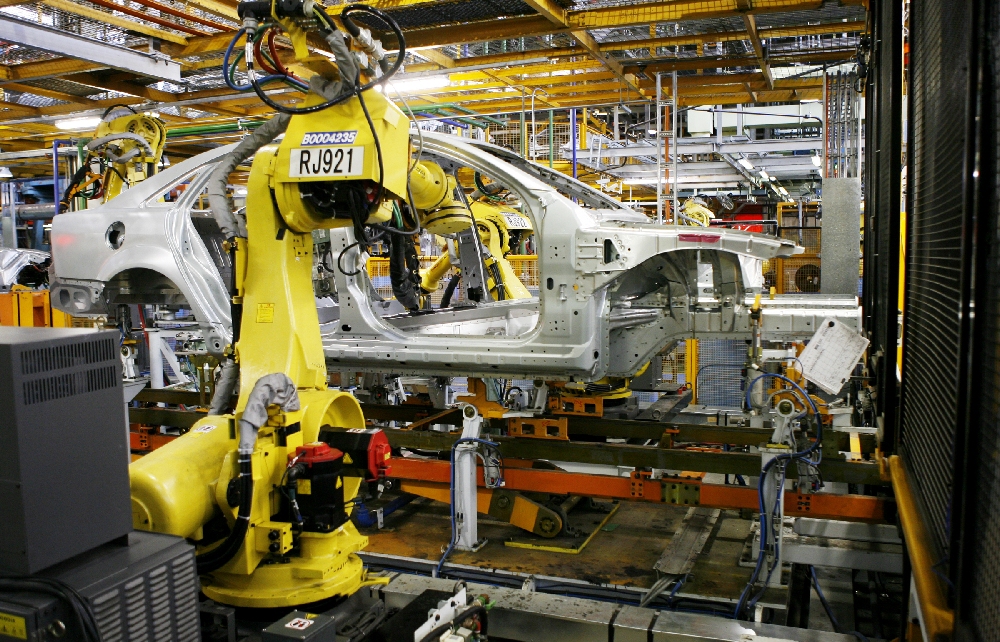 A CIMA report on the manufacturing sector from August 2010 highlights a number of current issues facing the sector. One of the issues mentioned is making products cost efficient by designing in cost effectiveness at the design stage – and this includes costs of designing in poor quality, just think of the issues with Toyota cars last year. So how can management accountants help at the crucial design stage. According to the report, a number of ways actually. First, the report states that a significant proportion of product costs (up to 80%) are determined at the design stage. Therefore manufacturers will benefit from the management accountant modelling costs for the prototypes or revisiting costs when testing is complete. Another way
Cost accounting – a revisit and some history
 I read a piece in CIMA’s Insight e-zine last February, which mentioned a discussion on the CIMA website about cost accounting. It prompted me to remind myself (and you the reader) about the origins and sometimes forgotten simple basics of management accounting.
The history of cost accounting – which was the precursor to what we now broadly call management accounting – dates back to the Industrial Revolution on the 1700’s. As the steel, textile and pottery industries grew in England, economies of scale were realised. Around 1770, an economic depression occurred and many businesses failed. Those that survived were ones who had a handle on how much it cost to make their products.
The Wedgwood pottery firm is one often cited example of a successful firm of the time. At this time, firms like Wedgwood had no choice but to develop their own internal accounting systems as the accounting profession as such did not exist. Firms like Wedgwood used what were relatively advanced accounting techniques at that time, including cost control, overhead accounting, and standard costing. These techniques, although with shortcomings, helped firms to make decisions like dropping unprofitable products.
While any student, accountant or business owner might have a reasonable knowledge of these basic cost accounting techniques, I can’t help but think have some forgot the basics of cost accounting. Okay, I am writing this from an Irish perspective, but we are not the only economy where boom times seem to have led to a somewhat remiss attitude towards the basic ideas of cost accounting and cost control. Is it not interesting that firms like Wedgwood survived depressions (which were more frequent back then) by focusing on cost reporting? Of course, business nowadays is much more complex, but that doe snot mean we should forget the basics and keep costs under control. I cannot help but think about many Irish businesses who took on costs ways beyond their long term capability (e.g. high rents) who are now either struggling or gone out of business. Focusing on costs is not the only thing a businesses needs to do of course, but this very important task should not be forgotten about. So cost accounting is still very relevant in my opinion.
Cost centres – a useful tool in any business
 Managing your business costs and revenues is a challenge. To survive, you have to sell enough products/services, and collect money and manage your costs. The latter can be more difficult than you think, particularly when you don’t have good breakdown of costs.
Without careful monitoring of costs, any business can find that costs can spiral out of control quite rapidly. The old saying “keep an eye on the pennies and the pounds look after themselves” is a good starting point. This does not mean you spend hours and hours monitored costs in minute details, but you should be able to get an overview of all costs at any time. One way to do this is to use cost centres in your accounting system.
What is a cost centre?
A cost centre some section/portion/unit of a business for which costs can be identified and someone is accountable for these cost. Normally, a cost centre has a budget which includes all costs traceable to the cost centre. These cost could be anything from wages to telephone to motor expenses, once they can be traced to the cost centre
In a small business there may be only one or two cost centres. Because you will be looking at small numbers of transactions, there is no need to split things up into smaller cost centres as costs can be more readily monitored against budgeted figures. However, for larger businesses, operating as a single cost centre is probably not good enough. It is also not going to be an easy task to monitor whether those responsible for cost control are doing their job effectively. A breakdown of costs down into each cost centre helps control cost of each cost centre and the business as a whole.
Identifying cost centres
Some businesses are easy to split into individual cost centres – for example, a manufacturing company with six factories, a head office and a distribution warehouse could be split into 6 individual cost centres for each factory), a head office cost centre and a separate distribution cost centre. This example portrays what I call high-level cost centres. A business may need to go into more detail to keep a tighter control of costs – for example, each manufacturing plant might make several different products, with several different machines/processes for each product. It would be possible to treat each machine or process as a costs centre in this case. This would allow the business to keep a good eye of how profitable each product process is. Sometimes too, a business might treat support activities like human resources, finance and logistics as cost centres too. There is no end to how detailed cost centres can be [i.e. they can become very low-level], but remember to be a cost centre, it must be possible to trace costs directly and someone is responsible for the costs.
Estimating costs using multiple regression analysis in Microsoft Excel
 I am writing a management accounting text book chapter at the moment and put together a short video on how to get Excel (2007) to do multiple regression. The multiple regression technique is often used to estimate costs that are influenced by several factors. Click here too see the video. Hope it helps
How to prepare an annual Budget
 I’m a bit stuck for time just now, so here’s a useful post I found on inc.com recently. It give good advice on setting an annual budget, a cash budget and tips on your first budget if you’re a start-up. Here’s the link: How to Set an Annual Budget.
Management control in NGO’s
 Non-governmental organisations (NGO) are increasingly being held to account for their performance and uses of funding. Indeed, the funding they obtain is more likely to be based on having sufficient competencies to use the funds in the best possible way. Sounds like a business doesn’t it? But NGO’s are not businesses you might say, and they usually have a non-profit (and often very worthy) objective.
However, NGO’s are increasingly becoming like businesses. For example, the Charities Act (2009) in Ireland requires all charities to be formally registered and (in most cases) submit annual audited financial reports to a Registrar. From a management accounting view, NGO’s can of course adopt budgetary control and other performance measures as normally used in a business. A recent report from CIMA suggests “evidence shows that developing formal management controls can help NGOs to develop networks with government departments, funding agencies, other service providers and clients”. It goes on to say that management accounting can contribute in several ways to the success of an NGO:
- Planning and control when formulating proposals for funding, often involving networks of partner agencies.
- Clarifying within the NGO the importance of including economic efficiency as an organisational value alongside traditional welfare values.
- Linking non-financial operational performance to financial concerns.


 Martin's accounting blog