Perspectives on the meaning of “cost” – a quality management perspective
 I recent read a research paper from the German “ControllerVerein” whcih I found quite interesting (controlling is the German word for management accounting by the way, and a controller is their nearest to the English term”management accounting” ). The paper is about business excellence and quality programmes. What I found interesting was the definition of “cost” from a quality perspective and well as a controlling (management accounting) perspective. I’ll do my best to translate them here.
According to the Deutsche Gesellschaft fuer Qulaitaet (DGQ or German Quality Assoc in English) costs are:
The value of physical and intangible materials, activities and other tasks which realise and subsequently recovery a product or service.
The above definition has some added notes too:
- These costs should include providing and maintaining the necessary capacity (of the product)
- Too many error and failure costs are indicators of a need for organisational and process improvement.
Now here’s the definition of costs from the Internationler Controller Verein (a leading German management accounting body):
The value of goods and services used in the creation/delivery of business activities. The cost is calculated according to management needs. Different costs may be used according to the decision being made, the type of product or the organisational structure.
So what’s the difference between these two definitions? I think the most obvious one is the time focus of each. In management accounting, we are sometimes criticised for providing too much short-term information. For example, one criticism of traditional budgeting techniques is its short-term focus. Looking at the definition of cost from the DGQ above, it clearly perceives cost as a longer-term concept. Yes, management accounting does have techniques like “life-cycle costing” which makes us consider longer-term costs of product or services, but this is a more “specialised” technique and not normally within the armaments of the typical management accountant. Although having said that, nowadays the increased focus on longer-term sustainability has focused management accountants on much broader and longer-term concepts. However, I can’t help but think if the basic definition of cost were broadened to embrace longer term thinking, like how costs are perceived by quality professionals, it would be of great benefit to us.
Opportunity costs of losing employees
 If you have studied business or economics, you’ll know what an opportunity cost is. Just in case, an opportunity cost is the cost forgone by choosing one course of action over another. I often ask my students ” what is the opportunity cost of who sitting here listening to me? Can you put a money value on it?” Usually one or two of them realise that they could be out working, so they answer with the minimum wage rate, which is a reasonable answer.
Two things prompted me to write this post. First, someone I know was made redundant as a systems trainer a few years ago, due to the role being outsourced. Now, after much failures by the outsourcing company, that same person is back in the company as a contractor earning a tidy daily fee. Why? Well, the outsourcing/redundancy meant a huge body of knowledge was lost from the company, which to cut it short resulted in poor systems training. I wonder how much this mistake actually cost the company? WI had this thought in the back of my mind when I read a post on Marc Lepere’s Blog on the CIMAGlobal website. Marc talks about the opportunity costs of employees. It’s not something I have ever thought about, but I think he is right on the button. Marc’s company have devised too useful concepts called Cost of Replacing Talent® (CORT) and Cost of Loosing Talent®. Taking both together, you can imagine a substantial cost of losing valuable staff. In my example, the cost of loosing talent included a massive knowledge loss, which is a cost that might be hard to put a monetary value on but is a cost. Within the CORT is an estimate of the opportunity cost of replacing staff, which is something like the time in weeks it take the new staff to become effective. This could be up to 30 weeks for senior managers, according to the post. So be careful when putting too much pressure on your staff; losing the good ones costs more than you might think.
Reducing costs at the design stage
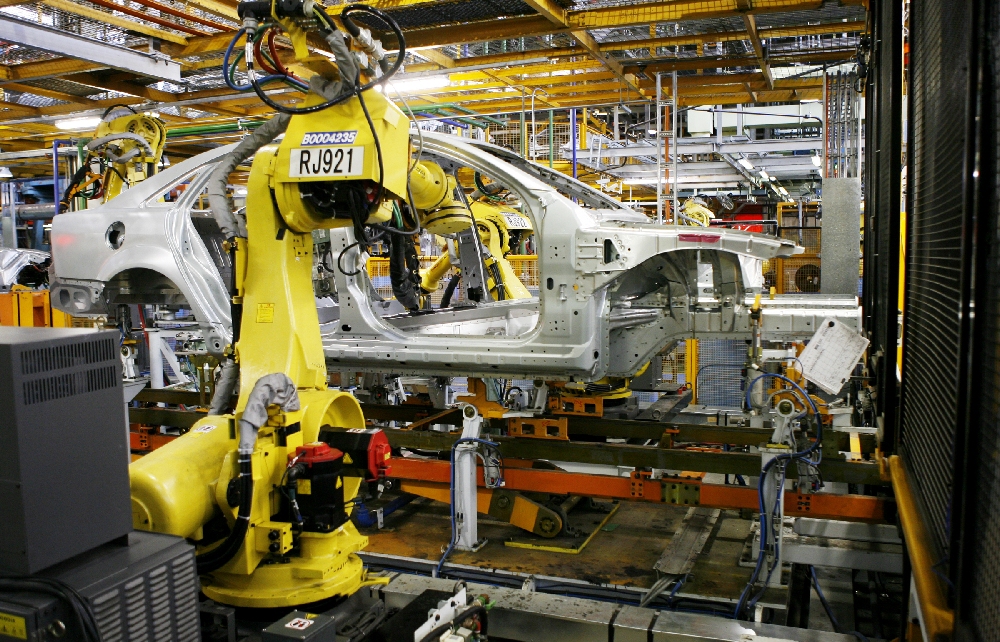 A CIMA report on the manufacturing sector from August 2010 highlights a number of current issues facing the sector. One of the issues mentioned is making products cost efficient by designing in cost effectiveness at the design stage – and this includes costs of designing in poor quality, just think of the issues with Toyota cars last year. So how can management accountants help at the crucial design stage. According to the report, a number of ways actually. First, the report states that a significant proportion of product costs (up to 80%) are determined at the design stage. Therefore manufacturers will benefit from the management accountant modelling costs for the prototypes or revisiting costs when testing is complete. Another way
Cost accounting – a revisit and some history
 I read a piece in CIMA’s Insight e-zine last February, which mentioned a discussion on the CIMA website about cost accounting. It prompted me to remind myself (and you the reader) about the origins and sometimes forgotten simple basics of management accounting.
The history of cost accounting – which was the precursor to what we now broadly call management accounting – dates back to the Industrial Revolution on the 1700’s. As the steel, textile and pottery industries grew in England, economies of scale were realised. Around 1770, an economic depression occurred and many businesses failed. Those that survived were ones who had a handle on how much it cost to make their products.
The Wedgwood pottery firm is one often cited example of a successful firm of the time. At this time, firms like Wedgwood had no choice but to develop their own internal accounting systems as the accounting profession as such did not exist. Firms like Wedgwood used what were relatively advanced accounting techniques at that time, including cost control, overhead accounting, and standard costing. These techniques, although with shortcomings, helped firms to make decisions like dropping unprofitable products.
While any student, accountant or business owner might have a reasonable knowledge of these basic cost accounting techniques, I can’t help but think have some forgot the basics of cost accounting. Okay, I am writing this from an Irish perspective, but we are not the only economy where boom times seem to have led to a somewhat remiss attitude towards the basic ideas of cost accounting and cost control. Is it not interesting that firms like Wedgwood survived depressions (which were more frequent back then) by focusing on cost reporting? Of course, business nowadays is much more complex, but that doe snot mean we should forget the basics and keep costs under control. I cannot help but think about many Irish businesses who took on costs ways beyond their long term capability (e.g. high rents) who are now either struggling or gone out of business. Focusing on costs is not the only thing a businesses needs to do of course, but this very important task should not be forgotten about. So cost accounting is still very relevant in my opinion.
Cost centres – a useful tool in any business
 Managing your business costs and revenues is a challenge. To survive, you have to sell enough products/services, and collect money and manage your costs. The latter can be more difficult than you think, particularly when you don’t have good breakdown of costs.
Without careful monitoring of costs, any business can find that costs can spiral out of control quite rapidly. The old saying “keep an eye on the pennies and the pounds look after themselves” is a good starting point. This does not mean you spend hours and hours monitored costs in minute details, but you should be able to get an overview of all costs at any time. One way to do this is to use cost centres in your accounting system.
What is a cost centre?
A cost centre some section/portion/unit of a business for which costs can be identified and someone is accountable for these cost. Normally, a cost centre has a budget which includes all costs traceable to the cost centre. These cost could be anything from wages to telephone to motor expenses, once they can be traced to the cost centre
In a small business there may be only one or two cost centres. Because you will be looking at small numbers of transactions, there is no need to split things up into smaller cost centres as costs can be more readily monitored against budgeted figures. However, for larger businesses, operating as a single cost centre is probably not good enough. It is also not going to be an easy task to monitor whether those responsible for cost control are doing their job effectively. A breakdown of costs down into each cost centre helps control cost of each cost centre and the business as a whole.
Identifying cost centres
Some businesses are easy to split into individual cost centres – for example, a manufacturing company with six factories, a head office and a distribution warehouse could be split into 6 individual cost centres for each factory), a head office cost centre and a separate distribution cost centre. This example portrays what I call high-level cost centres. A business may need to go into more detail to keep a tighter control of costs – for example, each manufacturing plant might make several different products, with several different machines/processes for each product. It would be possible to treat each machine or process as a costs centre in this case. This would allow the business to keep a good eye of how profitable each product process is. Sometimes too, a business might treat support activities like human resources, finance and logistics as cost centres too. There is no end to how detailed cost centres can be [i.e. they can become very low-level], but remember to be a cost centre, it must be possible to trace costs directly and someone is responsible for the costs.
Estimating costs using multiple regression analysis in Microsoft Excel
 I am writing a management accounting text book chapter at the moment and put together a short video on how to get Excel (2007) to do multiple regression. The multiple regression technique is often used to estimate costs that are influenced by several factors. Click here too see the video. Hope it helps
Preventive maintenance – a good investment?
 This article on The Economist website brought me back to my days working as a management accountant in manufacturing firms. Maintaining manufacturing and process equipment was always a delicate balance. Spares and maintenance staff pay was quite a substantial cost in one plant I worked in over the years. This plant, like others, tried its best to engage in preventive maintenance programs. This usually implied using a mixture of following guidelines from equipment manufacturers and the experience of the maintenance staff. But, as I am sure you can imagine, preventative maintenance comes at a cost too. The arguments would always be “should we wait until it breaks, or fix it before it breaks”. Of course, letting a piece of equipment go unmaintained can create serious problems. A business needs to avoid its main manufacturing process being down – losses of revenue per day (or even per hour) rack up very quickly. So from an accounting and profit view, a balance needs to be achieved between the right level of preventive maintenance and the cost of same.
Of course modern technology can help. When I left my last manufacturing role back in 2004, process equipment could be remotely diagnosed and repaired by engineers. I always remember being amazed in or around 2001 when a production manager told me how the main machine at our plant had PLC’s (programmable logic circuits) with an IP address – the same as any PC or internet device. This meant the engineers from the equipment manufacturer could simply connect over the internet. At the time I was thinking, wouldn’t it be great if fault information could be sent out instead, or even better, that fault signs might be noted in advance.
So, reading the above mentioned piece from The Economist brought me back to those great days when I as an accountant was constantly amazed by how advanced machinery had become. But now it seems a “virtual engineer” may be on hand to predict if electrical equipment is showing early signs of failure (read the piece for more detail). No detail is given on the cost of such devices, but it would seem to be a great cost-saving idea. It could mean that preventive maintenance costs are incurred less frequently as equipment may be perfectly fine beyond it’s normal maintenance period
How to drive at 1,000mph – at what cost?
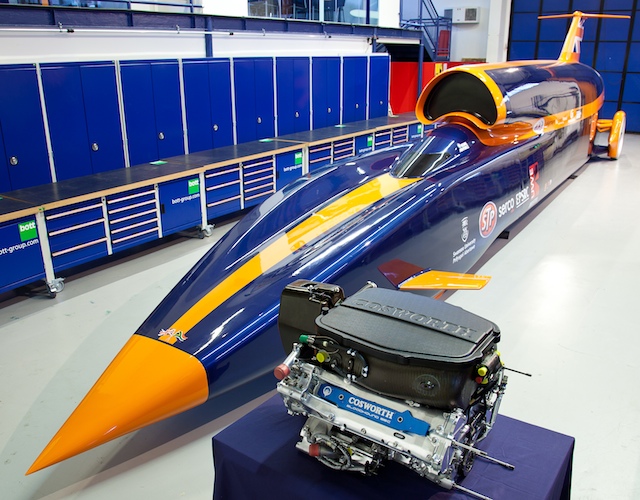 I’m a big fan of F1 and other motor sports. Putting on the accountants’ hat, sometimes the costs of the F1 industry astound me, but so too do the TV rights revenues and sponsorship deals. This article in The Economist caught my eye last November. It’s about a new attempt to break the land speed record. There are over 200 businesses involved in this. I’m thinking what is it costing them, and what revenues will they get back? Come on, a Cosworth F1 engine is needed to “kick-start” the jet engine that makes this thing go. I can imagine the roar of it, but the dent in someone’s bank account must be big too!
Relevant costs and revenues – opening a barber shop earlier?
One Saturday morning recently I went along to one of the two local barber shops to get a haircut. I usually like to get out early so I was in my local town about 9:30. For my last haircut I tried a the newer of the barbers, who to build up business had a loyalty scheme where you get your fifth haircut free. But it did not open until 10:00, so I went to the other barber ( who opens at 9:00 ) and I made up my mind I’ll stick with this one.
Now let’s talk accounting. The newest barber is in a high rent shopping mall. They also want to build up a customer base. The older one probably pays less rent or maybe none. Now let’s assume the new barber is thinking if opening at 9:00 to attract early birds like me. What costs and revenues are relevant to this decision in – in other words, what are the marginal costs and revenues. The revenue is easy – simply all extra revenue generated e.g. 5 extra cuts at £/€10 per cut = £/€50 And costs? The main cost would be labour of any employees, say £/€20. Other minimal costs would be utilities (power, water) and any hair products like gels or creams, say £/€5. So in this simple example a profit of £/€25 is made. Hang on, what about other costs like rent? These are not relevant as these will be incurred even if the shop is closed. This kind of decision is made by businesses quite regularly and while my barber example is simplifying things, such decisions can make a huge difference to profits. Why? Simply because all additional revenue contributes to profits and once fixed costs like rent are covered, each extra sale (haircut in my example) means more profit. So make these types of decision as best you can in your business. Obviously, if your figures are showing a loss, the course of action might be the wrong one – maybe the new barber in my example thinks no customers will come before 10:00, so he’d loss all labour costs!

Thinking about costs and revenues when setting a price
 Here’s a great example of how you need to think about costs when setting a price for a product or service. During the recent volcanic ash cloud over Europe (April/May 2010), many travellers were left with no option but to hire a car to drive home. One result of this was that 100’s of hire cars from Spain and Portugal ended up in places like Kiel and Rostock in Northern Germany as people from the Baltic states and Scandinavia tried to get home. To get these cars back to their places of origin was a problem. So what at least one major hire car company did was to offer cars for hire for €1 per rental period (incl. the fuel in the tank) once they were going south. Over a few weeks 70-80% of the fleet were back to where the needed to be or a lot closer. But surely no profit could be made at a price of €1. No, none was, but think about the costs saved by not having to hire additional car transporter trucks to carry the cars 1000’s of miles! So the “profit” was made by saving costs.
How to price your products or services
 Setting a price is a very important task for any business. Set the price too high and sales may not come; set it too low and you might not make money or customers might perceive your product/service as poor quality. As an accountant, I would of course first think of costs – without a clear knowledge of what your cost base is, how can you sell something at a profit. But other things determine price too, like the customer and the competition. Given that I’m sort of on holidays, and writing accordingly, here’s a great piece from inc.com that will help you set a price.
Preparing a small business budget – 7 easy steps to help you plan
 You’ve just started out in business, a first time entrepreneur. Maybe you’ve lost your job or given one up. Whatever the reason, you’re now in business on your own. Your business goals should include making some money. Waiting until the end of a year when dealing with an accountant is too late to see if you’re losing money. You need to plan, or budget from the start to avoid that daunting situation. A budget is simply a plan of revenues and costs for the coming year. It will not be the same as what actually happens, but you can adjust it as actual event happen. So where do you start? Below I outline 7 easy steps to help you. You might find these work quite well in a spreadsheet (MS Office, OpenOffice or even GoogleDocs). To keep it simple, let’s assume all costs are paid as incurred.
Step 1. Decide when the period of the budget. It’s normally a year, and this is broken down by month or quarter.
Step 2. Make a list of all the recurrent costs you know. Things like rent, purchase of goods for resale, wages and so on.Try to work out the costs according to month or quarter, as decided in step 1. Some costs may be higher or lower depending on the time of year e.g. heating or air-conditioning.
Step 3. Think about any one off costs you will have. For example, you might buy some new equipment. Add these costs to those in step 2.
Step 4. Now, think about the income of the business. Try to work out by month or quarter what you hope to sell and at what price.
Step 5. Now you have costs and income, so you have a basic budget by month or quarter. Adding all the number up will give you an annual budget. if you’re just starting out in business, you might find that costs exceed income, which is okay in the short term. At this point, you should be able to see how much profit or loss your business might make.
Step 6. As the months past by, compare your budget to the actual income and costs of the business. You might find that you have to revise the budget, which is always a good idea as it gives a better reflection of actual circumstances.
Step 7. Get on with your business, using the revised budgets as a tool to measure your business performance.
Most businesses of course do not pay for items immediately, but often get a credit period from suppliers or spread payments over a number of months or years. This means that a cash budget might need to be prepared also to complement an income and costs budget. I’ll post something soon on cash budgets.
Accounting and Innovation

Innovation is the life-blood of any business. New products, services and ways of doing business all lead to sustainable longer-term profits. Sometimes innovation comes at a substantial cost, for example in research and development costs. In these recessionary times, budgets for things like product research and development are often slashed. Of course accountants are blamed for this. But can accountants play a role in injecting innovation into businesses in these tough times. According to Richard Young, writing in Financial Management (September, 2009), accountants can inject a dose of realism in to innovative ideas and projects. They can be a ‘wet blanket’, which although has a negative tone, may actually be exactly what is needed in lean times. With a smaller pot of money to be spent on product innovation, accountants can help determine the longer-term profitability of new products or services, preventing great ideas becoming poor sellers. Accountants also bring structure, based on their expertise of the many business processes involved in getting innovative ideas afloat. For example, accountants can ensure that the costs of any new product are minimised – production costs, marketing and distribution costs etc. They can thus help take the innovation to something which is based on costs and profits, something which investors and managers readily understand. Innovative and creative people are often uncomfortable with such language.
Child friendly business?
I really need to turn off the accounting brain – at least sometimes!
As an accountant, when confronted with business situations my brain turns to costs and revenues. It’s a typical accountant’s problem. In my other life as a parent, there are many hills to climb as you do your best to ensure your child gets the best possible upbringing. And boy can it cost you! Sorry, there’s the accountant again.
After a recent visit to Finland the accounting brain and the parenting brain came together – cost conscious Dad, a dangerous phenomenon for my kids. That’s not how the two came together actually. During our week as a family in Finland, it became apparent that the country is very child-friendly. Restaurants typically have a small play area for kids equipped with table and chairs, colouring books, soft toys, wheeled toys etc. Even mainline trains have play areas on board. While in a restaurant, I observed one such play are. It probably took up the space of one normal dining table. What a great relief for Mum and Dad, as the kids can play with other kids and we can eat in some peace. Now the accountant’s brain kicks in. How much would this play area cost? Maybe £100 for the toys and equipment I’m thinking. But a table could be there, so how much profit is lost each (busy) night by not having a table. I’m not even trying to guess. Nor am I a marketing expert, but I think happy long-term customers is very important. Would this balance against the lost revenue?
The point in this example is that sometimes business decisions can be made which are at a minimal cost (yes, accountants love this) and provide long-term benefits which cannot easily be expressed in monetary terms (danger zone for accountants). So, sometimes it is good for accountants to switch off their well-trained accounting sense and see the broader picture.
If you’re a Dad like me, take a look at this website for some ideas to keep them occupied!


 Martin's accounting blog