Some interesting small facts on the accounting profession
Here is a great little blog post I came across a few months ago. It’s a bit of fun, and worth a read.
Why does craft beer cost so much?

Image from brubrewery.ie
I’ve often wondered why craft beer costs more than our normal mass-produced and popular brands. Is it because it tastes better – like the Bru brand to the left, it’s really nice. Or because it cost more to produce? Or the smaller breweries have less economies of scale? Or does tax have something to do with it. It may be a combination of all of these, or some other factors I have not mentioned. However, a quick search of the internet revealed the answer to me – it is about cost of production, but not the raw materials. It is also about volume, but not volume sales.
An article I found on the Huffington Post is a good example of the cost issue faced by craft brewers. If you look at the article, you will see that largest cost item is packaging – the bottle and label you may think. A bit of further digging around the internet revealed that the greatest part of the packaging cost is shipping. But not shipping to end customers, shipping to be bottled. It seems a bottling machine is quite expensive, and at small volumes is not easy for a craft brewery to purchase. Instead, they often send the beer away in vats to be returned in bottles. The Huffington Post article suggests that 50% of the cost to the customer is margin. I am not sure if this is the case in Europe, but certainly small craft breweries are unlikely to be able to invest in a large bottling plant at the outset. As volume increase, they may be able to do so. Let them stay small I say, the variety of beers is better then.
The costs of sitting in traffic?
 We all know what it is like to sit in traffic, but ever wondering how much money is wasted through lost time? An article from The Economist gives a good picture. Some research conducted by the Centre for Economics and Business Research and INRIX looked at costs of traffic jams in three ways – 1) reduced productivity, 2) higher transport costs and 3) carbon costs of fumes. Their cost estimates across four countries comes to some $200 billion. Quite a sum I think you will agree. I wonder how much of this cost relates to lost labour time – or in other words what is the opportunity cost to firms of having staff delayed in traffic. Of course, you could think of this from the view of the worker too – the opportunity cost might be at least some extra time in bed instead of the morning rush hour.
So what is big data?
Big data has been the feature of many articles in professional accounting journals such as CIMA’s Financial Management. But what exactly is big data? Originally it referred to more data than information systems could process. But today we have systems capable of processing and analysing millions of transactions in seconds . So what does it mean now? Well, I think the answer to this question will depend a lot on who you ask. To me big data is still data analytics, with maybe some external or social data sources thrown in., with a defined purpose of adding value or saving resources (such as cash or time). This is of course a very broad understanding of what big data is, as value will not mean the same thing to all organisations.
I read an article on Forbes recently which has a similar approach to big data as that I suggest above. The key point the author notes is not to care too much about defining things like big data, but to remember “who cares”. To quote directly from the article “the goal should be to solve a business problem by using new analytics, not to worry about defining a term. That’s because definitions are a distraction from the simple question of “Does this data contain information that is valuable for my business?”
How low-cost airline reduce costs and change our behaviour
I’m a bit tight on time today, so here is a link to a nice article the Economist which gives some useful insights and summaries of how low cost airlines have reduced costs over time. Enjoy.
Managing and accounting on farms
As I come from a rural background in Ireland, agriculture has to an extent always been part of my life. I have worked on farms as a young lad, and all things agriculture interest me still.
As a management accountant, I’d have a wild guess and say that most farmers do little formal accounting – particularly small farmers. Some farms have quite the turnover nowadays in Ireland and many are incorporated and even fit the medium-sized company criteria. The smaller farm, like many small businesses, probably does very little accounting – maybe just the annual trip to the accountant’s practice to work out taxes due.
As I have written in previous posts, cloud-based accounting software is a key tool in my view in bringing accounting to small business. And farming is no exception to that. Having done a relatively brief Google search, I could not readily find any cloud-based accounting apps which might be suitable for farmer. Farm accounting is a little difference than other business sectors in that 1) inventories are live crops and animals and 2) costs and revenues needs to be captured by sector e.g. tillage, dairy, crops. I have found several farm management apps, such as FarmFlo or see here for an international view. There are some software packages specifically designed for larger farms (see here for example), but it seems there is a gap there in terms of the smaller farmer. If I were to design an app, to be honest I would focus more on cash-based accounting than accruals accounting. I think farmers focus more on the cash in the bank than on profit.
Tesco and its hello money.

Image from Tesco.ie
A few weeks ago, a news story broke about an accounting scandal at Tesco – see here for example.
So how can this happen? It’s very simple actually. Now, we don’t know if it’s an error or something deliberate, but from an accounting view the entries in the books are the same.
When I was in college 20 years ago, one of our accounting lecturers asked is how would we account for this “hello money” as he called it. Within a decade I was calculating and accounting for what were termed “long term agreements” in my role.
For the likes of Tesco, the amount involved are large and I would guess they account for hello money as a separate income stream – although it’s not shown in the published accounts. Another way would be to reduce purchase cost, but this would probably be for smaller amounts. But how can Tesco make such an error you ask? Simple, just ” over accrue”. This means recording future hello monies now. Of course, I have no idea this is what actually happened, but it does show how easy errors or manipulation can happen by using the good old accruals concept.
CVP analysis – the effects of too much volume ?
Last summer I again took the car to Europe, using the Dover-Calais crossing. Not too long before I went I read an article about a UK Competition Authority ruling against one of the ferry operators – read here.
One of the operators is (now) owned by euro tunnel, hence the competition ruling. But let’s bring this to basic costs, volumes and profits. The ship I travelled on was almost empty, and as there is so much capacity on the route some operators are being pushed into a loss scenario. Why? Well, think about it for a moment – costs of running a large ferry are probably quite fixed. Prices may be low due to competition, but volume is relatively static. So, lowering price to attract passengers may be a loss maker. Similarly, too many operators may mean smaller passenger numbers for all, driving some into a loss situation.
So, as basic economics may dictate, ultimately one operator will fail as the market will force them out. And remember CVP analysis is based on a subset of the cost curves used in economics.

What is a cost centre?
If you type the above question into a Google search, you’ll get many answers. The one thing I found funny about the answers I looked at is they always mention costs – great – but some do not at all mention accountability.
So what is a cost centre? Well here is my definition. A cost centre is a unit, function, department or similar in an organisation for which:
1. Costs can be traced to
2. A manager is held accountable for those costs.
The second part of the definition is often forgotten, but it is probably the most important. The basic idea of responsibility accounting is that a manager is responsible for things like planning a budget or measuring performance against target. So in a cost centre, the manager is accountable for costs – but not revenue, profit or return on investment.
The cost of letting staff go……
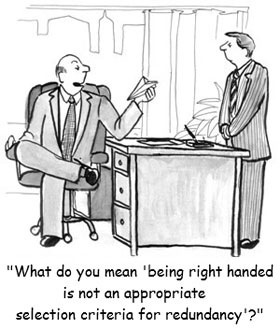
As an accountant, when we think of the costs of letting staff go, we probably think redundancy costs and so on. These can be quite substantial. But maybe these short run costs are better than longer term damage costs. I know the example I give here may be less likely to work in Europe for employment law reasons, but I’m just trying to think about costs, not the HR side.
I read recently that Amazon (and others) are offerings employees a cash sum of up to $5000 if they wish to leave. Maybe this is a bit strange, but there may be an argument which suggests such a payment actually saves money longer term – employees who are not engaged with their company are probably less productive. I don’t know if companies like Amazon have done a cost analysis on this, but it seems to make sense.
To give another example, a few tears ago an employer told me that a substantial redundancy payment made to an employee probably was a good deal. The employee in question was creating a poor image with customers, which was starting to effect turnover. Again, maybe no cost analysis was done, but the short term cost of redundancy was compared with unknown longer term effects.
Break even in farming
Farmer’s, even if they know their costs, face a problem in that they can’t do anything about crop prices. If the price is above break even, it may even make sense to rent more land to grow more.
And of course, if a farmer knows the break even ‘cost’ per acre/hectare then they can try to get the best price above that.
Here is a good article showing the costs of corn this year, and working out a break even price. It’s a good example of the application of break even analysis.

Counting money or CO2 – guest post on CESAR blog.
I recently was invited to write a post on the CESAR blog. This is great blog which deals with issues on sustainability and environmental reporting. You can read the post here.
Flat rate taxi fares, Hailo – reducing taxi costs?
I recently got a flat rate taxi fare from an airport in Europe – a bit of an adventure, the guy was really moving it. And the rate was of course cheaper than normal taxi fare which at airports are usually more expensive . So then I started to think about apps like Hailo (and the latest one Uber). Can these reduce taxi costs and in turn give us cheaper fares. Well I guess so. I don’t know for sure, but I would assume using Hailo is cheaper than “renting” a radio and a customer base from a taxi firm. If I’m right, will these reduced costs be passed on?
Does my milkman use Activity-Based Management ideas?

Not my milkman…
Ok, the title of this post is not really correct. It should be more like “does my milkman and his supplying dairy use activity-based management principles”? First, let me explain that where I live we still have milk delivered to our door twice per week. This is quite common in Ireland and has been happened for as long as I can remember. The only difference nowadays is that deliveries are no longer daily due to refrigeration technology improvements. Second, what is Activity-based Management (ABM)? In a co-authored text book (see burnsetal.com), ABM is defined as “The
use of ABC information to identify operational and strategic improvement possibilities”. We could extend this to say that ABM assumes a business manages itself based on activities (as in Activity-based Costing) rather than functions.
So what has this to do with my milkman? Well, despite its very traditional nature, technology has made its way into milk delivery. A new website (mymilkman.ie) has been set up by several dairies in Ireland to streamline milk delivery. Through the website, I can pay for my milk, change my order, pause my order if I go on holidays and so on. And when I signed up, I got €10 credit on my account.
I asked my milkman what he thought about the site. He told me that even if he gets only 50% of customers to sign-up, he will save 8 hours work per week. Why? Well he does not have to call to the door to collect money for one thing.
So what has this to do with ABM? Well the €10 credit on my account makes me think that someone is thinking that it costs less to manage a customer if online – and I would suggest this is a customer service activity. And if we think about it, how many businesses charge us more if we do things through call centres versus online for example. So there may be many businesses out there using the ideas of ABM – managing activities. But would they all use ABC? I doubt it. For example, the dairy industry probably used some form of process costing. Nevertheless, I think many businesses may use the basic idea of managing activities they perceive as costing more/less in different ways.
What is lean accounting?
Defining lean accounting is a bit odd to me, as I don’t really buy the idea that there is a technique called “lean accounting”. Having said that, there is definitely a concept called lean manufacturing. In a nutshell, lean manufacturing implies three concepts – pull, flow and waste reduction. Pull means product is produced (or pulled) according to customer demand. Flow means product moves through a facility as efficiently as possible and no delays. Both of these should imply waste reduction.
So what does this mean for accounting. Well one thing is inventory reduction. Another may be capital investment to get things working well. Both might put accountants off! But rather than me rattle on, here is a very nice article from Forbes which explains lean accounting and some issues.


 Martin's accounting blog