Setting prices in small business
 Setting a price for a small business can be a challenge. Cut the price too much and you loose money. Raise the price and you loose business. An article in the New York Times recounts the experience of some US small business. The basic message is that price is not everything. One business owner recounts how the quality customers gained outstrips those lost due to a perceived high price. Here’s one story
“About three years ago a computer error caused all of the prices on Headsets.com to be displayed at cost rather than retail. With the lower prices on display for a weekend, Mike Faith, the chief executive, expected sales to soar. Instead, the increase was marginal. “It was a big lesson for us,” Mr. Faith said.”
The basic lesson from this experience is that customers don’t think price is the be all and end all. The experience of a gluten free flour business showed that competitors prices may not matter as much as one thinks too. The company managed to raise its price by 20% in the first year in business by convincing customers that the product had more added value than competing flour. The most important lesson mentioned is that costs must be covered in the price charged. Seem so obvious, but I have written several pieces on this blog about breaking even.
Some good accounting blogs
 I had a message from a fellow blogger yesterday, which I thought I’d share. The “Accounting Degree Online” blog is a US-based blog which helps people decide on the best accounting degree for them and provides some useful resources. A recent post list 50 of the top accounting blogs. Many are US-based blogs, which might not be that useful on the taxation side, but the general accounting ones are fine. Take a look.
Knowing breakeven is key for any start-up business
 Anyone who has started a business from scratch knows how hard it is in the early months (or even years). Lots of businesses seem to fail too in these early times. Why? Well, there are many reasons from just bad timing, to poor marketing, poor quality and so on. There is also the possibility that the business simply did not understand its costs structure and how this relates to the volume of sales needed to make a profit.
The US Small Business Administration (and similar organisations world-wide) provide good advice for start-ups. One key concept on understanding costs and volumes is called breakeven. This simply means the output level at which your business neither makes a profit nor loss. To keep it simple, if a business knows its start-up costs and running costs for the first year, it can easily work out the level of sales required to breakeven – this output level is known as the breakeven point. To work out the breakeven point, you need to separate variable costs and fixed costs. Fixed costs remain the same regardless of how much your business sells (e.g. rent) and variable costs change as the output grows (e.g. labour costs , shipping cost, material costs). For breakeven, the sales value less the value of variable cost must be equal to fixed costs; any surplus is a profit, any deficit a loss. Doing this quick sum could save many businesses from going under. In fact, as a management accountant I would suggest a breakeven calculation is included in all business plans. I would say that, but why go into business to lose money? Or at least know when you will start to make money?
Just in case or just-in-time?
 Just-in-time is a management concept originating from Japan. The basic idea is that everything happens “just-in-time”; materials and supplies arrive just in time for production to start, and production finishes just in time for the customer to take it. With not much room of error, if a supplier fails to deliver goods on time production is disrupted and may even cease. Normally companies that use the just-in-time philosophy have close supplier relationships and tend not to run into supply problems. The savings from reduced inventory levels are obvious. Recent events in Japan however have raised issues about how tight things can get with just-in-time. A disastrous earthquake/tsunami in March this year left parts of Japan’s east cost in ruins. Factories were destroyed and power supplies disrupted for months. An article in The Economist (March 31, 2011) mentions how global firms are re-thinking how the manage production following events in Japan. According to the article, one company that controls 90% of the market for a resin is in smartphones had ceased production. Another company which supplies 70% of the global supply of a polymer used in iPod batteries is also out of action. And, car manufacturers in Japan and America have had to cut back on production as parts are in short supply. The events in Japan have prompted some commentators to say a “just-in-case” systems is also needed, according to the Economist.
Performance related pay – some food for thought BA v Banks
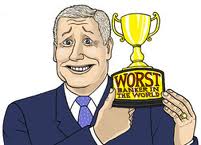
Image from slate.com
We’ve all heard the rumpus about bankers getting bonuses while the bank is still loss making. I can’t say I agree at all, as I can’t see a reason why someone should be substantially rewarded when losses are being made. While reading the news recently (April 1, 2011), I noted that British Airways CEO Willie Walsh, did not take a bonus for two years while the company was loss-making (see here). Contrast that to Royal Bank of Scotland. According to the Guardian, bonuses totalling £950m are to be paid out despite £1.1 billion in losses. Or out another way, the loss would be £150m if no bonuses were paid out. I am not getting into the personalities or the companies, but surely what the likes of BA have done is both logical and financially sound.
Reducing costs at the design stage
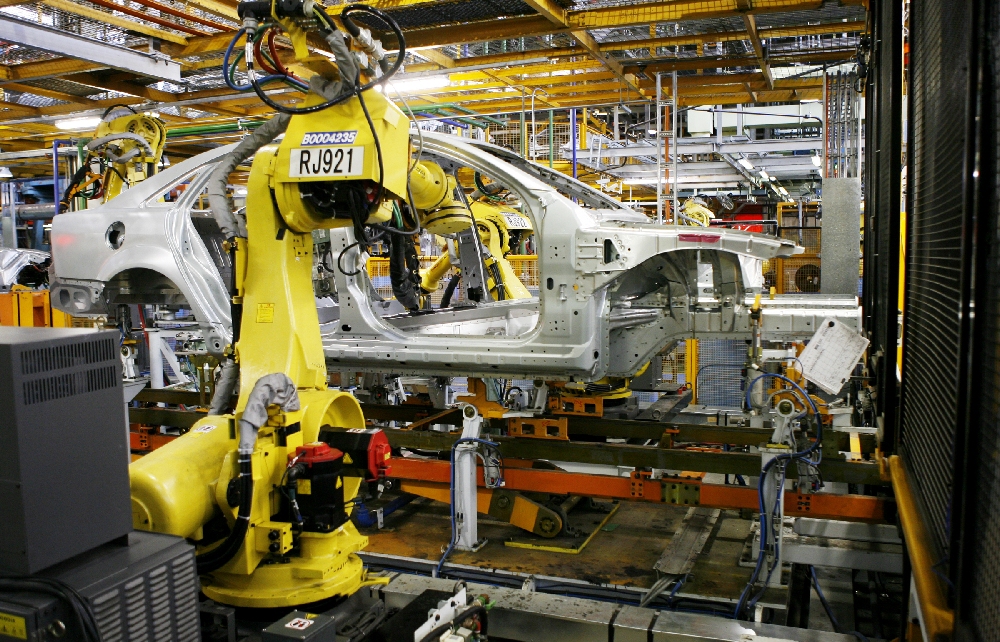 A CIMA report on the manufacturing sector from August 2010 highlights a number of current issues facing the sector. One of the issues mentioned is making products cost efficient by designing in cost effectiveness at the design stage – and this includes costs of designing in poor quality, just think of the issues with Toyota cars last year. So how can management accountants help at the crucial design stage. According to the report, a number of ways actually. First, the report states that a significant proportion of product costs (up to 80%) are determined at the design stage. Therefore manufacturers will benefit from the management accountant modelling costs for the prototypes or revisiting costs when testing is complete. Another way
Sustainability practices being adopted by companies

A recent joint survey (December 2010) from CIMA, the American Institute of CPA’s and Chartered Accountants Canada provides some very useful insights on what companies are actually doing in terms of sustainability. The survey obtained more than 2,000 responds, mainly from CFO’s. It reports on the key drivers of sustainability, with the number one driver being legal and regulatory requirements. This is followed by minimising brand risk for larger companies and cost and efficiency savings is in second place for smaller firms. An interesting finding is that CIMA members place a greater emphasis on sustainability – not surprising given they are more typically involved with the day-to-day practices of the business. The survey also reports on two cases, including UPS – the global logistics firm. The full survey report can be read at the link above.
Business meetings – face-to-face is best
 According to a post on the Gulliver blog on The Economist website, the expense of air travel, hotels and all that for business meetings is money well spent. The reason is simple, you can’t drink beer together via email. Obvious! The real issue is that face-to-face meeting accomplish so much more than email, video conferencing, phone calls or any other non-contact medium. The post is based on a Harvard Business Review by Stephen Greer, who mentions the gelling and bonding only brought about by face-to-face meeting. Once these bonds are in place, then email and phone calls can be used. My own experience makes me agree totally. I have resolved quite a lot of business problems in restaurants and bars – not by getting drunk, but by building trust in a less formal environment and getting to know the people better. Try it, but don’t go too mad! But, seriously, read the blog post, it is sound advice.
Energy efficiency delivers real returns on investment.
 When I worked in a paper company, health and safety was always a big concern. The machinery used in paper making could be quite lethal in the case of an accident. Quite an amount of money was spent annually by my employer to ensure the safety of all staff, but in particular those exposed to process equipment and machinery. As an accountant, one comment made by a manager on health and safety always stuck in my mind, namely that “there is not return on investment in health and safety”. I’m not going into detail here, but I’m sure you can appreciate it may be difficult to put a financial return on health and safety expenditure.
Another hot topic in business for the past decade or so is energy efficiency. Investment in energy efficient ways of working and running a business, like health and safety, is a good thing to do and probably adds to the longer term survival of a business (and the planet!). But, unlike health and safety, for accountants the return and investment can be ascertained a lot easier. For example, a recent article in The Guardian reports that many well-known UK companies are achieving definite returns on investment. DIY company B&Q saves 12% on CO2 emissions through education of staff and monitoring energy usage; hospitality group Whitbread can save 3% on energy costs just by changing behaviour. However the article also reports that companies may be seriously underestimating the return investment. recent research at the Carbon Trust in the UK took a close look at 1,000 energy efficiency projects it has been involved with and found that companies can expect to see an internal rate of return (IRR) of 48% on average and payback within three years. In the retail sector, the research shows the average IRR from energy efficiency projects leaps to 82%. Most “normal” investment projects would be happy to see a return of about 15%.
The full Carbon Trust report can be read here.
Green your business and save money!
 About a month ago, I read a piece in the New York Times about saving money by making your business greener. I’m no tree hugger, but most of the energy saving tips given by the NY Times (and many others) actually make sound business sense – as well as do something for the environment. A win win situation. The NY Times piece suggests any changes need to start at the top i.e. at the owner/manager level. I could not agree more, as it’s really all about changing behaviour, and only those is power in a business can make and support the changes.
Here’s what you can do in your business:
- I’ll sound like a real accountant here, but start with an inventory of the energy you use, the water you use and the waste you generate. This is your benchmark.
- Try to work out what you can do. Can you get staff to be more energy aware? Can you recycle (or sell) waste, can you recycle water? Can you replace paper with electronics – email invoices for example
- Track what you do and report on it. How much energy have you saved, how much less waste has been generated and so on.
Cost accounting – a revisit and some history
 I read a piece in CIMA’s Insight e-zine last February, which mentioned a discussion on the CIMA website about cost accounting. It prompted me to remind myself (and you the reader) about the origins and sometimes forgotten simple basics of management accounting.
The history of cost accounting – which was the precursor to what we now broadly call management accounting – dates back to the Industrial Revolution on the 1700’s. As the steel, textile and pottery industries grew in England, economies of scale were realised. Around 1770, an economic depression occurred and many businesses failed. Those that survived were ones who had a handle on how much it cost to make their products.
The Wedgwood pottery firm is one often cited example of a successful firm of the time. At this time, firms like Wedgwood had no choice but to develop their own internal accounting systems as the accounting profession as such did not exist. Firms like Wedgwood used what were relatively advanced accounting techniques at that time, including cost control, overhead accounting, and standard costing. These techniques, although with shortcomings, helped firms to make decisions like dropping unprofitable products.
While any student, accountant or business owner might have a reasonable knowledge of these basic cost accounting techniques, I can’t help but think have some forgot the basics of cost accounting. Okay, I am writing this from an Irish perspective, but we are not the only economy where boom times seem to have led to a somewhat remiss attitude towards the basic ideas of cost accounting and cost control. Is it not interesting that firms like Wedgwood survived depressions (which were more frequent back then) by focusing on cost reporting? Of course, business nowadays is much more complex, but that doe snot mean we should forget the basics and keep costs under control. I cannot help but think about many Irish businesses who took on costs ways beyond their long term capability (e.g. high rents) who are now either struggling or gone out of business. Focusing on costs is not the only thing a businesses needs to do of course, but this very important task should not be forgotten about. So cost accounting is still very relevant in my opinion.
Cost centres – a useful tool in any business
 Managing your business costs and revenues is a challenge. To survive, you have to sell enough products/services, and collect money and manage your costs. The latter can be more difficult than you think, particularly when you don’t have good breakdown of costs.
Without careful monitoring of costs, any business can find that costs can spiral out of control quite rapidly. The old saying “keep an eye on the pennies and the pounds look after themselves” is a good starting point. This does not mean you spend hours and hours monitored costs in minute details, but you should be able to get an overview of all costs at any time. One way to do this is to use cost centres in your accounting system.
What is a cost centre?
A cost centre some section/portion/unit of a business for which costs can be identified and someone is accountable for these cost. Normally, a cost centre has a budget which includes all costs traceable to the cost centre. These cost could be anything from wages to telephone to motor expenses, once they can be traced to the cost centre
In a small business there may be only one or two cost centres. Because you will be looking at small numbers of transactions, there is no need to split things up into smaller cost centres as costs can be more readily monitored against budgeted figures. However, for larger businesses, operating as a single cost centre is probably not good enough. It is also not going to be an easy task to monitor whether those responsible for cost control are doing their job effectively. A breakdown of costs down into each cost centre helps control cost of each cost centre and the business as a whole.
Identifying cost centres
Some businesses are easy to split into individual cost centres – for example, a manufacturing company with six factories, a head office and a distribution warehouse could be split into 6 individual cost centres for each factory), a head office cost centre and a separate distribution cost centre. This example portrays what I call high-level cost centres. A business may need to go into more detail to keep a tighter control of costs – for example, each manufacturing plant might make several different products, with several different machines/processes for each product. It would be possible to treat each machine or process as a costs centre in this case. This would allow the business to keep a good eye of how profitable each product process is. Sometimes too, a business might treat support activities like human resources, finance and logistics as cost centres too. There is no end to how detailed cost centres can be [i.e. they can become very low-level], but remember to be a cost centre, it must be possible to trace costs directly and someone is responsible for the costs.
What is the entity concept?

If you are learning accounting for the first time, one of the earlier things you should learn are basic accounting concepts. These are underlying rules which apply to accounting no matter how simple or complex the business or (to the best of my knowledge) the location.
One of these concepts is called the entity concept. In accounting, financial statements (e.g. income statement, statement of financial position (balance sheet)) need to be prepared for each business entity or group of entities under common control. When we think of large companies this is probably a simple enough concept to grasp. Companies are by nature separate legal entities too, and costs and revenues for each legal entity are normally easy enough to identify. In large groups, the entities are combined to prepare financial statements for the group as a whole. When we get down to the typical one-man-show type sole trader, things can get a bit blurred. But, the sole trader is probably the best example to explain the entity concept. For the sole trader, the entity concept would dictate that all business and personal expenses must be separated. Here’s an example. Let’s say a sole trader makes a business trip which means an overnight stay in a hotel. Let’s assume his/her partner comes along. Should any costs associated with the partner be treated as expenses in the sole trader’s accounts? Of course, the answer is no. (But hotel rooms often cost the same for 1 or 2 persons you’re thinking – so make sure your partner’s name does not appear on any bills for the room!). I remember another example from my time in practice. Following a tax audit, the tax inspectors correctly disallowed a repair to a washing machine as a business expense. This would only be an expense in a laundrette or similar business.
So the key thing to remember about the entity concept is to isolate the business entity and only include costs and revenues associated with that entity. Any personal costs/revenues should not be included. Costs/revenues of other entities should be excluded in general too (unless you are looking at a group).
Key metrics for your small business
 In management accounting, we often talk about Key Performance Indicators (or KPI). These are measures of business performance which catch the essence of how a business is doing. Choosing the right KPI is not an easy task, even for a business with accountants on the payroll. This leaves it tough on smaller businesses, who probably have little expertise in this area. Having said that, there are a number of key things you might focus on as a small business.
The first is cash, without it you are snookered. Accountants often refer to liquidity issues, meaning a business cannot generate enough cash. Liquidity issues lead to solvency problems, meaning you can’t pay debts as they fall due. Traditionally, accountants will tell you need the ratio of cash and receivables to payables to be about 1:1. To make this sort of metric even easier, why not think about it like this:
Cash in the bank/Monthly cash requirements = number of months until cash runs out.
You could easily work this measure out at any time and try to collect debts from customers before you run out of cash. If you have a bank overdraft which is within its limit, you could quickly alter the above to figure out how long until you hit the overdraft limit.
A second key metric is your cost structure. You could regularly compare you costs as a portion of sales revenue. Keeping a tab on this might help prevent cost overruns over a period of time. So if you see sales drop off, are costs remaining the same?
Finally, think beyond the traditional financial measures. Try to think of what it is that keeps your business ticking over. The key metric(s) here will vary by business but you should consider things like:
- number of new sales enquiries
- number of customer complaints
- how efficient is your production and/or purchasing
- what’s your market share.
- sales revenue by customer/product or segment
Doing business is getting easier?
 As many entrepreneurs know, there seems to be endless reams of regulations and rules a business needs to follow. This makes doing business all the harder. In some countries the amount of regulations for small business are often off-putting. However, according to a recent World Bank report (see here), about 85% of the world economies have need doing business easier in the last five years. The annual “Doing Business” report by the World Bank (see www.doingbusiness.org) is one of those quite useful – but perhaps not well known ways – of comparing the relative ease of doing business in other countries. The report measures key business “topics” to help business on the way: starting a business, construction permits, property registration, getting credit, investor protection, paying taxes, enforcing contracts and so on. Us Irish don’t do too bad in the ranking, as 8th easiest in the world. Typically, doing business in the OECD countries is easiest, with sub-Saharan Africa at the bottom of the league. While glancing through the full report, I thought it would be a fairly useful resource for any small business you might be considering extending export markets. The associated website is packed with information too!


 Martin's accounting blog