The balanced scorecard – making it public??
 If you have studied management accounting, you’ll have heard the term balanced scorecard. A scorecard is a report of key performance indicators – both financial and non-financial – of an organisation. Many organisations not only use some form of scorecard, but also publish it on their websites or display it in a public place within the organisation.
Take for example London’s Heathrow airport. As you can see on the graphic here, they produce a monthly report (see here) which looks at many areas of performance for each terminal. Like many firms, they use a colour-coded system, where red usually means a target has not been achieved – for example, seat availability seems to be an issue in Terminal 3 on the example here.
This scorecard is a great example – if you click the link above you’ll see it has much more than I show here. I have only one negative thing to say about it – and this falls from a recent trip through Terminal 1. I discovered this wonderful colourful (and positive) scorecard on my way to the gents – on the corridor into the toilets to be specific. Surely there’s a better place to display results? Or maybe it does not matter as only us management accountants take any notice of such things.
What is a manufacturing execution system (MES)?
 In my former life as a management accountant in industry, I worked in a number of projects which automated either production itself, production planning, or both. A term I was use to at that time was Manufacturing Execution System or MES. So what is an MES and why should management accountants know about them? Well, an advertisement in the November 2011 edition of Financial Management (CIMA’s monthly magazine) prompted me to write about it. AN MES is a system which basically communicates from sales through to the actual making of a product or a the start of a process. An MES may include a sales order module, which would gather customer orders and pass these on to planning modules or directly to process equipment. Typically, an MES will improve a production process as production is scheduled more efficiently and can be monitored for back-logs and jams. Also, an MES will also typically integrate with an ERP system, which means that a businesses systems are fully integrated. According to the advert in the CIMA magazine, Carlsberg (yes the brewer) improved performance in several areas once it used an MES; sales increased bu 1.5%, gross margins up 1.2%, downtime decreased from 28% to 13%, material loss decreased by 1%. All of these translate into increased profitability, which of course is of interest to managers and management accountants. I would argue that understanding how an MES works in a business is a vital piece of kit for any management accountant, particularly if such performance improvements can be made. If you are interested in reading some more, here are two websites I am familiar with which offer MES systems; Kiwiplan and ATS.
Know your costs = know your business operations
 When I teach management accounting to students, I am always looking for examples to relate what I say to a real life example. So, a while back I was trying to think of an example which might convey the fact that management accountants are not (or should not be) just bean-counters. The role of a management accountant/business analyst/business partner is much more than just accounting. My experience tells me that a good management accountant (and manager too) get’s their hand dirty i.e. knows a good deal about the business in terms of how things are made/delivered. If you don’t know the business, then how for example can you actually undertake a cost-saving exercise. So now for the example. I read a blog post on The Economist website a while back. The title caught my eye actually “Reducing the barnacle bill”. The article post mentions how barnacles attached to a ships hull below the waterline can increase drag so much that fuel costs increase 40%. The post then mentions several chemical solutions currently available and some being worked on. The point from this example is that should a management accountant at a shipping company know such detail of operations. I’d like to suggest, yes they should. Only such detailed knowledge of the operations would highlight the need to control the “barnacle cost”. I’m sure there are many more similar examples out there.
Financial reporting apps – now and the future
 The October 2011 issue of CIMA’s Financial Management had a good article summarising the development to date of iphone/ipad/android apps for financial reporting. Since the advent of the internet, most public companies (and many other organisations) now publish their financial statements on their websites. Some just provide a static PDF file, while others offer more dynamic PDF files, Excel downloads and even XBRL formats. I suppose it is only logical that some firms are now providing a corporate reporting app, which not only make financial information more readily available, but also available in an offline format. According to the article, only a few companies have taken the “ground-breaking” step to develop and provide an app solely for financial information. Nestle launched the first such app (30,000 downloads), which incorporates news, financial reports, presentations and share prices. The article also mentions (just) two other firms, Shell (3,000 downloads) and Cemex – i think Tesco also have an app. There are obvious benefits of an app – reducing distribution and print costs, faster information dissemination – but the objective according to the article is to make the user’s experience far more interactive than web pages currently do. At present, given the infancy of such apps, interaction is their biggest downfall too. According to the author, only increased interactivity and a more user-friendly approach will increase the use of financial reporting apps. But, no matter what way these apps develop over the coming years, one thing is for sure – mobile communication will increase. Perhaps these early adopters of financial reporting apps may become the leaders in the field soon – only time will tell.
Happy Christmas
 Just a short post to say I wish you all a very happy and peaceful Christmas and let’s hope 2012 brings joy and happiness too.
To keep it festive and light-hearted, here’s a line to end the year on (which I found here) – “year-end is approaching – keep calm and carry on reconciling”.
(Picture is the Leipziger Weihnachtsmarkt)
Keeping our accounting records for future history
 I recently have been lucky enough to study accounting records at a company over a period spanning from about 1870 to today. It was a truly great experience, and history is not really one of my favourite topics. But having seen accounting techniques that we still apply today develop over time, it really gave me an appreciation for where present day accounting came from. The other thing that struck me was the level of detailed communication that went on between the accountants and various other parts of the organisation in the past. At the particular archive I was working in, volumes of typed-out reports and many hand-written ledgers, memos and other reports provided a wonderful picture of accounting over more than a century. What really struck though was how bad we are today at leaving a similar trail of history. Most accounting information is now electronically stored, which may be a problem in itself for any future researchers of accounting history. But a bigger problem is more likely to be the dispersal of information across modern organisations. While the main accounting records may be stored in an electronic, but archivable format, there’s normally vast amounts of related information stored in emails, documents and spreadsheets all across a company. This may make it impossible for any future business/accounting historians to follow the story of accounting within organisations today. So if you are an accountant, future accountant or a manager, why not think about how centralised your important accounting information is. It not only makes sense that important information be available to all now (and thus centralised), but it also leaves a more complete picture for the business itself to look over historic records – and of course makes it easier for future story-tellers/researchers.
Gearing ratio – 6 of 6 in series on financial ratios
In this last post on financial ratios, I will look at some ratios which are of interest to the providers of debt finance i.e. lenders like banks and investors who buy debt in companies instead of shares. We will look at two ratios, the Debt/Equity ration and Interest Cover.
The Debt/Equity ratio is calculated as follows:
Debt/Equity ratio: Debt
Equity
Debt is long-term debt, which is normally taken to mean long-term bank loans and other debt finance found under the non-current liabilities heading in the statement of financial position (balance sheet). Equity is the shareholders’ equity, or the capital provided by or attributable to shareholders (typically share capital, accumulated profits and other equity reserves). In general, if the gearing ratio is greater than 1:1, then a business is said to be lowly-geared; less than 1:1 makes it highly-geared. For a potential investor or lender, the higher the level of gearing the more risky the business may be. From a potential shareholder’s view, if more cash is needed to pay interest on debt, less is available for dividends. From a lender’s view, if the level of existing debt is high, repaying any additional debt may be problematic. However, high gearing is not necessarily a bad thing. Once monies borrowed are put to good use and earn a return greater than the rate interest paid, overall company profits grow. Managers use investment evaluation techniques to select investments (such as building a new production facility) which will produce returns beyond the cost of borrowing.
The next ratio, Interest Cover, is useful to lenders in particular. It is calculated as follows:
Interest Cover: Operating profit
Interest
The interest cover ratio simply tells us how many times operating profit (which is before interest, tax and dividends) covers interest. From a lenders perspective, a higher level of interest cover is preferred. If the interest cover is low, then a business might have trouble meeting interest payment on borrowings, which certainly would not bode well for repayments of the principal (the amount borrowed).
As in previous posts, let’s now calculate these ratios based on the financial statements of Diageo plc for 2010. The Debt/Equity ratio is as follows:
8177/4786 = 1.7:1 (data from p.108)
This means Diageo plc is a highly geared company. It is however quite successful and generally pays dividends to shareholders, so it most likely uses its debt well.
The interest cover is:
2574/844 = 3.04 times.
This means profit covers interest payments just over three times at current levels, which is reasonable.
Investment ratios – 5 of 6 in series on financial ratios
 As we have seen in an earlier post the ROCE may be useful to shareholders, but there are a number of other ratios which they may find particularly useful as investors. These are Earnings per Share (EPS) and Price Earnings (PE).
EPS represents the profit per individual share. It as calculated as follows:
EPS: Profit after tax, interest and preference dividends
Number of ordinary shares in issue
The top portion of the EPS ratio represents the profit that is available for payout as a dividend. This does not at all mean it will be paid out, but it is the profit available to ordinary shareholders. Given that the bottom portion of the EPS is the number of ordinary shares issued, the EPS is not very comparable between two companies. However, the trend of the EPS of a particular company is an important indicator of how well the company is performing and it is also an important variable in determining a shares price
The PE ratio shows a company’s current share price relative to its current earnings – which assumes the company is a public company and its shares are available for purchases through a stock market. It is calculated as follows:
P/E ratio: Market price per share
Earning per share
It’s usually useful to compare the P/E ratios of one company to other companies in the same industry, to the market in general, or against the company’s own P/E trend. It would not be useful for investors to compare the P/E of a technology company (typically high P/E) to a utility company (typically low P/E) since each industry has very different growth prospects. Care should be taken with the P/E ratio because the bottom part of the ratio is the EPS, which as stated above may not be that comparable between companies. There are some crude yardsticks for the P/E ratio as follows:
- A P/E of less than 5-10 means that company is viewed as not performing so well;
- A ratio of 10-15 means a company is performing satisfactorily;
- A ratio above 15 means that future prospects for a company are extremely good.
Again, as with all such yardsticks, these will vary by industry and depend on other factors which drive share price e.g. bad publicity, the general economic outlook.
As in previous posts, let’s use the accounts of Diageo plc from 2010 to calculate these ratios.
EPS = 1,762,ooo/2,754,000 = £0.64 per share (data from p. 107/150)
PE = 1060/64 = 16.6 times (share price from http://www.diageo.com/en-row/investor/shareprice/Pages/Shareprice-History.aspx. Based on the yardstick mentioned above, the PE for Diageo reflects sound future prospects.
Working capital management ratios – 4 in series of 6 on financial ratios
 In this post, I’ll detail some ratios which can helps a business manage its working capital (working capital is current assets less current liabilities). A business can calculate a ratio for each of inventory, trade receivables, and trade payables which help interpret how well working capital is managed. In my previous post, I showed some ratios which help determine liquidity and solvency; with the ratios below, we have all elements of working capital covered (including cash) .
The first ratio is inventory turnover, which is calculated as follows:
Inventory turnover: Cost of sales
Average inventory
This ratio tells us how many times a year inventory is sold. You’ll notice the bottom line says “average inventory”, which might be a simple average of the inventory at the start of the year and the end of the year, or a rolling average. The reason for using an average is to try to remove seasonal variations.
The next ratio reflects how well trade receivables are managed:
Average period of credit given: Trade receivables x 365
Credit sales
This ratio tells how many days credit, on average, is given to customers. The top line is multiplied by 365 to give the answer in days. If you want it in months, multiply by 12 instead. If the period of credit given is getting longer, this could be problematic, as cash is not collected as fast by the business.
Now let’s see the average period of credit taken. This is very like the previous one, except it relates to suppliers. It is calculated as follows:
Average period of credit taken: Trade payables x 365
Credit purchases
One thing to note about this ratio is that it may not always be possible to obtain the credit purchases figure from published financial statements. The period of credit taken should not be too long either. If it is getting longer, it may be a sign of cash flow problems.
As in my previous posts, I’ll now calculate the above ratios using the figures from the 2010 annual report of Diageo plc.
The inventory turnover is: 4099 (3281+3078)/2 = (data from p.106/108) =1.2 times per annum. This means the company sells its inventory just over once per year. This probably seem really low if you think about how quickly beer and other alcohol sells in a retail sense. However, if we look at the detailed notes on inventory in the annual report, we can see that about 2/3 of the inventory is deemed “maturing” inventory.
The average period of credit given is: 1495 x365/9780 = 56 days (data from p.106/140). This seems a reasonable period of credit.
The average period of credit taken is: 843 X 365/4099 ) =75 days (data from p.106/148). Note that I am using the cost of sales figure as a substitute for the credit purchases figure – which is typically not available in published accounts. Again this figure seems reasonable and is longer than the period of credit given, which makes logical sense.
In summary from the figures above, the working capital of Diageo plc seems well managed.
Liquidity ratios – 3 in series of 6 on financial ratios
 Your have probably heard the terms liquidity and solvency. Liquidity refers to the ability to convert assets to cash. For example, inventories may be more liquid (i.e. can be sold for cash quicker) than a non-current asset like a building. Solvency refers to the ability of a business to pay debts as they fall due. Liquidity and solvency are closely related concepts. If assets cannot be converted to cash, debts like loan repayments or payments to suppliers may not be met. To be unable to pay debts as they fall due means a business is insolvent, which can mean business failure. There are two useful ratios to help us assess the state of a businesses’ liquidity – the current ratio and the quick (or acid-test) ratio. The current ratio is:
Current ratio: Current assets
Current liabilities
The basic idea the current ratio is that for a company to be able to pay its debts as they fall due, current assets should cover current liabilities by a multiple. Generally a current ratio of at least 2:1 is good. This means that current assets are twice current liabilities. So, even if some stock could not be sold or some trade receivables not paid, current liabilities would still be covered for payment. However, the 2:1 figure is only a guideline. If we calculate the current ratio for Diageo plc for 2010 (from the statement of financial position on p. 108), we get:
6,952/3,944 = 1.76 : 1.
Although not 2:1, it should not be a major problem. Think about the type of business and the inventory it has – can you imagine Diageo having difficulty selling it’s stock of Guinness for example.
The Liquid ratio, and it is calculated as follows:
Liquid ratio: Current assets – inventory
Current liabilities
This ratio is also called the Quick ratio or the Acid Test ratio. It is very similar to the Current ratio, except that inventory is deducted from current assets. This is because inventory is typically regarded as being the least liquid current asset. Often the yardstick for the Liquidity ratio is 1:1, but this depends on the type of business. For example, large retailers may have relatively low stock and almost no receivables, which will skew the figure well below zero if we assume suppliers give credit.
If we calculate the current ratio for Diageo plc for 2010 (from the statement of financial position on p. 108), we get:
6,952-3,281/3,944 = 1.12 : 1
The Current and Liquid ratios serve as useful indicators of the liquidity/solvency or a business. However, as with other ratios, the trend over time is important. Any business may face short-term liquidity problems which could skew either of the above ratios. Short-term liquidity problems may arise if, for example, customers are slow to pay or inventories can’t be sold. Such problems are normally overcome through the management of inventory and receivables, which I’ll deal with in the next post.
(Image above from withfriendship.com)
Germany’s Finances Not as Sound as Believed
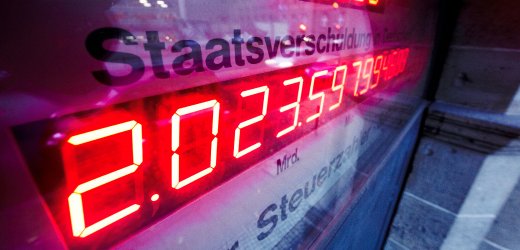
I could not help but share this. It’s a kind of “get your own house in order first ” message.
Flawed Role Model: Germany’s Finances Not as Sound as Believed – SPIEGEL ONLINE – News – International. (Image from Spiegel Online)
Gross Profit Margin – 2 of 6 in series on financial ratios
 Let’s now look at a second useful profitability ratio (see the previous post also). The Gross Profit Margin is a simple ratio which shows the percentage profit made on sales before deducting business expenses. It is calculated as follows:
Gross Profit x 100
Sales
The Gross Profit Margin will vary by business sector. For example, some businesses/sectors may make quite a large Gross Profit Margin on each, but have lots of overheads to pay e.g. the hospitality sector, like pubs and clubs. Other sectors may have a much lower figure. The Gross Profit Margin is usually closely watched by business owners in particular. If you remember that Gross Profit is Sales less Cost of Sales, and Cost of Sales in turn includes opening/closing inventories and purchases. With any abnormal changes in these figures the Gross Profit Margin will change.It might be something simple like an increased purchase price which has not yet been passed on to customers through a price increase, or it could be something more sinister like theft or stock or unrecorded sales.
As in the last post, let’s use the accounts of Diageo plc as an example. Based on their 2010 Income Statement (p.106 of the annual report), the Gross Profit Margin is;
5681 x 100 = 57.5%
9870
If you do the same figure for 2009 it’s 58.1%, which is in a similar range. Most business managers will know what their average Gross Profit Margin is. Although the Diageo figure seems high, there are lost of expenses to be paid out of the Gross Profit. You can also calculate a Net Profit Margin, which use the Net Profit before tax instead of Gross Profit in the above formula. This is not as useful as the business expenses tend to be more variable from year to year, although it is still widely used.
Return on capital employed – 1 of 6 in series on financial ratios
This is the first in a series of seven posts looking at some common ratios used to analyse financial statements.
The Return on Capital Employed (ROCE) ratio is defined as follows
Operating profit before interest x 100
Capital employed
Capital employed is the amount of money (capital) which is invested (employed) in a business. It can be calculated from the balance sheet (statement of financial position) as total equity plus non-current liabilities or total assets (current and non-current) less current liabilities.
There is a potential problem with the ROCE, which is what capital employed figure to use in the calculation. Normally, the year end figure is used, but might be higher than the capital employed at the beginning of the year. Some companies use a simple average figure, taking the average of the capital employed at the start and end of the year. Others use a rolling average, which might be best in a highly seasonal business. Whatever capital employed figure is used is a matter of judgement for the business. The important thing is to be consistent from one year to another with the calculations.
The ROCE tells us the return made on capital employed before any distributions of profits (e.g. taxation, dividends or interest). It can be compared to risk free returns like putting money on deposit. Normally anyone investing in a company would expect a reasonable return – approximately 15% – or more if the business is seen as risky.
As an example, you can get the 2010 annual report of Diageo ( owner of brand such as Guinness, Bailey’s and Bushmills) here. If I look at the income statement (p.106), I can see a profit before interest of £2,574m. Looking at the statement of financial position (balance sheet) (p.108), I can work out capital employed as total equity (£4,786m) plus borrowings from non-current liabilities (£8,177m) – I am keeping it simple and ignoring other non-current liabilities. This would give an ROCE as follows:
2,574 x 100
4,786+8,177
This equals 19.9%, which is quite a good return.
Using ratio analysis – an introduction
 Over the coming weeks, I’ll be writing a number of posts on using ratios to analyse financial statements. First though, let me give an outline of what ratio analysis is about.
If you want to compare the financial statements on a business from one year to another, or, compare two businesses you cannot use direct comparisons of figures. Here’s a simple example:
Company A has a profit in 2010 of €1m according to its income statement. Company B has a profit of €5m. Which company is the most profitable?
You’re probably thinking Company B, as its profit is five times that of Company A. However, this comparison is mis-leading. Now let’s assume Company A has capital of €2m, but Company B has capital of €25m. Now we can do a quick calculation as follows::
Return on investment Company A €1m/€2m = 50%
Return in investment Company B €5m/€25m – 20%.
Looking at the figures this way, we can see that Company A actually manages to make 2.5 times the return of Company B. This simple shows one problem of compare raw numbers, that is scale. However if we use financial ratios, which express figures in relative terms, we are able to make more direct comparisons between businesses. Over the next few weeks, I ‘ll be writing a number of posts detailing some individual ratios, so keep an eye out. By the way, if you already know how to do ratios and/or want your accounts analysed, here’s a great website where you can plug in your data for a free analysis.
Single entry accounting
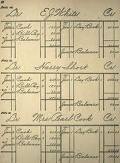 Elsewhere on my blog, I have written a post of the basics of the double entry accounting system. I had a comment on this post asking for some more information on single entry accounting – so here it is.
The basic idea of the double entry accounting system is that information is recorded twice. The system allows any business or organisation to get a picture of its incomes, expenditures, assets, liabilities and capital at any point in time. The double entry system is encoded into all accounting software and is the basis of all financial reports of businesses.
In the double entry system, any transaction is recorded from its source all the way through to the financial statements. For example, if a supplier is paid the following happens:
- the cheque is recorded in a “day book” – normally a cash/cheque payments book
- the suppliers balance is updated – in a personal ledger account
- the bank balance is updated
- by virtue of the previous two items, the assets (bank) and liabilities (trade payables) are updated
- the financial statements (income statement and balance sheet) are updated.
In a single entry system, some of the above is not done. The best way to explain this is by an example. When I worked in small accounting firm some years ago, most sole traders kept what were single entry records. At that time (the early 1990’s) most small sole traders kept records in a manual form – most had no computer anyway. The records would typically comprise a book where all purchases/expenses were recorded, a book where all payment in and out of the bank were recorded and a book where all sales were recorded. Records of things like assets – how much was owed by customers or records of vehicles for example – and liabilities – how much was owed to suppliers for example – were not kept. Using these books, it is only possible to prepare an income statement. Thus, as the double entry system is not applied in full, i.e. transactions are not recorded through ledgers in this example, then the single entry system applies.
It is not possible to say that the single entry system means that only certain specific records are kept. It’s probably better to think of the single entry system of accounting as one which does not fully use the principles of double entry, but does allow profit to be calculated. In the example above, what we did was to build up a list of the assets and liabilities, as well as the capital of the business, to allow us to prepare an income statement (profit and loss account) and statement of financial position (balance sheet).


 Martin's accounting blog