A brief (but incomplete) overview of current attempts to account for sustainability : guest post 2 by Dr Stephen Jollands

World map of countries by ecological footprint (Photo credit: Wikipedia)
Guest post #2 by Dr Stephen Jollands
In the previous post I defined sustainability as humanity not over-consuming the resources available to them and thereby irreversibly depleting the levels of natural capital while at the same time ensuring an equitable and fair distribution, both within the current generation as well as across all future generations, of the resources available. The aim of this post is to review some of the tools that claim to account for sustainability and question how well they stack up against this definition.
The obvious place to start is with the very tool we utilised to help explain sustainability, the ecological footprint. This calculates the biologically productive surface area required to sustain the thing of interest; whether that is the Earth, a specific country, an organisation, or even a specific project. Thus this tool is a very effective indicator of resource throughput. Despite being a very effective tool and adhering to a strong conception of sustainability it also has inherent weaknesses. Primarily amongst these is that it gives no indication over the health of the specific part of the ecosphere that the resources are being drawn from or the waste assimilated to. Therefore, it would appear that its effectiveness would be improved if set within a system of supporting sustainability focused management controls. We shall now turn to examining a few of these potential candidates.
The most obvious to examine next is the various types of external reporting that organisations do under the label of sustainability. There have been many differing frameworks developed in this respect including The Prince’s Accounting for Sustainability Project, the GRI and Integrated Reporting. These provide useful tools for businesses to organise their communications with their shareholders in regards to their social and environmental impacts. But this is also the source of critique for them as well. That is we have to question how far beyond public relations these reports go. The proponents of the various framework argue that the use of their frameworks provide stakeholders with an in depth analysis of the social and environmental impacts of an organisation. However, we need to question whether any rationale executive would allow the more controversial elements of their operations to be released in a public environment. When we reflect on the various accounting standards inability to provide clarity over economic affairs, as is evidenced by continual scandals, it is hardly surprising that these frameworks will probably fare no better. Further, none of these frameworks requires the organisation to report on the scale or scope of resources drawn from the ecosphere or waste assimilated back into it (i.e. an ecological footprint), which, as was explained last week, is at the heart of the issue of sustainability. This is not surprising as the accounting entity convention sets precise limits as to what is accounted for. For this very reason many commentators have expressed the view that the focus of the going concern concept should be elements of the ecosphere; such as rivers and forests; rather than the economic entity. If this was the case then economic organisations would be required to account for how they have helped maintained these ecosphere going concerns and in doing so been allowed to generate a profit.
The final example, although there is so many others we could review, which I will cover will be attempts to provide a cost to the social and environmental impacts of an organisation. The reason for selecting this as the final example is that Puma generated a large amount of publicity recently through publishing their first Environmental Profit and Loss account. Puma reports that their environmental impact for the key areas of greenhouse gas emissions, water use, land use, air pollution and waste, generated through their operations and supply chain is valued at €145 million in 2010. In the same year Puma reported that their Net Earnings were €202.2 million. This raises the question as to whether, given their Net Earnings were greater than their environmental impacts, they are therefore a truly sustainable organisation? The possibility of one of the world’s most notable examples of a consumerism driven, profit increasing through growth in sales organisations being sustainable seems to fly in the face of the evidence provided by the ecological footprint of our current over consumption of natural capital. This contradiction could be better explored had Puma provided more in depth details surrounding their calculations. However, given the involvement of consultants in this calculation, these details are unlikely to be ever released. The final question to ask is what concrete actions will this calculation result in?
In closing this quick overview, I would also question why Puma chose to put itself in a position for stakeholders to believe that it was the first organisation to provide an environmental profit and loss account when so many other notable and more transparent examples and experiments have occurred before? Or indeed we could question why Puma did not utilise one of these other tools given they are existing technologies and these tools have a close relationship with strong conceptions of sustainability? One notable example is full cost accounting (FCA). FCA as a concept integrates all potential costs and benefits, including those that relate to social and environmental, that organisations would normally consider as externalities, into the economic calculations they perform. The aim, therefore, is to ensure that a full set of broad considerations are taken into account during the decision making process. Of course here the emphasis is on decision making rather than releasing information publically and hence when this tool is used it generally does not make levels of publicity anywhere near those generated by Puma. Related to this is the sustainability assessment model (SAM), which is a tool developed in order to assist with the implementation of FCA. It is interesting that a colleague of mine focused his PhD research on assisting two local government bodies in implementing the use of SAM. While one of these were genuinely amazed at the extent of their impact and proceeded to take action accordingly, the other asked my colleague to leave when the SAM failed to deliver the “right” answer. That is when it provided visibility over the high levels of un-sustainability this plainly was unsettling to the managers involved. It is often understood by researchers in the area of accounting for sustainability that if the results do not make you feel incredibly uncomfortable you’re plainly not doing it right. Thus it is with interest that I introduce the last tool, the sustainable cost calculation (SCC). SCC is a way to measures how much it would cost an organisation to ensure that its operations left Earth at least no worse off at the end of the accounting period. The idea here is precisely to utilise the language of accounting to provide visibility over the true impacts of an organisation on natural capital and thereby the gapping chasm between our current operations and those that would be sustainable. It is interesting that the experiments with this tool have, beyond showing the un-sustainability of the organisations involved, highlighted how difficult it is to perform these calculations given the complexities and our relative dearth of knowledge as to how our ecosphere works.
The point I am trying to highlight in this post is that it is hard to be anything but cynical of many of the current attempts to account for sustainability as they do not link to the underlying issues and appear to be nothing more than attempts to generate publicity for the organisations involved.
These issues, covered in these two posts, around accounting and sustainability is the focus of my research and teaching efforts:
http://business-school.exeter.ac.uk/about/whoswho/index.php?web_id=Stephen_Jollands&tab=profile
I would therefore encourage anyone interested in furthering their knowledge in the area of sustainability and business to consider undertaking the innovative One Planet MBA, which I teach the accounting module in:
Understanding sustainability through an accounting lens – guest post 1 by Dr Stephen Jollands

Guest post #1 by Dr Stephen Jollands
It is very interesting that Martin’s story of the wasted portions of condiments on an airline flight is a very simple setting to think through the complexities of the issues we face around sustainability. But before we examine Martin’s example further we first need to think about what exactly sustainability is and more importantly what it is not. The first question to ask is what is it that we are trying to sustain? While this may appear as quite a straight forward question the answer is not as most expect. Sustainability is about sustaining humanity. Put simply we need the ecosphere in which we live but it does not need us. This leads to an interesting understanding of a nested system view of the world. That is the economy resides in our societies and our societies in turn reside within the ecosphere. Thus no ecosphere then no society and in turn no society then no economy.
With having worked out what it is that we are trying to sustain we still need to investigate a few more things before we can put forward a concrete definition. In order to do so I need to introduce the ecological footprint, which is an accounting tool that measures the biologically productive area required to sustain a given population. This has been calculated for the entire world with the formula being the total biologically productive surface area divided by the population of the world. The result of this calculation gives us what is referred to as each individual persons Earth share. That is it provides us an indication of the average amount of biologically productive surface that we each have available to us to provide all that we need and want as well as absorb all the waste we generate. Based on 1996 data we know that the Earth share per person was roughly the size of one football field and this is not even taking into account the space required for other species we share our planet with.
To draw an appropriate conclusion from the above calculation of the average Earth share we need to draw an analogy between the ecosphere and a business. With a business we invest capital from which we expect to earn some form of interest. It is this interest that we expect to use to pay for the things we need and want to live from. However, in some situations we understand that the interest we earn may not be enough to support what we want and therefore we may decide to withdraw some of the capital. This is fine as long as we understand that we are doing this (and hence the need for good accounting) and that we understand that if we keep removing capital then the business will eventually go bankrupt. So it is with the ecosphere. Interestingly environmentalism first started to gain traction with space exploration back in the 1960s when it became very clear from the photos taken from space that we live on a finite planet. Hence we can view the ecosphere as having a finite amount of natural capital from which we derive natural interest (usually through interactions with the energy produced by the sun). So in terms of our Earth share this requires deriving everything we need from the football field without depleting the existing resources on that football field. However, the ecological footprint calculation based on 1996 data showed that our resource throughput (measuring resources being taken from the ecosphere as well as waste that the ecosphere is required to re-assimilate) was 20% over the levels of natural interest. This has increased to 50% over the levels of natural interest based on 2008 data. Put simply it would take one and a half years to generate the resources we consume within a year and thus we are currently, and potentially irreversibly, depleting the levels of natural capital, the very thing we require to keep sustaining us.
We can therefore define sustainability as humanity not over-consuming the resources available to them and thereby irreversibly depleting the levels of natural capital while at the same time ensuring an equitable and fair distribution, both within the current generation as well as across all future generations, of the resources available. Hence returning to Martin’s analogy it is not only the amount of things we waste that we must be aware of but also the levels of resources we utilise. Hence, what would the ecological footprint of Martin’s flight look like or in other words what was the amount of biologically productive surface area required to sustain this flight?
In the next post (as Martin has been kind enough to allow me to post two) I will briefly overview experiments around accounting for sustainability. As part of this we will investigate how well the measure up against accounting for a world of finite resources. We will even see that successful examples like the ecological footprint have inherent weaknesses that require us to question whether business that are serious about engaging with these issues may actually require a series of sustainability focused controls to guide their efforts.
Finally in closing, the large part of what I have written above is based on one easy to read book that I would suggest is the perfect place to start for anyone wishing to learn more about these issues:
Wackernagel, M., Rees, W.E., 1996. Our ecological footprint : reducing human impact on the Earth. New Society Publishers, Gabriola Island, B.C.
Sustainability – an accountant’s brief thoughts

Sustainability is a huge issue for us all, not just for accountants. It is not my specific area of expertise, so over the next few weeks Dr Stephen Jollands, University of Exeter, will be writing a few guest posts on my blog. He will give you much more on sustainability actually means, but let me tell you what inspired me to ask Dr Jollands to write some stuff.
I was travelling back to Ireland on an Aer Lingus flight recently. It was an early flight, so I ordered a breakfast, some muffins and drinks for my kids and a tea and cake for my wife. So we started to eat. As I was eating my breakfast I realised I had a portion or marmalade I did not want to eat just then, and portions of salt/pepper I did not use, and some plastic cutlery and some milk. So I thought why not bring some of it home and use it for lunch – which I duly did. Then I started to think about how many similar items would be simply waste on the flight. And, thinking further, the effort (and cost) that goes into produced all these portions is simply wasted too. This, I thought is completely daft, and here it come, not sustainable. All sorts of questions came into my mind – why do we waste so much, why do the flight attendants not ask if you want certain portions, how much money is wasted in this one flight, what natural resources are wasted etc.
This simple everyday experience of mine shows the kind of issues that might be part of the broader sustainability field. I’ll leave it up to Dr Jollands to give you some more insights over the coming weeks.
Book going to press
 For a few years now myself and three co-authors have been working on a management accounting text book. Well, it’s finally gone to press today and will be available to buy in mid-January. See here for more.
A graphical look at business performance – Apple Retail stores
I have written quite a few posts on performance management of firms and how management accountants can use both financial and non-financial performance measures. One thing I have not thus far mentioned is the actual presentation of such information. I am not one of those people who uses the bells and whistles and products like Powerpoint, but I do appreciate that information presenting in a short, concise format. One way to do present information in a clear way is to use a graphical format. So, here I give a great example which a kind reader of my blog referred me to.
We all know how successful Apple Inc are. Now you can look into their annual reports and analysts presentations to get a view of how much money they make. But wouldn’t you love to know what Apple’s managers get to see on a regular basis in terms of the company performance. That is, what kind of performance measurements might they use and report on internally. Below you’ll see a great infographic on the performance of Apple’s retail stores. The data shown is self-explanatory, so I will not detail it here. When I first saw this graphic, I thought wow, wouldn’t this be a great internal performance measurement tool. Of course, we don’t know if Apple actually prepare something like this infographic, but it is certainly quite effective at getting the message across.

From onlinemba.com, see http://www.onlinemba.com/blog/apple-stores/
Accounting textbooks for free!
 A while ago, I promised some Facebook friends to review some text books from bookboon.com, a website where you can download free accounting books. Given my teaching and research area is management accounting I choose the text on Managerial and Cost Accounting. As I am an author myself, I have had quite a bit of experience in both writing and reviewing text books. So, I will try to be critical but fair. So here goes.
First, the authors seem well experienced and qualified to write the text, so that’s good. The writing style is pretty clear, although it uses US English (not an issue, just a minor comment). There are a total of 21 chapters (see below for the full contents), which covers the vast majority of the important management accounting topics. Now to be fair, I have not read all chapters word-for-word, but the text does seem to cover all topics pretty well at an introductory level. The authors use some graphics to explain stuff and give normally one example of a technique per chapter.
So far so good, but now for the downsides. I suppose it must be remembered this a free text. And even though it is free, it is actually quite good in terms of basic content. But it does fall down on what I as an author/lecturer would expect of a textbook. The pitfalls are in the area of exercises within the text (I know there is a separate book of exercises, which I have not reviewed yet) and basic things from a pedagogical nature – learning objectives, key terms, real life examples and so on. The content, as I said previously, is also at an introductory level and for the more advanced or specialist management accounting courses simply would not be enough – for example, there is little is no references to academic research. The downloaded file also has adverts, which I can live with, but some might find this annoying.
And finally, as I am a bit of a techie, I tried to download the book first on my Android Tablet (in July 2012). This did not work. I actually think this is a major pitfall. Why? Well, the book is absolutely fine for a non-specialist introductory course in management accounting or accounting. The audience for this book is less likely to be those in universities in developed countries (although I have nothing to verify this, but I am quite sure that it would be difficult to challenge the embedded text books), but more so developing countries. I have read in The Economist and several other sources that countries like India are considering given cheap (less than $100) tablets to students with texts pre-loaded. This text would be ideal for such students to introduce them to the basics of management accounting, with the more traditional texts helping them in more advanced areas.
So my overall opinion, a reasonable book for the fact that it is free. But, I would suggest it is most suitable for introductory courses and get it working on tablets.
Table of Contents of the book.
Part 1. Introduction to Managerial Accounting
1. Managerial Accounting
1.1 Professional Certifications in Management Accounting
2. Planning, Directing, and Controlling
2.1 Decision Making
2.2 Planning
2.3 Strategy
2.4 Positioning
2.5 Budgets
2.6 Directing
2.6.1 Costing
2.6.2 Production
2.6.3 Analysis
2.7 Controlling
2.7.1 Monitor
2.7.2 Scorecard
3. Cost Components
4. Product Versus Period Costs
4.1 Period Costs
5. Financial Statement Issues that are Unique to Manufacturers
5.1 Schedule of Raw Materials
5.2 Schedule of Work in Process
5.3 Schedule of Cost of Goods Manufactured
5.4 Schedule of Cost of Goods Sold
5.5 The Income Statement
5.6 Reviewing Cost of Flow Concepts for a Manufacturer
5.7 Critical Thinking About Cost Flow
Part 2. Cost-Volume-Profit and Business Scalability
6. Cost Behavior
6.1 The Nature of Costs
6.2 Variable Costs
6.3 Fixed Costs
6.4 Business Implications of the Fixed Cost Structure
6.5 Economies of Scale
6.6 Dialing in Your Business Model
7. Cost Behavior Analysis
7.1 Mixed Costs
7.2 High-Low Method
7.3 Method of Least Squares
7.4 Recap
8. Break-Even and Target Income
8.1 Contribution Margin
8.2 Contribution Margin: Aggregated, per Unit, or Ratio?
8.3 Graphic Presentation
8.4 Break-Even Calculations
8.5 Target Income Calculations
8.6 Critical Thinking About CVP
9. Sensitivity Analysis
9.1 Changing Fixed Costs
9.2 Changing Variable Costs
9.3 Blended Cost Shifts
9.4 Per Unit Revenue Shifts
9.5 Margin Beware
9.6 Margin Mathematics
10. CVP for Multiple Products
10.1 Multiple Products, Selling Costs, and Margin Management
11. Assumptions of CVP
Part 3. Job Costing and Modern Cost Management Systems
12. Basic Job Costing Concepts
12.1 Cost Data Determination
12.2 Conceptualizing Job Costing
12.3 Tracking Direct Labor
12.4 Tracking Direct Materials
12.5 Tracking Overhead
12.6 Job Cost Sheets
12.7 Expanding the Illustration
12.8 Another Expansion of the Illustration
12.9 Database Versus Spreadsheets
12.10 Moving Beyond the Conceptual Level
13. Information Systems for the Job Costing Environment
13.1 Direct Material
13.2 Direct Labor
13.3 Overhead and Cost Drivers
14. Tracking Job Cost Within the Corporate Ledger
14.1 Direct Material
14.2 Direct Labor
14.3 Applied Factory Overhead
14.4 Overview
14.5 Financial Statement Impact Scenarios
14.6 Cost Flows to the Financial Statements
14.7 Subsidiary Accounts
14.8 Global Trade and Transfers
15. Accounting for Actual and Applied Overhead
15.1 The Factory Overhead Account
15.2 Actual Overhead
15.3 The Balance of Factory Overhead
15.4 Underapplied Overhead
15.5 Overapplied Overhead
15.6 Influence of Gaap
16. Job Costing in Service, Not For-Profit, and Governmental Environments
16.1 The Service Sector
16.2 Capacity Utilization
17. Modern Management of Costs and Quality
17.1 Global Competition
17.2 Kaizen
17.3 Lean Manufacturing
17.4 Just in Time Inventory
17.5 Total Quality Management
17.6 Six Sigma
17.7 Reflection on Modern Cost Management
Part 4. Process Costing and Activity-Based Costing
18. Process Costing
18.1 Process Costing
18.2 Comparing Job and Process Costing
18.3 Introduction to the Cost of Production Report
18.4 Job Costing Flows
18.5 Process Costing Flows
18.6 Job Costing Flows on Job Cost Sheets
18.7 Process Costing Flows on Cost of Production Reports
19. Equivalent Units
19.1 Factors of Production
19.2 An Illustration of Equivalent Units Calculations
19.3 Cost per Equivalent Unit
20. Cost Allocation to Completed Units and Units in Process
20.1 Cost of Production Report
20.2 Journal Entries
20.3 Subsequent Departments
20.4 The Big Picture
20.5 FIFO Process Costing
21. Activity-Based Costing
21.1 Pros of ABC
21.2 Cons of ABC
21.3 The Reality of ABC
21.4 A Closer Look at ABC Concepts
21.5 The Steps to Implement ABC
21.6 A Simple Analogy
21.7 A Case Study in ABC
21.8 Study Process and Costs
21.9 Identify Activities
21.10 Determine Traceable Costs and Allocation Rates
21.11 Assign Costs to Activities
21.12 Determine Per-Activity Allocation Rates
21.13 Apply Costs to Cost Objects
21.14 What Just Happened?
21.15 A Great Tool, But not a Panacea
The importance of integrating cost and risk into decision making

Olympic Stadium at Stratford, London (Photo credit: Wikipedia)
It’s always great to find and example of where some simple planning and management accounting type work would have done quite a bit for a particular company or decision.
During the summer just past, a great example came to life. The London 2012 Olympics have come and gone, but I’m sure you can imagine such an event needed a lot on planning. Mostly, the games went fine. However, a few weeks before the games kicked off, a story broke about how G4S would not be able to deliver the number of security personnel they were contracted to provide. You can read more on the BBC website here, but in a nutshell G4S racked up losses of £30-50m. Why? Well it seems to boil down to not been able to recruit enough new staff and train them within the timeframe, and thus G4S have to cover the cost of army personnel provided instead. According to the BBC, the value of the contract was £280m and one would think there should be scope for profit in this. I wonder did anyone ever ask this key question: What if we cannot recruit enough staff? If this question was asked, then the next question might be: how much will it cost us if we cannot provide enough staff. These two relatively simple questions might have forced managers at G4S to think about the risk of this happening and the costs. This does not mean they would have not faced the problems and costs they did, but at least they may have been more prepared to deal with the problem as it happened – or better still planned better from the start.
Business recovery plans – a must, but a cost?
 This summer, customers of the Irish based Ulster Bank faced 3-4 weeks of problems getting paid and paying bills as the banks payment system failed. Customers had to queue to get cash from their accounts and go to other banks to pay bills- see my post 2 weeks ago about how some countries are limiting the amount that can be paid in cash; these limits would be too low to pay a mortgage in Ireland for most.
When I worked in a paper firm, I was involved in the decision to set up a simple business recovery plan. At the time, I was IT manager at a plant with about €30m turnover and 150 staff. The whole place was more or less run by a single system which managed sales orders, production planning and invoicing. We had a server onsite which done all this. This was not always so, so once I realised we were so dependent on a single piece of hardware/software I initiated a discussion with the plant management board to get a recovery plan in place. To keep it brief the cost of having a server available to us at any location within 4 hours was €7000 per annum. As part of the contract we could also do a free trial run once a year to test how long it would take to recover our systems. I always remember the production manager saying this was a cheap deal as if we had no systems we would basically loose wall customers within a week. And all we did was made cardboard boxes. Surely a bank should have a much better system in place. The cost does not really matter in the decision, it’s much more about the list revenue and lost customers.
The photo by the way comes from a friends Facebook page .
A story of change – in a Dire Straits song!

Telegraph Road (Photo credit: Wikipedia)
As part of my research work, I like to study how organisations and their management accounting practices change over time. And, I particularly like to frame my research as a story of change. I like the stories of how things change (or don’t) as these stories quite often get to the bottom of things quickly, or summarise everything that happened in a brief and concise way. Of course, when I am in research mode, there are often many thoughts flying around in my head. Recently, I was doing some work on how technology has changed the role of management accountants. I put on an old CD I had from Dire Straits (Love over Gold, 1982) and as I was listening to the first track, I realised, hang on this is a story of change. The song is Telegraph Road, here are the lyrics:
Telegraph Road lyrics
Songwriters: Knopfler, M;
Telegraph Road is nowadays US Route 24 in Michigan. The song tells the story of how what was once a dirt track, became a telegraph line route, and ultimately a highway with all the associated development. When I actually realised the story this song tells, I started to think, okay it was only written 30 years ago, but look how much has changed in even that short time. I thing it’s time Mark Knopfler wrote a new version! By the way, if you don’t know the song, it’s about 15 mins long and has some really cool guitar pieces.
That’ll be €1500. Can I pay in cash? Sorry sir, no.

Cash (Photo credit: BlatantWorld.com)
During the summer, I was on holiday in Sud Tirol (it’s Italy, but the culture is more Austrian). We were led to our room, shown around and then asked how will we pay when we leave. The reason for the question was that a law introduced as part of Italy’s austerity measured prevents cash payments in excess of €1,000. Now, I never carry much cash, but I was thinking what an odd law. Is it to stop tax evasion? Apparently so. I read around a bit and found that Spain also has a similar law. And apparently the Italian’s actually wanted to implement the law with a lower amount.
Now, as an accountant I completely understand the issue of tax evasion, cash deals and the black economy. But where is this headed? When I done Business Studies in secondary school, I remember being thought the concept of legal tender. Pre the Euro, the Irish Punt notes were legal tender for settlement of any amount and apparently this may be still so (see here re Euro legal tender). If cash cannot be used at all, what happens when the banking systems fail? Don’t anybody tell me they can’t/won’t; see my post soon on Ulster Banks’ systems failures this summer. And if I were to get a bit political, are we perhaps in the future to trust the very banks that brought the world a financial crisis to manage all transactions. Yeah, I’m being a bit over the top perhaps, but I completely disagree with strict cash controls. There must be other ways to make businesses more tax compliant e.g. focused audits, serious penalties.
Algebra in management accounting
Many years ago when I work in an accounting practice, we had a client who kept no wage records for a while. All we had was the net pay of each employee. We needed to get the gross pay, as well as the tax and social insurance, to do proper accounts and sort out the taxes owed. Back then we had no software to do this. So what did we do?
Well, we used algebra. We knew tax and social insurance rates and these were all a percentage of gross pay. We ended up with something like this :
G – 0.20G – 0.07G= Net
So we solved for G. It’s a bit more complicated today as back then the social insurance was a flat rate – and what I show above is only illustrative. What made me think about this past experience was a CIMA post about how we still use algebra in many management accounting tasks today – read more here.
Another cost-volume-profit example – supersize portions

In June this year, I was watching a programme called “The men who made us eat more” on BBC. It told the story of how super-size portions and combo-meals came about in fast-food chains like McDonalds, Burger King and other similar ones. One of the participants mentioned how the profit margin on the extra portion (or the additional products in a combo-meal) is huge. He explained why, and the explanation is again an application of understanding costs and volumes (or CVP).
Let’s take the example of a portion of french fries. If we think about the cost of a regular size portion first. The variable cost would be mainly the ingredients, i.e. potato, packaging cost and maybe energy costs. There would be quite a few fixed costs – all the costs associated with the running of the restaurant, including staff costs (they need to be paid even if there are no food orders). Now if we make the portion size larger, the additional cost will be very small – some extra ingredients, a slightly bigger package and that’s about it. But, the price increase is proportionately much higher than the cost increase usually. Thus, by encouraging a customer to super-size or buy a combo-deal, profits can rise at a much faster rate than the corresponding increase in costs.
A cost-volume-profit-example – a child care facility

The BRiC charging (Photo credit: fe2cruz)
In this and the next post, I will give you two simple examples of cost-volume-profit (CVP) analysis in action. CVP analysis, or sometimes it’s called break-even analysis, is a useful decision tool for any business to understand effects of cost changes or sales volume changes on underlying profit.
The first example relates to small Montessori school run by someone I know. In Ireland, preschool children get some free childcare and the owner of the facility gets paid €250 per child per month. The Montessori in question is insured to have 11 children with one staff member, but beyond this a second employee is needed. The full capacity of the school is 15 children and the extra employee costs €620 per month. This is a fixed cost. If you do some quick calculations, you can see that it takes 3 children (€ 750) to cover the employee cost. Thus, the owner needs to have 11 or less children with one employee, or 14 or more with two employees. So you can see how the fixed cost increase affects the volume needed to keep profit levels stable. There may of course be some additional variable costs with more children, but I am ignoring these to keep the example simple.
Do accountants have a sense of humour
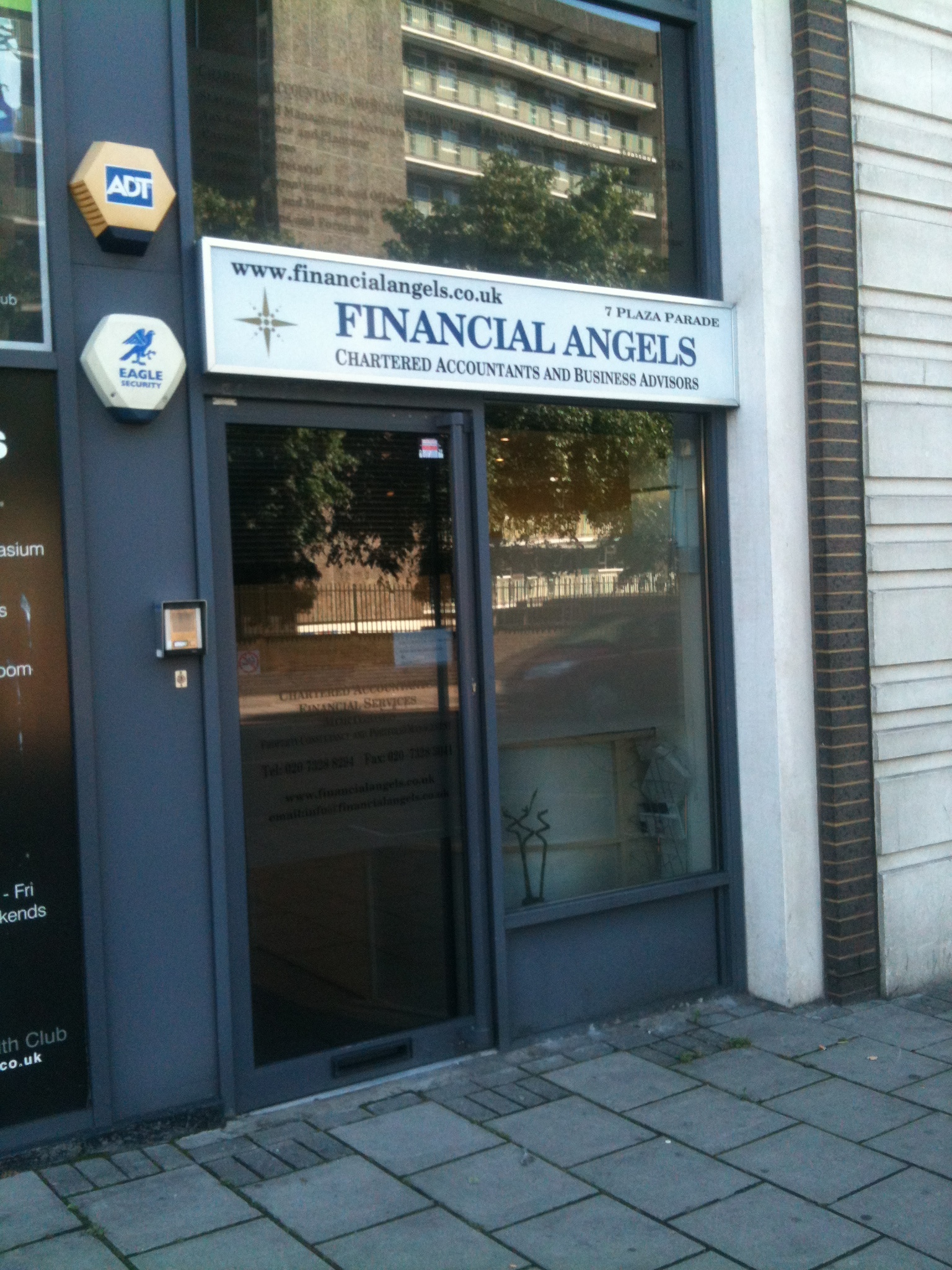
Last month, I asked were accountants sexy. I walked by a chartered accountants practice (see the pic) in Maida Vale (London) recently and decided at least some accountants must have a sense of humour – despite the stereotype. If the owner is called Charlie ( as in Charlie’s Angels ) wouldn’t that be just great. Or maybe it should read financial angles?.
An innovative approach to pricing – life cover at a fixed price

(Photo credit: aWee)
Any business needs to understand its costs to be able to set a price – at least that’s one of the key things I would tell my students when I teach management accounting. Of course, another key point to mention is that sometimes the price will be dictated by the market the business is in.
If you read any of my posts, you know I like to give examples of topics I am interested in or teach. The Irish economy is not doing the best still, so I think it would be fair to say that consumers are price conscious and looking for a good deal. This means the market is leading the price to an extent. So what can you do as a business in this case. One thing is to try to reduce costs so that you make a profit at the market price. Another option is to change the product/service you offer – and I cam across a great example of this recently.
A new website emerged called www.10eurolifecover.ie. Normally, if you want to buy life assurance, you go to a broker/website and give the amount of cover you want – say €100,000. Based on things like your age and health, you get a price for the amount of life assurance cover requested. What this website does is fixes the price at €10 per month, and then tells you how much cover you can get for that amount. The idea seems like a great way to price in a market where consumers are probably more concerned with what they can afford than with the amount of cover they get.


 Martin's accounting blog