Strategic scorecard – a useful tool from CIMA
A short post today – holiday season.
You may know about tools like the Balanced Scorecard which are used by many organisations to monitor performance from financial and non-financial aspects. Here is another type of scorecard, developed by CIMA, which may be quite useful to managers and boards of directors when trying to formulate a strategy. The tool prompts managers to consider the business model of the organisation and reflect in the external environment, risks/opportunities, implementation and options available. Have a read of a document prepared by CIMA/CGMA by clicking this link .CGMA Strategic scorecard_T1 FINAL . This document explains the scorecard quite well.
Related articles
- The Vision and Strategy of Balanced Scorecard (unicomseminarsltd.wordpress.com)
- 5 Valuable CGMA Resources for Business People (aicpa.org)
Technology and new business-models – taxi despatching

I always like to read about new ways of doing business, or new technology can change existing businesses. You may have seen how various new technologies have helped the taxi-sector. For example, in London you can send a text from a smart phone requesting a taxi and your position can be pin-pointed by the GPS within the phone. Now let’s take this a step further and add an app to the smart phone and then the way the whole taxi industry operates could change? How you might ask. This post from the Babbage blog on Economist.com explains why. In several European countries, taxi users can now use apps to request a taxi. The apps ping the nearest cab, and once a customer accepts a particular offer they can track the taxi progress. All the taxi needs is the same app effectively. This changes the way business is done in the sector as the taxi dispatcher is effectively cut out of the picture. I don’t know about other cities, but I can tell you that a taxi dispatcher would charge its drivers in the order of €200 per week or more in Dublin. For this, the driver (who suffers all risks of owning and paying for the cab) gets fares directed to them usually through some system installed in their cab. Now, if I were a self-employed taxi-driver you could cut out that cost by using an app, I’d be giving it some serious consideration. Of course, as the post notes, taxi dispatchers are not seating idle and a race is on between taxi dispatchers and app developers!
Prices, costs and business failure – a few examples from Ireland
 In recent years hard economic times have hit Ireland and other developed economies. According to an article in the Guardian over a year ago now, the number of businesses failing in Ireland was 5 times that in 2010 – a huge chunk of these being construction firms. I hope have some sympathy for many of the hard-working business people who perhaps have seen a lot of their money lost. But, there is a part of me (probably the accountant) who is not at all surprised at so many Irish businesses failing. Why? Am I getting more cranky (Yes, of course I am)? Well, let me give me a few of many examples I have encountered over the last few years which seem to show poor decision making. But before I do, I should say that many Irish businesses who started during the “boom” years were already doomed to failure due to a pretty high cost structure e.g. rent.
The first example dates back about 2-3 years now. In the area where I live, we collect an amount of money each year to help maintain the common greens in the area. The landscaping business doing the work was charging about €7000 per annum and a new landscaper offered to do the work for €4500. Both were sole traders with similar costs (as best I could guess at least). The original landscaper said he could not do the work for that price and would not even reduce his current price, so the business was lost. Now I don’t know what either landscaper was thinking, but it fairly obvious that the original landscaper was living in the boom years in my opinion. He could have reduced his price by some amount, say €1500. This would mean his net contribution would fall by €1500, but instead he lost €7500 – a bad decision.
The second example relates to a really nice bakery I visited recently in a more affluent part of Dublin. Yes, the price is of course going to be affected by the area, but having paid €4.60 (ok my wife bought it) for a loaf of sour-dough bread I thought this is not a sustainable business. Even people in affluent areas cut back on spending in lean times. The point here is that I thought the price was more reflective of a time four or five years ago.
The third example relates to an employee within a business. The employee left as €900 per week income was not “enough” for him. The job involved manual labour and some skills, but nothing that could not be replaced readily. The right decision was made by the business owner, which was adiós amigo. The employees decision was rather silly though, as the immediate income from social benefits would be way lower.
These three examples to some extent portray how high prices may have become engrained in the minds of business people following many years of the Celtic Tiger. I like to study how practices have become accepted/taken-for-granted, or institutionalised. When practices become institutionalised, there are hard to change. So I wonder are businesses in Ireland failing because some business owners cannot make the change in their minds to reduce costs or prices? In other words, they are finding it hard to break the institutionalised practices associated with past more affluent times. I know there are many other factors, but based on my experience, at least some business failures in Ireland result from a failure to change mindset.
Costs, volume and profits – an example from the taxi sector.
 Back in the late 1980’s and early 1990’s when I was young enough to be frequenting pubs/clubs around Dublin city centre, one of the biggest problems was getting a taxi home. At that time, the number of taxi’s was regulated, with (if my memory serves me right) about 1,200 taxis for a city of about a million people. The effect of this was a market for taxi licences. Many taxi drivers depended on this for their pensions, with a licence yielding IR£ 60,000- 80,000 (about €75-100,000). Now, Dublin has a de-regulated taxi system and has more taxi’s than New York (see here for a taxi-eye view). The price structure is also heavily regulated, and a common price structure applies to all fares throughout Ireland. And, of course, a taxi licence is nowadays worth very little.
Why and I writing about taxis you might ask? Well, while on holiday near Leipzig (Germany) over the Christmas period, I read an article in a local paper (Doeblener Allgemeine Zeitung, Dec 27, p.7) about how a taxi firm is dealing with rising costs. The taxi sector in Leipzig is de-regulated too as far as I know, and competition is strong. The article interviewed a manager from a local taxi firm, 4884. Rising fuel prices seem to be a major problem for the firm – and indeed for Dublin taxis too. However, as I read on I realised that Dublin and Leipzig taxi firms/owners, while having a lot in common (over/high supply, rising costs, relatively declining static/declining market), the Leipzig firm 4884 seemed to adapt well to become attract and keep customers. For example, in June 2011, 4884 launched an app to order taxis (using GPS). They also (according to the Dec. article) regularly train and annually update their drivers on things like customer service skills – it is even written into the drivers’ contracts. In Dublin too, there is at least one taxi app I am aware of (Irish Taxi), but I am not sure it is as advanced in terms of GPS. London too has a GPS service available for ordering a taxi.
So what’s the management accounting point? Well, if we compare the market for taxis now to compared to the past (in most countries, but certainly Ireland), there is a far greater supply (volume). The cost structure is typically beyond the control of all taxis. Most costs are fixed – radio rental, advertising, taxi licence fee, insurance – with fuel being the main variable cost. With more taxis in supply, a static market, fixed prices and little ability to control costs, then the ability to earn a profit is likely to be more difficult now. So what can be done by taxi owners/firms to sustain profit. Most have joined forces to create firms/co-ops, which can share some costs (e.g. central booking). Other options are to increase customer retention through things like apps and improved customer service. At the end of the day, with so many costs beyond their control, taxi drivers/firms can only but be adaptive to stay in business. If they are not, they can (and do) go out of business.
How business models can (climate) change
 Following on from my last post on what is a business model, here I recount two articles I had saved from last year on how climate change can force businesses to change – and in some cases even change the business model.
The first article comes from Time (Sep 04, 2011). It recounts how Spanish winemaker Torres are increasingly moving their crops to higher, cooler areas of Spain. Due to global warming, the hotter climate means sweeter fruit and earlier ripening. At the same time, the early ripening of the fruit is offset by the fact that the seeds and skin (which give flavour) are not ripe. Thus, as a possible solution, vines are being planted at a higher, cooler altitude in an effort to offset the warming experienced in traditional regions.
The second related article comes from The Economist (Sep 10, 2011, online). In this articles, you can read how English wine is being produced in increased volumes and better quality – with locally grown grapes. Again, it is climate change – bringing warmer climes to Southern England – meaning that more traditional grape varieties can be grown in England as opposed to the typically acidic German varieties. The result has been a product of increasing quality, and a tendency to produce higher margin sparkling wines – something that was not so easily done before. Thus, the business model of English vineyards may have changed from one where imported “grape juice” was added to make local wine, to one where high quality, high-margin product is the norm.
What is a “business model”?
 Often, when I teach about types and classifications of cost in my management accounting classes, I use the term business model. For example, I might say “whether a cost is fixed or variable, can depend on the particular business model”. But, I am assuming the term business model is well understood. Perhaps it is not, and even when I asked myself what the term means, I had to do a bit of thinking. So here’s a simplified explanation.
An article in the Harvard Business Review from 2002 describes a business model as “the story which explains how an enterprise works”. This is a deceptively simple definition, but it does capture exactly what a business model is. If I were to ask you what are the essential elements of a story such a Cinderella or The Frog Prince, you would probably says things like characters, what the characters do, when the characters do things, and of course the (moss likely) happy outcome. Using the story analogy, a business needs to ask itself, what is that we do, who are our customers, how much does what we do cost, and will we make money (the happy outcome!). In other words, “what’s our story” in an economic sense (Read the full HBR article for more detail and examples).
Nowadays, business models have become a bit blurred though. For example, there are so many web-based “businesses” out there who, to be honest, do not immediately show a story which makes economic sense. For example, we now know how Google and Facebook can make money on a business model which changed the advertising world. But, what about for example Twitter or off-shoots like paper.li. I love the latter, as I can bundle all the twitter users I follow into a daily newspaper, but how can this make money. I am guessing they will introduce advertising, but has this business model already been over-cooked?
I hope this helps you understand what a business model is. To conclude, I suppose the story of what it is a business does has to be infused with accounting concepts. For example, there is not point being the world’s best at something, but costing a fortune to do it.
The balanced scorecard – making it public??
 If you have studied management accounting, you’ll have heard the term balanced scorecard. A scorecard is a report of key performance indicators – both financial and non-financial – of an organisation. Many organisations not only use some form of scorecard, but also publish it on their websites or display it in a public place within the organisation.
Take for example London’s Heathrow airport. As you can see on the graphic here, they produce a monthly report (see here) which looks at many areas of performance for each terminal. Like many firms, they use a colour-coded system, where red usually means a target has not been achieved – for example, seat availability seems to be an issue in Terminal 3 on the example here.
This scorecard is a great example – if you click the link above you’ll see it has much more than I show here. I have only one negative thing to say about it – and this falls from a recent trip through Terminal 1. I discovered this wonderful colourful (and positive) scorecard on my way to the gents – on the corridor into the toilets to be specific. Surely there’s a better place to display results? Or maybe it does not matter as only us management accountants take any notice of such things.
What is a manufacturing execution system (MES)?
 In my former life as a management accountant in industry, I worked in a number of projects which automated either production itself, production planning, or both. A term I was use to at that time was Manufacturing Execution System or MES. So what is an MES and why should management accountants know about them? Well, an advertisement in the November 2011 edition of Financial Management (CIMA’s monthly magazine) prompted me to write about it. AN MES is a system which basically communicates from sales through to the actual making of a product or a the start of a process. An MES may include a sales order module, which would gather customer orders and pass these on to planning modules or directly to process equipment. Typically, an MES will improve a production process as production is scheduled more efficiently and can be monitored for back-logs and jams. Also, an MES will also typically integrate with an ERP system, which means that a businesses systems are fully integrated. According to the advert in the CIMA magazine, Carlsberg (yes the brewer) improved performance in several areas once it used an MES; sales increased bu 1.5%, gross margins up 1.2%, downtime decreased from 28% to 13%, material loss decreased by 1%. All of these translate into increased profitability, which of course is of interest to managers and management accountants. I would argue that understanding how an MES works in a business is a vital piece of kit for any management accountant, particularly if such performance improvements can be made. If you are interested in reading some more, here are two websites I am familiar with which offer MES systems; Kiwiplan and ATS.
Know your costs = know your business operations
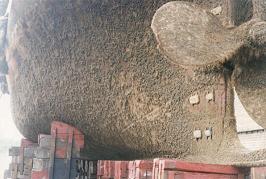 When I teach management accounting to students, I am always looking for examples to relate what I say to a real life example. So, a while back I was trying to think of an example which might convey the fact that management accountants are not (or should not be) just bean-counters. The role of a management accountant/business analyst/business partner is much more than just accounting. My experience tells me that a good management accountant (and manager too) get’s their hand dirty i.e. knows a good deal about the business in terms of how things are made/delivered. If you don’t know the business, then how for example can you actually undertake a cost-saving exercise. So now for the example. I read a blog post on The Economist website a while back. The title caught my eye actually “Reducing the barnacle bill”. The article post mentions how barnacles attached to a ships hull below the waterline can increase drag so much that fuel costs increase 40%. The post then mentions several chemical solutions currently available and some being worked on. The point from this example is that should a management accountant at a shipping company know such detail of operations. I’d like to suggest, yes they should. Only such detailed knowledge of the operations would highlight the need to control the “barnacle cost”. I’m sure there are many more similar examples out there.
Liquidity ratios – 3 in series of 6 on financial ratios
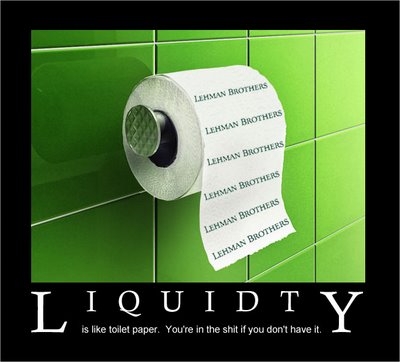 Your have probably heard the terms liquidity and solvency. Liquidity refers to the ability to convert assets to cash. For example, inventories may be more liquid (i.e. can be sold for cash quicker) than a non-current asset like a building. Solvency refers to the ability of a business to pay debts as they fall due. Liquidity and solvency are closely related concepts. If assets cannot be converted to cash, debts like loan repayments or payments to suppliers may not be met. To be unable to pay debts as they fall due means a business is insolvent, which can mean business failure. There are two useful ratios to help us assess the state of a businesses’ liquidity – the current ratio and the quick (or acid-test) ratio. The current ratio is:
Current ratio: Current assets
Current liabilities
The basic idea the current ratio is that for a company to be able to pay its debts as they fall due, current assets should cover current liabilities by a multiple. Generally a current ratio of at least 2:1 is good. This means that current assets are twice current liabilities. So, even if some stock could not be sold or some trade receivables not paid, current liabilities would still be covered for payment. However, the 2:1 figure is only a guideline. If we calculate the current ratio for Diageo plc for 2010 (from the statement of financial position on p. 108), we get:
6,952/3,944 = 1.76 : 1.
Although not 2:1, it should not be a major problem. Think about the type of business and the inventory it has – can you imagine Diageo having difficulty selling it’s stock of Guinness for example.
The Liquid ratio, and it is calculated as follows:
Liquid ratio: Current assets – inventory
Current liabilities
This ratio is also called the Quick ratio or the Acid Test ratio. It is very similar to the Current ratio, except that inventory is deducted from current assets. This is because inventory is typically regarded as being the least liquid current asset. Often the yardstick for the Liquidity ratio is 1:1, but this depends on the type of business. For example, large retailers may have relatively low stock and almost no receivables, which will skew the figure well below zero if we assume suppliers give credit.
If we calculate the current ratio for Diageo plc for 2010 (from the statement of financial position on p. 108), we get:
6,952-3,281/3,944 = 1.12 : 1
The Current and Liquid ratios serve as useful indicators of the liquidity/solvency or a business. However, as with other ratios, the trend over time is important. Any business may face short-term liquidity problems which could skew either of the above ratios. Short-term liquidity problems may arise if, for example, customers are slow to pay or inventories can’t be sold. Such problems are normally overcome through the management of inventory and receivables, which I’ll deal with in the next post.
(Image above from withfriendship.com)
Single entry accounting
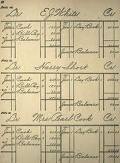 Elsewhere on my blog, I have written a post of the basics of the double entry accounting system. I had a comment on this post asking for some more information on single entry accounting – so here it is.
The basic idea of the double entry accounting system is that information is recorded twice. The system allows any business or organisation to get a picture of its incomes, expenditures, assets, liabilities and capital at any point in time. The double entry system is encoded into all accounting software and is the basis of all financial reports of businesses.
In the double entry system, any transaction is recorded from its source all the way through to the financial statements. For example, if a supplier is paid the following happens:
- the cheque is recorded in a “day book” – normally a cash/cheque payments book
- the suppliers balance is updated – in a personal ledger account
- the bank balance is updated
- by virtue of the previous two items, the assets (bank) and liabilities (trade payables) are updated
- the financial statements (income statement and balance sheet) are updated.
In a single entry system, some of the above is not done. The best way to explain this is by an example. When I worked in small accounting firm some years ago, most sole traders kept what were single entry records. At that time (the early 1990’s) most small sole traders kept records in a manual form – most had no computer anyway. The records would typically comprise a book where all purchases/expenses were recorded, a book where all payment in and out of the bank were recorded and a book where all sales were recorded. Records of things like assets – how much was owed by customers or records of vehicles for example – and liabilities – how much was owed to suppliers for example – were not kept. Using these books, it is only possible to prepare an income statement. Thus, as the double entry system is not applied in full, i.e. transactions are not recorded through ledgers in this example, then the single entry system applies.
It is not possible to say that the single entry system means that only certain specific records are kept. It’s probably better to think of the single entry system of accounting as one which does not fully use the principles of double entry, but does allow profit to be calculated. In the example above, what we did was to build up a list of the assets and liabilities, as well as the capital of the business, to allow us to prepare an income statement (profit and loss account) and statement of financial position (balance sheet).
Knowing the cost structure of your business
 When a business or manager refers to their cost structure, they are talking about the composition of the costs of the business. Typically, costs are either fixed or variable. Fixed costs stay the same regardless of what happens e.g. how much is sold. Variable costs increase or decrease in line with business activity e.g. the more product sold, the higher the purchase or manufacturing costs. It goes without say that a business manager needs to have a full knowledge of how their business responds to changes in output and how the business itself actually operates. I read a great example of this back in June this year in the Guardian. The article mentioned how Ryanair had started talks with a Chinese aircraft manufacturer (Commercial Aircraft Corporation of China) in an effort to build a cheaper alternative to its current aircraft, the Boeing 737. What struck me was not the cheaper cost of the aircraft, but attempts by Ryanair to design the aircraft with exactly 200 seats – about 15 more than the Boeing. Why 200 seats? Simple answer actually, anything above 200 seats and one additional crew member is needed. Keeping the seats at 200 means that each extra seat could yield anaverage profit of about €40 per seat. Now that’s knowing your cost structure and operations in detail
Business lessons from Apple
Here is a really good article from Forbes on what other businesses could learn from the legacy of Steve Jobs – and to the man’s testament this is posted from an iPhone at my kitchen table. Read the piece here
Data theft cost Sony as much as earthquake
 I remember some meetings in my past life, when I had to justify expenditure on information to my boss – a chartered accountant with not too much in-depth knowledge of IT. This was in the late 1990’s. Of course, technology has moved on dramatically since then, but I’d be fairly sure that any accountants today would still be questioning the costs if IT/IS infrastructure and software. And today, it is not only the cost of the equipment that needs to be considered, it is the cost of the information held by companies. This is a very difficult thing to cost, but the problems at Sony in recent months gives some idea. In May 2011, the Los Angeles Times wrote about the cost of the first hacker attack on Sony (there was another one in June 2011). The article reports a cost of $171 million, which is believe it or not is nearly as much as the impact of the Japanese earthquake/tsunami earlier that year on the companies profit ($208m). I’m not sure what the hackers did to break in to Sony’s systems, but I bet it would have cost a lot less than $171 million to make their systems hacker-proof. And I’d also bet the hacker’s would be happy to repair the damage for a lot less than $171 million too!
What organisations need to prepare acccounts?
 One of the first few things that I would typically teach students that are new to accounting is that all most organisations need to control what they do in some way. Control can be of a financial nature, i.e. preparing financial statements, and this is something we typically associate with “for-profit” organisations.
However, many not-for-profit organisations also need to keep accounting records and have intricate financial/accounting based control systems. For example, a charity might like to know its sources of funding and keep a detailed trace on all expenditures. Similarly, any sovereign state needs to keep track of its income (usually taxes) and its outgoings e.g. expenditure on schools, roads and social welfare. A few months ago, a number of articles on the annual financial report of the Vatican State caught my eye (see here and here). In brief, the Vatican State had a surplus of about €10 million for 2010. The Vatican is a peculiar organisation in that it is somewhere between a Church and a State. I can’t find the annual report on-line, but as far as know one main source of income for the Vatican is the traditional “Peter’s Pence” collection held annually at all catholic churches across the world. The press releases surrounding the 2010 Vatican financial report seems to suggest that deliberate efforts were made compared to previous years to control costs and keep within budget. So, even the Vatican has a use for accounting information – both financial statements of some kind, and management accounting. By the way, if you do find the annual reports of the Vatican on-line, do get in touch


 Martin's accounting blog