links for 2010-03-29
-
I found this new website which aims to educate the general public about personal finances. It provides a useful A-Z guide, some online budgeting tools and even a teaching manual. I've also seen some useful tips there for managing personal/family finances. The site is brought to you by the Educational Building Society and the National Adult Literacy Association.
links for 2010-03-27
-
Good advice for business poeple
-
Good read for self-employed.
links for 2010-03-26
-
A nice pod cast of interest to small business
-
VAT for the US – would be be as complex as most European countries
Keeping fraud at bay.
 Elizabeth Wasserman, writing for Inc. magazine provides some useful tips on keeping fraud out of your business. She reports that a 2009 survey of 3,000 small, medium and large US businesses revealed that almost 90% had experienced fraud of some kind.
Locals allocate money – an example of Zero-base budgeting?
 Michael Portillo (a British MP) currently hosts a BBC documentary called “Power to the People”, which looks at ways more democracy can empower people . In a recent episode (March 20th, BBC2, 21:00), Portillo describes what is in effect an example of Zero-base budgeting (ZBB). What is ZBB? ZBB is often associated the the public sector. It is a technique used to create budgets which starts off with a figure of zero,and is often cited as being useful for discretionary type expenditure. From this, each item of expenditure must be analysed, discussed and ranked. Then, out of a limited pool of money, the highest ranking items get priority until all funds are used up. Sounds simple, but a lot of work is needed to discuss and rank expenditure items.
In the BBC documentary, Portillo visits a “You Decide” session organised by the local council in Tower Hamlets, London. At this session, local people decide what is to be done with £250,000 of council money. They are given fully costed options under headings like health-care, the elderly and local policing. The options in each category can be debated for a time, then all present “vote” for their preferred option using an electronic voting system. This continues until all funds are used up. What in effect is happened here is that the local residents are undertaking the ranking and deciding part of ZBB. This, it could be argued, saves the council a bit of time and allocates resources to where residents want them most. Of course £250,000 is a long way off a council’s full budget, but this is ZBB in action.
By the way, if you’re in the UK you can get this programme on BBC IPlayer.
Carbon accounting software
According to expert blogger Tracy de Morsella, the market for software to help global firms with carbon accounting has increased 84% in 2009 to a total global value of almost $400m. Carbon accounting means that firms account for (or keep track of) the amounts of CO2 they emit. Firms are under more pressure to be greener and reduce CO2 emissions. Pressure  is not only coming from regulators, but from customers too. On top of this, smaller firms are starting to feel the pressure as suppliers to the larger firms. Predictions are, the market for carbon accounting software will continue to grow and the big players like SAP are already there. Read the full from De Morsella here.
Some tips on writing your dissertation

Writing a dissertation or thesis is no mean feat. Come to think of, writing a decent business report is no easy task either. We all have different writing styles, so no matter what we write it will to an extent be reflective of our own style of writing. Your style may have influences from what you’ve read in the past, so be sure to read some good stuff.
No matter the style, there a few key things any dissertation or thesis must have. The most obvious is some clear structure. Next is clear language. Both quite obvious you might say, but sometime we get carried away and forget about the simple stuff. Now, to some tips and guidelines for writing a goods thesis/dissertation. We’ll I’m not going to note them all here – you do the work – remember a thesis/dissertation is about doing research after all.
Here are some useful links:
Newcastle University tips and guide
A guide by Levine, Michigan State University
Writing an abstract – a guide from Leeds University
A nice dissertation guide from Purdue University
Happy writing (and reading!)
Fooling accounting
Jennifer Hughes writes an interesting piece in the Financial Times (London) which reminds us of one of the basic concepts of the accounting world – “true and fair view”. The recent investigation into Lehman Brothers revealed how $49billion had been “moved off” the balance sheet in 2008, a move which was supported by the now defunct banks’s directors. And we don’t have to look as far away as the US – what about Anglo Irish Bank moving (was it) €6billion in to and out of its deposits at year end to make things look nice. And, as Hughes says, this kind of thing has happened before – she cites the case of London & County Securities back in 1973, who were up to the same sort of shenannigans as Anglo Irish.
Can we stop this kind of tom-foolery in accounting? Maybe not completely, but as Hughes says, a global set of accounting standards might help. Let’s wait and see.
The contradictions of finance – micro-finance in developing economies
 I read this piece (http://bit.ly/aAKjUL) on The Economist” website recently. Some words from the piece struck me immediately. The words are “For all this to happen, banking regulations in many countries need to become more flexible”. Okay, if you read the full piece you’ll see I am paraphrasing to suit myself. BUT, what a contradiction. The developed world is in the throes of a severe economic depression because banking regulation was “light-touch”.
As this piece reports, micro-finance institutions are essential for farmers and small enterprise in developing countries. The majority of these institutions (approx 70%) only offer credit, but not savings products. Encouraging “micro-saving” may not be an easy task, but all banks need liquidity to survive and some should come from locally-held savings. So, on the face of it, deregulating to allow more micro-finance institutions (MFI) to take savings seems like a good idea. Let’s hope the lessons of scant regulation has been noticed by MFI’s. Or maybe it’s time for someone like the IMF to take a “real” global view of regulating the banking sector.
Tips for writing – some guidance from Tim Harford
Just a quick post for anyone in the throes of writing a dissertation or thesis for college- although some of you writing a large business report may also find this useful.
The biggest problem a writer often faces is to actually write. There are so many other things you can do during your day – your (real) job, family, socialising etc. Of course, there are a few things you can do. My biggest tip is to follow some advice given to me 20 years ago now while in secondary school ” a little and often”. Have a look at what Tim Harford – author of the Undercover Economist – says on a recent blog post. It’s pretty sound guidance.
Accountants as translators
 I had a guest speaker at one of my lectures recently. The talk was about accounting software, but during her presentation the speaker mentioned that accountants should be translators for their clients – especially to new small business clients who may not have much knowledge of accounting terms. This made me think about the role a good accountant should work link a language translator with clients. One of the key functions of accounting is to communicate information. But what happens when the language used to communicate is too complex to be understood without translation? Personally, I can speak both English and German quite well. While learning and using German I know that some things just don’t readily translate. On top of this, my German is not fully fluent, so I sometimes need to ask the speaker to slow down or use simpler words. Now think about what a small business owner or up-and-coming entrepreneur knows about the language of accounting. Let’s assume nothing, but they know things like how much money comes from sales, they have a pile of receipts in a drawer somewhere, they have an office computer, owe some suppliers and have invested a lump-sum in the business. To accountants these are:
| Business owner’s term | Accountant’s term |
| Money from sales | Turnover/Revenue |
| Receipts in a drawer | Expenditure |
| Computer in office | Non-current (fixed) asset |
| Money owed to suppliers | Liability -trade payables |
| Lump sum put in business | Capital/Equity |
So some advice to the accountant’s out there – be a translator if you need to be. Translate your jargon into understandable language for the business owner – especially new business ventures. Over time, both accountant and business owner will start to understand each others language.
Book review – Financial Accounting – a practical introduction
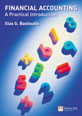 Okay, this is the first book review I’ve written on this blog. It’s not something I’ll too do often, but I just had to write about this book. Financial Accounting – a practical introduction by Ilias Basioudis is just the ticket for first time accounting students. the book aims to give a book introduction to topics like preparing financial statements, recording accounting information and adjustments to accounts. The great thing about this book is that it is simply written and has lots of questions and answers at the end of each chapter. It’s absolutely perfect for someone who is studying accounting as a non-core topic or if you’re struggling with bigger (and more expensive) texts. See here for full details http://bit.ly/cKwZYu
Recent CIMA research report on the use of standard costing
The Chartered Institute of Management Accounting (CIMA) have just released some interesting research findings on the use of standard costing. The research warns that accountants need to “wake-up and smell the coffee” and be careful how standard costing is used in an organisation. Poor use of standard costing can create a “percolator” effect with bad practice filtering up and down the organisation. Click the link for more detail and access to the full report http://bit.ly/b6v4f0
McDonalds and management accounting – what’s the link?
 In management accounting (the branch of accounting that provides decision making information to business managers), a technique called “standard costing” is often used to cost products or services. This technique tries to establish a “standard” for things like the amount of time taken to perform a task or the amount of material used to make a product. For example, the National Car Testing Service (NCTS) in Ireland performs a standard set of checks on each car which lasts about 30 minutes. This standardised list of checks can be used to schedule work and estimate costs. You might be thinking that a technique like standard costing would be less relevant to accountants in business as so many businesses nowadays try to be “non-standard”, delivering differentiated products and trying to offer varying levels of service. But as the NCTS example shows, may businesses still operate in accordance with standards. One of the best known examples of such a business is the ubiquitous McDonald’s. No matter you go a Big Mac is a Big Mac – it’s a really standard product which has a recipe something like this:
Two 1.6 oz (45 g) patties,special “Mac” sauce, lettuce, cheese, pickles, onions and a three part bun.
This ingredients can be easily costed to get a standard ingredients cost. You can probably imagine too how the actual preparation of a Big Mac in a restaurant could be timed, so you could easily have a standard preparation time. In fact the way McDonalds do things has been coined “McDonaldsization” by sociologist George Ritzer (see here). With such standard products, it’s quite easy to see how a business like McDonalds can use standard costing techniques to not only cost its products, but also to measure performance. This is simply because of such little variation in products like a Big Mac. But care should be taken in using standard costing ideas, even where it might appear as a useful idea. Take healthcare for example – I’m not suggesting McDonalds start doing healthcare! There are many “standard” diseases with “standard” treatments. All treatments cost money and as healthcare providers struggle with falling budgets, would it be an idea to provide “standard” treatments? I’d like to think no. For example, what would happen if the treatment time for goes beyond standard. Do you tell the patient “sorry you allotted time is up, next please”. The difference here is that although something may appear like a pretty standard task (i.e. the treatment), the standard will be broken regularly. To hold people accountable for breaking the standard would potentially be a life-threat – unlike your Big Mac taking a little longer to cook. For a little more information, take a look at this link http://bit.ly/9yuhZ6
Accounting for sustainability
 A piece in this months Financial Management (March, 2010), the monthly journal of the Chartered Institute of Management Accountants (CIMA) in London, reports on a research report which asks the basic question why are financial managers (i.e. accountants) not getting more involved in important business issues like climate change strategy. Gillian Lees writes that businesses can be proactive or be pushed in relation to issues like climate change. Proactive seems like a much better approach for a business to be sustainable in the long-term, both economically and environmentally. Take energy costs as an example – these have and will increase as time goes on, so it makes sound business and environmental sense to control and reduce energy usage. The research reported in this piece suggests that when accountant are involved in climate-change work, the results were potentially better. As a manager at Asda ( a large UK retailer) says, “the finance team brings the right rigour to ensure that we aren’t simply doing it because it feels like the right thing to do”. Put another way, the numeric and commercial acumen of accountants can mean that climate-change can be the right business thing to do also. The full CIMA research report on Accounting for Climate Change can be found at this link.


 Martin's accounting blog