How Deere & Co manage business performance


Due Diligence? A play with words..
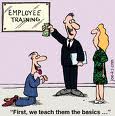
A somewhat amusing post I found on a blog on the words ‘due diligence’ -words accounta nts use a lot. Enjoy
10 small business tax deductions
 Ok, you’ve just started in business, you have not yet approached an accountant and you’re wondering what expenses are deductible for tax purposes? In this post I list off ten items that you can set against income for the purpose of calculating tax. I am trying to be as general as possible, but you might want to check the rules with your local tax authority in your country. I’ll assume you’re a sole trader and you operate your business from home.
Performance indicators – a bad example
 I watched a Channel 4 documentary (Dispatches) last month (June 7th) about the somewhat lacking work done by some child social workers in the UK. While they may be over-stretched and burdened with bureaucracy, the have a job to do which can seriously effect peoples lives – so was quite annoyed when I watched what an undercover social worker found (have a quick look here http://www.channel4.com/programmes/dispatches/articles/undercover-social-worker-exclusive-video-clips). But that’s not what this blog is about, so sorry for the little rant. One thing struck me though as a management accountant while watching this. One senior social workers mentioned how their performance is rated. Using performance metrics is common in business and all kinds of organisation, but the right metric must be used. For example, profit is one metric, but this does not tell us much about how the company treats its workers or the environment for example. And on a day-to-day basis, business might used metrics like units sold e.g. bums on seats for airlines. In the documentary, the senior social worker mentioned that performance was measured by the number of cases closed by each social worker. The more closed, the better they were deemed to perform. Then, she mentioned how silly this was, as there was no measure of quality – how well the case was dealt with, or how the outcomes matched what children needed. If I remember her quote correctly, she said “you could write ‘cream buns, cream buns, cream buns’ in the middle of a care report and nobody would even look at it. They (local councils or health officials I presume) are only interested in the number of cases dealt with”. Yes, this might be a bit of an extreme example, but it really does show the importance of linking a performance metric to the desired outcomes of any organisation. So, spend a little time getting it right!
A netbook of laptop? Which is best for a small business owner?
 It goes without say that the vast majority of business owners and entrepreneurs live with some piece of computer hardware not to far away from their person. The choice for a small business is not dictated by cost any more either. In fact, the choice is more about what you need the technology to do for your business. Here, I’ll focus on the choice between a netbook or a laptop.
What’s a netbook? The simple answer is a smaller, lighter version of a laptop. The first netbooks came a few years ago with stripped down operating systems and low disk space. This is no more. I bought a HP netbook a few weeks ago for my daughter and it has a 160GB hard disk, 1 GB of ram, full WiFi connectivity and a full version of Windows XP. So in my mind, it’s exactly like my laptop- only smaller and lighter. And all for about €250 net of VAT. So if you’re running a small business and you want to get away from a desk, should you buy a laptop or netbook? My answer is to first ask yourself three questions:
1) What is the computer used for? If it is MS Office, browsing, email and basic accounting/business software go with the netbook. If applications are more intense, like CAD or graphics, a laptop might be better.
2) Who is going to use the computer? If you’re mobile, or your staff are, netbooks are really light and portable. So are laptops, but they can cost a little more.
3) Where is the computer used? I have seen some business people use a netbook (with mobile broadband) in their car – obviously while stopped! Again, netbooks are so portable and you can think of them as a travelling version of your office PC or laptop.
Some people have said to me, ” hang on, these netbooks don’t have a CD drive, how do I install software?” Download it is the simple answer. So, given the low cost and full connectivity, netbooks are the best option in my view – unless you’re a designer or architect running heavy applications.
The future role of management accountants
 CIMA’s CEO, Charles Tilley, outlines his views on the what the future holds for management accountants in a recent interview with Insight, CIMA’s e-magazine. Accountants might not have a great reputation in recent years with many corporate scandals and various banking “meltdowns”.
Tilley suggests a number of ways management accountants can develop and enhance their roles over the next decade or so. First, Tilley notes that successful companies focus on longer-term sustainability. To do this, the right kind of management structures and incentives need to be in place. Here, management accountants can help by ensuring boards get the right kind of information to ask the right questions. Second, companies need to focus beyond increasing shareholder value. While capital growth is important, running business with an ethical and longer-term focus might be better. Again, management accountants can help here, by providing a robust and ethical analysis of business information. Third, globalisation will continue to effect management accounting. More and more companies are increasingly bigger and face greater challenges on dealing with local knowledge, cultures etc. Again management accountants have a key role to play in providing information and assessing risks.
You can read the full piece here http://bit.ly/c0t4CA and lots more on CIMA’s Insight.
Can I employ myself and treat this as an expense?
 If you have just become self-employed, you’ve got a million things on your mind and book-keeping and accounting is not usually top of the list. But there are some important things you need to do in terms of getting registered for various taxes. What I say below, and the title of this entry, was inspired by a conversation I had last night with someone who was looking for some help with book-keeping.
Let’s assume you become self-employed i.e. you are a sole trader. In any of my books, the early chapters explain the format a business can have (sole trader, partnership or company) and also a fundamental accounting concept – the entity concept. This concept means that the person is separate from the business. So here’s an outline of what happened to this guy I met last night. He lost his job and set up his own business as a sole-trader. He got some bad advice telling him to register as an employer with the tax authorities and pay himself a wage i.e. he was both the employer and the employee. Under the entity concept this could not happen. Why? When a sole trader makes a profit, a portion of this profit (usually called drawings) can be withdrawn for personal use. Or in accounting jargon, the business entity gives a portion of the profits to the person behind the business. Wages are an expense in the accounting world, being deducted from revenues to calculate profits. And, wages are paid to employees you must by definition be a different person or entity from the employer. If this business was a company however, the story would be different. A limited company is a separate legal and accounting entity, so the guy I was advising could set up a company, be a director of that company and pay himself a wage. So, in summary if you are a self employed sole trader, you cannot pay yourself a wage as if your were an employee; instead you withdraw some portion of the profits to live on.
Outsourced accounting?
 Brian Skelly wrote recently on outsourcing the work of accounting practices in Irish monthly journal BusinessPlus (www.bizplus.ie). The piece detailed an Irish firm Online Web Accounting (OWA), who are a small accounting practice based in County Meath. OWA provides normal accounting services, but also provides value-added services such as monthly management accounts – all at minimal cost. In fact, Nigel McAuley OWA founder, says he can deliver such services “without being substantially more expensive than an annual service”. How can OWA do this? Well, the firm have reduced costs by outsourcing back office task like book-keeping to their office in Sri Lanka. Here, salary costs of accountants and book-keepers are approximately 25% of Irish levels. Is this a trend to watch out for? For smaller and growing businesses, this might be just what is needed to provide improved management accounting information, without a corresponding increase in cost.
Want to borrow money for your business? Some questions you should be asking.

All businesses are finding it hard manage cash flow in the current economic environment. Even harder is trying to raise finance for a new business venture, for working capital or for expansion. Media reports seem to indicate that bank lending to small business is particularly difficult.
Let’s assume you do get a hearing with your local bank manager. You’d probably plan on being bombarded with questions and maybe even grovel to get the money your business needs. Why not turn this on it’s head? Why not approach a bank with a list of questions to ask? The first question would be “is your bank suited to my business needs?”. A simple question, but some banks just don’t deal with small business or particular sectors (even in good times). Christine Lagorio (Inc magazine) writes eight more questions like this (9 Questions to Ask a Small Business Lender) with the help of Bob Seiwert, a senior figure in the American Bankers Association. The questions are (click the link above to read the answers):
Does the bank have any questions about your character?
Does the bank understand your reason for borrowing?
Is the amount you’re asking for reasonable?
What’s your cash position?
What are the risks to loan repayment?
Can these risks be mitigated without adding tough terms to your loan?
Do you think my company’s financials are strong?
Do you trust me?
Read the full piece, it’s really good advice.
An example of how to save your business – NY Times
Here’s a small clip and video from the New York Times about a financial printing company, seeing decreasing business due to the economic crisis, used its goodwill to hang on in there. Read it here

How I Saved My Company: Vintage Filings – You’re the Boss Blog – NYTimes.com.
There are a few more short videos in the blog series, all of which are useful experience stories.
Choosing the right accountant for your business
 I read a piece on inc.com recently about how to choose the right accountant for your business. I’ll summarise it here and add my own few thoughts. By the way, the picture on the left pops up in a google image search for “accountants”. Not the typical image we have of an accountant perhaps!
The piece on inc.com starts off with great question and answer.
Q: What’s the definition of an accountant?
A: Someone who solves a problem you didn’t know you had in a way you don’t understand.
This Q&A is of course a bit of a joke, but it is often the case that the problems with many smaller businesses is that the owners don’t have the knowledge or time to work with the numbers. Or buying some accounting software is just not top priority. hence the need to hire an accountant. Assuming you need to hire an accountant, here are some things to think about:
1 . What do you need the accountant to do?
If your business needs regular information of an accounting nature, then it might be worthwhile actually employing an accountant. This might be the case in larger businesses. The alternative is to engage the services of an accountant as needed e.g. at year end.
2. What qualifications and experience should the accountant have?
Unfortunately, in Ireland the word “accountant” can be used by anyone. Therefore, be sure you engage someone who is a member of one of the recognised professional bodies. If it’s a book-keeper you need, ask for references from other clients. If your business is a start-up or small one, you might be better off avoiding larger accounting firms as these tend to be able to give you less time.
3. There is no substitute for a personal recommendation. Ask someone else in business questions like “Are you happy with your accountant?”, ” Does your accountant help your business”?. If you are hiring an accountant as an employee, check their references and ensure they have a professional qualification.
4. Going back to the Q&A at the start, can you talk to your accountant? Or ask this another way, can your accountant talk to you? You need someone you can understand your business and problems if has, and be able to communicate to you in simple terms. Go and meet any prospective accountant and you’ll get a feel for what I call their social skills.
5. Can your business and your accountant grow together? Most smaller businesses will start off with an accountant doing accounts and tax returns at year end. But as your business grows (hopefully) can your accountant offer more services. This might be something as simple as working with you on expansion plans, but it is worth asking any prospective accounting firm what skills are within the firm.
To conclude, when you get to the point of needing an accountant, take your time to choose the right one. Remember, the accountant is a key person in your business, both now, and in the future.
How to use Kickstarter to launch a business
 As a small business, getting finance is always a big problem- even more so nowadays with poorer economic times. And let’s not say too much about the banks! An alternative funding source to get you off the ground might be crowd funding. What you ask? Well, the basic idea is to get a “crowd” of people to all provide a small amount of money to help start your business venture. So if you needed €2,000 to kick start you venture, could you get 200 people to “donate” €10 each – I say donate as they may not get any return from it. But where’s the crowd you ask? Well, social networking is the “in thing” nowadays it seems. You could use you business and social networking contacts as a start. If this is not sufficient, there are some websites out there you may help. Kickstarter.com is one such site ( here’s a recent piece from inc.com “How to Use Kickstarter to Launch a Business“. While such site are in their infancy and may still be more common in the US than Europe, don’t rule them out straight away. Crowd financing may be a viable answer to those smaller one-off ventures, but you know what, sometime these turn into a great and booming business.
“Publish or perish” – the researchers dilemma
 Part of my job as a lecturer is to do research on management accounting and related areas. It can be a really interesting part of the job and, yes I know this is sad, but I get a great kick of it. Research in management accounting means getting out to (or surveying) businesses to understand for example, what management accountants do in practice. The outputs of research can be twofold, namely 1) integration into teaching, and 2) publication in an professional or academic journal. The latter is probably the main goal of most academics, but in some countries, more pressure is exerted to publish a certain number of research pieces in a given time period.
I read this article (Times Higher Education – ‘Publish or perish’ culture distorting research results) recently, which mentioned some work by Daniele Fanelli from the University of Edinburgh. (The original journal articles is freely available here) Fanelli points out that research is often better accepted if outcomes are positive. He is not (I think) saying that this is bad, but simply questioning if the way academic output is measured effects the way academics behave. To relate this is management accounting, it is the basic problem of placing too much emphasis of a single or small number of performance measures. For example, profit is the most commonly known performance measure used by accountants and managers. In addition business also assess performance based on other measures such as health & safety, customer satisfaction and how “green” they are. Now, getting back to research, let’s assume the only thing academics are measured on is published papers, the big question is “is this one single output measure adequate to give “true” picture. Well, to be honest as I’m a more a “newbie” to research (having only just got my PhD this month) I don’t know the answer. But, given my experience as a management accountant, I would be a little concerned that any one single performance measurement does not give the the true picture. So, if an academic has to “publish or perish”, will there be manipulation of the “budget” or “budgetary slack” to borrow some management accounting terms. In other words, can targets – e.g. x papers in n years- be achieved to the detriment of other noble objectives like teaching quality or student engagement? I don’t know, but it’s worth asking the question. Is their a thesis there?
Emerging markets – are they still emerging?

I don’t normally delve too much into the world of economics and marketing, but this piece from The Economist (April 15th, 2010) caught my eye.
Antoine van Agtmael, a Dutch investment banker, actually coined the phrase “emerging markets” almost 30 years ago. In this time some of what were emerging markets are now the largest markets in the world – China and India for example. Market knowledge is a must for any business, even small ones, but when a business gets to the global level a detailed knowledge of (and arguably a presence in) all global markets is a must – emerging markets included. Van Agtmael cautions though on the use of the term “emerging markets”. Some markets, for example China, Brazil, South Korea and Mexico, have not only emerged, but upstaged developed economies. For example, the SamSung brand from South Korea is one of the worlds best known electronics brands. Perhaps a mindset change is needed to appreciate the business challenges of some economies which have now well and truly emerged.
Here’s a link to the full article: Schumpeter: An emerging challenge | The Economist.
Small business cash flow – a week from a business owners’ diary
 One of the most common issues in small business today is cash flow. As sales decrease and consumers have less cash, smaller businesses are finding it difficult to get paid in some cases. I have spoken to 3 or 4 small business owners here (in Ireland) in the past week or so and while they are all “ticking over”, they all recounted difficulties in getting paid – none are cash only businesses. Some are sailing quite close to the wind with their bank overdrafts. Trying to live within the overdraft limit can become a daily task. And of course, it’s a viscous circle and both suppliers and customers are often experiencing similar cash flow issues.
To relate the kind of problems businesses are facing, and maybe you’ll get some help here, read the 5 blog posts by Paul Downs in the NYTimes. He has a small cabinet making business in Pennsylvania. Yes, ok it’s a US example, but the problems are the same as those in Ireland and elsewhere in Europe at the moment. Here’s a link to the first post from a week in Paul’s business.
My Week in Cash Flow: Monday – You’re the Boss Blog – NYTimes.com.
Links to the other four posts follow on from the above link.


 Martin's accounting blog