IFRS adoption by country
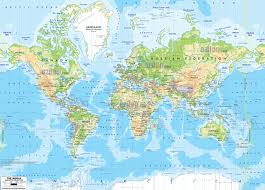 International Financial Reporting Standards (IFRS) were adopted by the European Union in 2005 for all public listed companies. The standards cover a range of topics in financial statement preparation, from relatively simple issues such as Non-Current Assets to complex issues such as pension funds (see www.ifrs.org for a summary of all standards). However, the standards can also be used for the preparation of accounts of other entities. The use varies by country (EU and globally), so here is a very useful map prepared by PWC. Simply click on a country to see how the IFRS are used.
Five Leadership Lessons From James T Kirk
I don’t normally do stuff on leadership or general management, but I couldn’t resist this.
What is a ledger account?
Sometimes we often forget the basics of accounting. It’s so easy nowadays to forget what’s behind the transactions and journal entries we make in accounting software. So, today I’ll got back to basics and describe a ledger account. Ledger accounts can be used in financial and management accounting to accumulate things like costs, revenues, the value of assets etc.
 It’s probably easiest to describe what a traditional manually written ledger account looks like. The term T account (see left) is often used to describe a ledger account as this is what an account looks like in a handwritten ledger (a ledger is just a type of notebook). The left side of the account is called the Debit side, the right hand the Credit side. The details of every business transaction can be recorded in a ledger account. There are rules (called rules of double entry accounting) which tell us what to do. What we do depends on the type of transaction. If we wish to record an increase in an asset or expense , then we record the details (date, amount, some narrative) on the debit side of the account. If we wish to record in increase in an income, liability or capital account, then we record the details on the credit side. For example, if I make a sale for cash of €1,000, I would record this on the debit side of the bank account and the credit side of the sales account. There are always at least two ledger entries for every transaction – this is the double entry system of accounting, which you can read more on in this post. If I were to enter this cash sale in some accounting software, while I might not see a ledger account, the principles are there in the background. For example, some software might show debit entries as a plus, credits as minus. No matter what the software, be it simple like Quickbooks or complex like SAP, the same process as a manual ledger account occurs.
Your age and your CO2 footprint

When I teach about carbon accounting, the first thing I do is get students to look at their own CO2 footprint. This typically means going to a website and putting in some information on your lifestyle. I read an article from the Economist a while back which outlined the differences in CO2 emissions based on age. The study was based on US data on nine types of consumption—including electricity use, driving cars, buying clothes and food. The amount of money spent on each was used to estimate a CO2 footprint by age. According to the article the 60-64 age group produces the most CO2, and this group is going to get larger in number over the coming years. You can click on the link to read the full article and see a nice graphical depiction of CO2 footprint by age
Costs, volume and profits – an example from the taxi sector.
 Back in the late 1980’s and early 1990’s when I was young enough to be frequenting pubs/clubs around Dublin city centre, one of the biggest problems was getting a taxi home. At that time, the number of taxi’s was regulated, with (if my memory serves me right) about 1,200 taxis for a city of about a million people. The effect of this was a market for taxi licences. Many taxi drivers depended on this for their pensions, with a licence yielding IR£ 60,000- 80,000 (about €75-100,000). Now, Dublin has a de-regulated taxi system and has more taxi’s than New York (see here for a taxi-eye view). The price structure is also heavily regulated, and a common price structure applies to all fares throughout Ireland. And, of course, a taxi licence is nowadays worth very little.
Why and I writing about taxis you might ask? Well, while on holiday near Leipzig (Germany) over the Christmas period, I read an article in a local paper (Doeblener Allgemeine Zeitung, Dec 27, p.7) about how a taxi firm is dealing with rising costs. The taxi sector in Leipzig is de-regulated too as far as I know, and competition is strong. The article interviewed a manager from a local taxi firm, 4884. Rising fuel prices seem to be a major problem for the firm – and indeed for Dublin taxis too. However, as I read on I realised that Dublin and Leipzig taxi firms/owners, while having a lot in common (over/high supply, rising costs, relatively declining static/declining market), the Leipzig firm 4884 seemed to adapt well to become attract and keep customers. For example, in June 2011, 4884 launched an app to order taxis (using GPS). They also (according to the Dec. article) regularly train and annually update their drivers on things like customer service skills – it is even written into the drivers’ contracts. In Dublin too, there is at least one taxi app I am aware of (Irish Taxi), but I am not sure it is as advanced in terms of GPS. London too has a GPS service available for ordering a taxi.
So what’s the management accounting point? Well, if we compare the market for taxis now to compared to the past (in most countries, but certainly Ireland), there is a far greater supply (volume). The cost structure is typically beyond the control of all taxis. Most costs are fixed – radio rental, advertising, taxi licence fee, insurance – with fuel being the main variable cost. With more taxis in supply, a static market, fixed prices and little ability to control costs, then the ability to earn a profit is likely to be more difficult now. So what can be done by taxi owners/firms to sustain profit. Most have joined forces to create firms/co-ops, which can share some costs (e.g. central booking). Other options are to increase customer retention through things like apps and improved customer service. At the end of the day, with so many costs beyond their control, taxi drivers/firms can only but be adaptive to stay in business. If they are not, they can (and do) go out of business.
Variance analysis
Here is a useful article and example on variance analysis from CPA Ireland’s e-zine. It explains most aspects of including flexed budgets and cost/efficiency variances.
How business models can (climate) change
 Following on from my last post on what is a business model, here I recount two articles I had saved from last year on how climate change can force businesses to change – and in some cases even change the business model.
The first article comes from Time (Sep 04, 2011). It recounts how Spanish winemaker Torres are increasingly moving their crops to higher, cooler areas of Spain. Due to global warming, the hotter climate means sweeter fruit and earlier ripening. At the same time, the early ripening of the fruit is offset by the fact that the seeds and skin (which give flavour) are not ripe. Thus, as a possible solution, vines are being planted at a higher, cooler altitude in an effort to offset the warming experienced in traditional regions.
The second related article comes from The Economist (Sep 10, 2011, online). In this articles, you can read how English wine is being produced in increased volumes and better quality – with locally grown grapes. Again, it is climate change – bringing warmer climes to Southern England – meaning that more traditional grape varieties can be grown in England as opposed to the typically acidic German varieties. The result has been a product of increasing quality, and a tendency to produce higher margin sparkling wines – something that was not so easily done before. Thus, the business model of English vineyards may have changed from one where imported “grape juice” was added to make local wine, to one where high quality, high-margin product is the norm.
Does accounting prevent creativity and innovation?
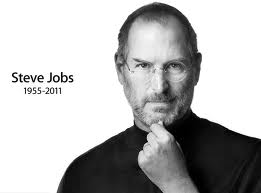
Photo (techlabs.com)
Accounting is often criticised, and one of the common criticisms is that too much focus on money in a business causes a short-term focus which may not be good for a business. I would agree to an extent, probably because I am more into management accounting and have seen businesses take bold decisions which eventually paid off. Of course, financial accounting (the external reporting of results basically) is less helpful (or “completely useless” as one business owner told me a few weeks ago) in situations where decisions need to be made. And sometimes, these decisions involve a lot of brave and bold creativity and innovation which accountants seen to have a reputation of pouring cold water on.
I read two articles recently which made me think about accountants and creativity/innovation. The first one was a few months back on Forbes. The piece by Eric Savitz mentioned how creative type toys (like Lego) can be crucial to later creativity. Here’s a quote from him:
Lego, loosely translated, means “to put together” in Latin. But “to put together” doesn’t fully encompass the value – and purpose – of those buckets of colorful bricks. Legos are about putting together, then taking apart, then reassembling in new ways. That’s why I got so upset recently when a friend told me that she and her daughter had built a pirate ship out of Legos, arranged the pieces until they were just right, and then glued the whole thing together. That, I exclaimed, is not the point.
Legos unleashed my creativity when I was growing up. They drew out the part of me that had to know what things looked like from the inside out, how they worked, how they might work better. The hours I spent with them — sprawled on the floor, building and rebuilding, puzzling and visualizing — became my first lessons in engineering. There was magic in those little bricks. There still is.
Reading this I wondered how would Savitz be as an accountant. I think he would have a good chance of being creative, but not in a bad way. I think, like the Lego, he might be throwing away the rule book and creating accounting information which might meet the needs of the organisation where he was working. This of course is what good management accountants should do, but do they all? I don’t know, perhaps its partially our fault (i.e. educators) and we need to encourage lateral (but always ethical and proper) thinking about accounting.
The second article I read was in this week’s Time, “What would Steve do?”. Steve Jobs was an obviously brilliant innovator – and eventually made Apple one of the richest firms in the world. In the article the author (Rana Foroohar) makes a strong claim, but she is probably fairly correct. She states ” Jobs stands out as an exceptional leader not so much because of his in-your-face style, but because American business has become dominated by bean-counters focusing on hyper-efficiency rather than by innovators focused on real growth”. I suppose this is a classic case of too much focus on short-term financial goals over longer-term business development and growth. I don’t have a quick-fix solution for such a problem, but certainly an open mind by accountants towards innovators would help.
What is a “business model”?
 Often, when I teach about types and classifications of cost in my management accounting classes, I use the term business model. For example, I might say “whether a cost is fixed or variable, can depend on the particular business model”. But, I am assuming the term business model is well understood. Perhaps it is not, and even when I asked myself what the term means, I had to do a bit of thinking. So here’s a simplified explanation.
An article in the Harvard Business Review from 2002 describes a business model as “the story which explains how an enterprise works”. This is a deceptively simple definition, but it does capture exactly what a business model is. If I were to ask you what are the essential elements of a story such a Cinderella or The Frog Prince, you would probably says things like characters, what the characters do, when the characters do things, and of course the (moss likely) happy outcome. Using the story analogy, a business needs to ask itself, what is that we do, who are our customers, how much does what we do cost, and will we make money (the happy outcome!). In other words, “what’s our story” in an economic sense (Read the full HBR article for more detail and examples).
Nowadays, business models have become a bit blurred though. For example, there are so many web-based “businesses” out there who, to be honest, do not immediately show a story which makes economic sense. For example, we now know how Google and Facebook can make money on a business model which changed the advertising world. But, what about for example Twitter or off-shoots like paper.li. I love the latter, as I can bundle all the twitter users I follow into a daily newspaper, but how can this make money. I am guessing they will introduce advertising, but has this business model already been over-cooked?
I hope this helps you understand what a business model is. To conclude, I suppose the story of what it is a business does has to be infused with accounting concepts. For example, there is not point being the world’s best at something, but costing a fortune to do it.
Balanced scorecards – a bit of humour
 As you many know, many scorecard type systems used to report on business performance often use some form of traffic-light system to display whether or not targets have been met (see one of my previous posts). While looking for examples of scorecards, I came across a German blog post, which equated the use of scorecards to Formula 1 (F1) flags – well taking the mick a bit really on the use of ideas such as traffic light type reporting. You can see the original post here, but below is a brief translation. It’s a bit funny, the idea being that the management accountant can be signalled by the security guard on whether or not to drive past the main gate.

Green – all is clear. Drive to the bank and plan to take over the competition.

Blue – a competitor is about to outperform us. The security guard has the phone number of a recruitment agency.

Yellow – not sure if there is real danger. The management accountant has not yet received a recent consultants report. Meet colleagues in the car park first.

Red – the business has been taken over or merged. The accounting department has been centralised. Go home

Red/Yellow stripes – danger of slippage. The board has discovered a good Business Intelligence software suite. Time for a training course
Using rail freight to reduce CO2 emissions
 A year or two ago I set a hypothetical assignment for some of my students on a comparison of CO2 emissions on road freight versus rail freight. I based on the assumption that a CO2 charge would have to be paid by firms, and they could in fact save money by using rail freight. Of course the problem with rail freight is that is does not go door-to-door, but it might still be an option for transporting between cities or depots – depending on volume. At the time when I set the assignment, I did not find many examples (at least in the UK/Ireland), but I came across a Tesco press release in November last. According to the release, Tesco are expanding their use of rail services, which will mean 24,000 tons less CO2 and 72,000 less road journeys. Yes, this is a great thing for the environment, but the management accountant in me really wants to know the cost savings generated by this.
Institutionalised practices – a simple example
 In my research work, I write and read a lot about how accounting practices become taken-for-granted within organisations. This taken-for-grantedness might be equated with the term “institutionalised”, based on theories from economics and sociology. When we think of the term institutionalised, we often associate with things like being in jail for too long, or something that’s more physical like the an Institute of Engineers. But, it can be something far more fluffy. While driving to work in early December, a useful example came to mind as I listened to the radio. It was December 1st, and an Irish radio DJ called Larry Gogan is typically accepted as the person to play the first Christmas song on the Irish airwaves – it was Fairytale of New York for Christmas 2011 just in case you’re interested. It is not written down anywhere that Larry does this, and to be honest I don’t know how this practice came about. But radio listeners know that Larry is expected to play the first Christmas song each year. In other words, it is an institutionalised practice. And what happens is something tries to change this? After a quick search I found some comments from 2006 on a boards site:
 boo gerry boo i say
I hope he gets a rap on the knuckles / kick in the balls for stealing Larry’s thunder. If he wants to do it after Larry has gone to the Great Microphone in the Sky (not for many years yet, I hope, I hasten to add), fair enough, but he shouldn’t have upstaged Larry like that 

These quotes/posts above show that some people did not like the fact that another DJ broke the accepted practice. This is quite typical when change to any institutional practices is attempted. Similarly, in the world of accounting, there may be practices which are just accepted as how things should be done. Trying to change these can be tricky, but if we can understand why such practices became institutionalised, then we might be able to foster some change.
Dealing with a currency crisis/hyperinflation – a quick historical note and IAS29
 Over the years, economies have suffered many currency crises, soaring interest rates and hyper-inflation. Luckily, in my time as an accountant I have not had to deal with financial statements or other accounting information where the value of money became, well worthless. Runaway inflation for example occurred in Germany in the 1920’s and today it is still present in countries like Zimbabwe. In times of hyper-inflation, accounting standards do give us some guidance. IAS 29 suggests hyperinflation may have several characteristics
1) the general population prefers to keep its wealth in non-monetary assets or in a relatively stable foreign currency. Amounts of local currency held are immediately invested to maintain purchasing power;
2) the general population regards monetary amounts not in terms of the local
currency but in terms of a relatively stable foreign currency. Prices may be quoted in that currency;
3) sales and purchases on credit take place at prices that compensate for the expected loss of purchasing power during the credit period, even if the period is short;
4) interest rates, wages and prices are linked to a price index; and
5) the cumulative inflation rate over three years is approaching, or exceeds, 100%.
Without going into too much detail on IAS 29, when such hyperinflation exists, the financial statements have to be restated to a monetary value using some form of price index.
I recently had the good luck to see real financial statements prepared during a hyperinflation period. The accounts were if a German brewery and dated back to 31/12/1923 – long before IAS 29 was even thought about. The inventory figure had 18 digits, which I think is called a quintillion. I cannot imagine what it must have been like to deal with figures like this. Mind you the kinds of figures being thrown around nowadays on sovereign debt are getting close to these kind of numbers. Just out of interest the accounts on 1/1/1924, showed a figure of about 2 million marks – a new mark was issued and pegged to gold I think.
Thanks!
Hi all, just passed 20,000 hits on my blog! Not much in the grand scheme of the internet, but it’s not a bad start.


 Martin's accounting blog