Strategic scorecard – a useful tool from CIMA
A short post today – holiday season.
You may know about tools like the Balanced Scorecard which are used by many organisations to monitor performance from financial and non-financial aspects. Here is another type of scorecard, developed by CIMA, which may be quite useful to managers and boards of directors when trying to formulate a strategy. The tool prompts managers to consider the business model of the organisation and reflect in the external environment, risks/opportunities, implementation and options available. Have a read of a document prepared by CIMA/CGMA by clicking this link .CGMA Strategic scorecard_T1 FINAL . This document explains the scorecard quite well.
Related articles
- The Vision and Strategy of Balanced Scorecard (unicomseminarsltd.wordpress.com)
- 5 Valuable CGMA Resources for Business People (aicpa.org)
Technology and new business-models – taxi despatching

I always like to read about new ways of doing business, or new technology can change existing businesses. You may have seen how various new technologies have helped the taxi-sector. For example, in London you can send a text from a smart phone requesting a taxi and your position can be pin-pointed by the GPS within the phone. Now let’s take this a step further and add an app to the smart phone and then the way the whole taxi industry operates could change? How you might ask. This post from the Babbage blog on Economist.com explains why. In several European countries, taxi users can now use apps to request a taxi. The apps ping the nearest cab, and once a customer accepts a particular offer they can track the taxi progress. All the taxi needs is the same app effectively. This changes the way business is done in the sector as the taxi dispatcher is effectively cut out of the picture. I don’t know about other cities, but I can tell you that a taxi dispatcher would charge its drivers in the order of €200 per week or more in Dublin. For this, the driver (who suffers all risks of owning and paying for the cab) gets fares directed to them usually through some system installed in their cab. Now, if I were a self-employed taxi-driver you could cut out that cost by using an app, I’d be giving it some serious consideration. Of course, as the post notes, taxi dispatchers are not seating idle and a race is on between taxi dispatchers and app developers!
Cleaner transport (and cost savings?)
 Back in February this year I wrote a short post about how Tesco were increasing their use of rail travel to reduce CO2 emissions. It was a good example of how to change your business to both deliver cost savings and be more environmentally friendly. In the February 2012 edition of CIMA’s Financial Management (pp 26.30), there is a great article written by Ben Schiller which provides a number of examples of firms which are seeking ways to reduce transport costs and CO2 emissions. One quote from the article sums up the problems around transport costs “many ships operating today were built to run on $150 a tonne bunker fuel, not a price four times that”. Of course, it is not only ships but all forms of transport which are facing these price increases, such as road haulage and even company cars (for example, when I bought my first diesel car just over 3 years ago, diesel was 99 cent per litre at my local station, now it’s over €1.50). As a result of these increasing costs, we can see more sleek looking fuel-efficient trucks for example on our motorways.
I found Ben Schiller’s article really great less for some examples we might know about – chip fat being converted to biodiesel, electric vehicles – but more for some real examples from firms we all probably know well. The first way firms can save on transport costs (and green up) is to bring production closer to the market – L’Oreal for example have brought some of their supply chain in-house, by producing thinks like packaging on-site. A second way, is to change the modes of transport. For example, both Philips and Tesco use canals to transport bulky product. Phillips use barges to transport goods to Rotterdam port, while Tesco ship wine between Liverpool and Manchester. In Spain, SEAT rebuilt a short rail line to Barcelona port, carrying 80,000 cars annually using 2 trains a day. Even large shipping companies like Maersk are doing things like “slow-steaming ” (or sailing slower) to reduce CO2 emissions and fuel costs.
There are more examples in the article itself. You can read an online summary here.
Thinking about labour costs
 Paul Downs is a US business owner who writes on the NY Times Small Business blog. Here is a nice post in a series he wrote on “the numbers I track”. In this post, he focuses on the importance of tracking labour costs. This quote from the post gives a good summary of Paul’s thinking:
“I’m not sure what to think about my labor costs. I have two conflicting theories running through my head. The first: pay people what they deserve. The second: pay people just enough so that they don’t leave. In reality I’m somewhere in between the two. Payroll is our biggest single expense, and it’s easy to let it get out of control and suck up all of the profit in the company”
I’m sure many small businesses experience this same sentiment. Read the full post for more.
Fair value accounting – a brief summary
 I read an article from the Guardian website last January, where a Bank of England official was suggesting that banks need to have separate accounting standards from other types of business. Some of the concerns mentioned were around the notion of fair value. This an extremely complex area, but I’ll try to summarise it here.
The basic idea of fair value is that certain types of assets and liabilities should be measured in the financial statements at a value which reflects what they could be sold for or settled for. In the main, the types of assets/liabilities concerned are referred to as financial instruments – e.g. debt, equities. There are two complex accounting standards which deal with how such instruments are measured according to fair value. IFRS 9 defines the what happens to the difference arising on fair value adjustment. Without going into too much detail, the fair value adjustment goes through the income statement/profit & loss account. As mentioned in the Guardian article, this is normally fine when markets are causing the value of the assets to increase, but it perhaps less popular when markets are falling. And, of course there is the problem of ascertaining what exactly is “fair value”. IFRS13 defines fair value as “the price that would be received to sell an asset or paid to transfer a liability in an orderly transaction between market participants at the measurement date”. It also describes a hierarchy of how to measure fair value and outlines detailed disclosures which must be made in the financial statements. Of course, all this presupposes there is a reasonable way to ascertain fair value based on a market price or equivalent market price. And, as we know from recent years, there have been plenty of media reports about the complex nature of some financial instruments. I’m sure the debate on whether or not fair value is right for the banking sector will continue.
Can social data change markets?
In recent years, we have heard so much about the (financial) markets, their reactions, lack of confidence and so on. I often feel like asking who or what exactly is “the markets” and will they ever just leave us alone. The economist Adam Smith used the analogy of the invisible hand, a self correction mechanism the markets may have. More recently Chandler alone of the visible hand – the firm – which could be influenced and changes perhaps easier than something like an invisible market hand.
I’m no economist, but I do find this stuff interesting. Especially nowadays when you think if the amount of information a firm could have – social data for example. I read an article in a Forbes blog last year some time, which suggested the prevalence and increasing availability of social data might be the invisible hand that could change markets, or at least help us to understand the markets. Seems like an interesting thought – click here to read the post.
Peer-to-peer lending – a source of finance for small business?
 I read an interesting article in the November 2011 issue of Financial Management, CIMA’s monthly journal. The topic was peer-to-peer finance, which was something I had only heard a little about. Given the combination currently of low deposit interest rates and high lending rates for small business, peer networks have formed and are seemingly growing fast. The basic idea is relatively simple: some business have cash surpluses and others need finance – but not at 19% (which was a rate quoted to one business mentioned in the article). Those with spare cash can group together and lend to those that need it. The risk may be lower for the provider of finance as only a small amount can be contributed, and for the borrower the rate is lower (8.9% in the case of the business the bank wanted 19% from). Two peer-to-peer lending networks are mentioned in the article – Thincats and Funding Circle. In effect such networks are like mini-money markets. They do, of course, undetake some credit checks and crediting rating, but for small business this seems to be a very sensible way to bring borrowers and lenders together.
What is a parntership? How does it change financial statements prepared?

In business, a partnership refers to the coming together of two or more persons to conduct a business. Normally, there is a maximum number of partners with exceptions made in cases like accounting practices and legal practices. A partnership is usually formed to take advantage of the combining of skills and resources. The objective is normally to make a profit, and this profit is shared out in some agreed way among partners. Losses too are borne by the partners.
As essential element in the formation of a partnership is the Partnership Agreement. This is a legal agreement (which ideally should be written) which contains items such as the following:
- the capital to be contributed by each partner
- how profits are to be divided
- any interest to be paid on capital contributions
- any interest to be paid by the partners on monies withdrawn
- salaries to be paid to partners
- arrangements for admission of new partners
- arrangements to dissolve the partnership, and procedures on the retirement/death of a partner.
In the absence of a partnership agreement, in the UK and Ireland, the Partnership Act 1890 applies (see here).
In terms of preparing financial statements, there are some differences. First, any adjustments to profit are made in a profit and loss appropriation account – which is in effect an addendum to the income statement/profit and loss a/c. For example, any interest due to or to be paid by partners, salaries etc are made here. The resulting adjusted profit is then shared among the partners as agreed. In the statement of financial position (balance sheet), each partner will have their own separate capital account. Some partnerships used a combination of capital and current accounts. The former shows only the fixed capital contributions, the latter shows profits, drawings, interest, salaries etc. This approach is probably better as the any negative balances on the current account will signify that perhaps a partner is taking out more from the business than they should.
John Teeling, founder of Cooley Distillery talks about his business
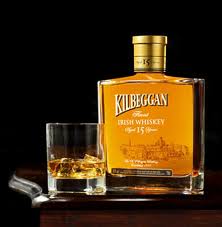 John Teeling founded Cooley Distillery in 1987. In January this year, he signed off on a deal to sell the business to global spirits firm Beam (see here) US firm to buy Cooley Distillery – The Irish Times – Fri, Dec 16, 2011. On January 14th 2012, Dr Teeling gave a very useful radio interview on his life is business. Have a listen to the podcast here (January 14th, 2012). There are a few things of interest. For example he tells the story of why Irish whiskey sales declined from 60% to 2% of the world market in the past. And how in 1960, he was one a few people in Ireland you could do Discounted Cash Flows – something we take for granted nowadays.
Pricing tips for small business
I’m a bit lazy today, sorry, so I’m directing you to a nice post on setting prices in small online business: Top 5 pricing tips for small business
Prices, costs and business failure – a few examples from Ireland
 In recent years hard economic times have hit Ireland and other developed economies. According to an article in the Guardian over a year ago now, the number of businesses failing in Ireland was 5 times that in 2010 – a huge chunk of these being construction firms. I hope have some sympathy for many of the hard-working business people who perhaps have seen a lot of their money lost. But, there is a part of me (probably the accountant) who is not at all surprised at so many Irish businesses failing. Why? Am I getting more cranky (Yes, of course I am)? Well, let me give me a few of many examples I have encountered over the last few years which seem to show poor decision making. But before I do, I should say that many Irish businesses who started during the “boom” years were already doomed to failure due to a pretty high cost structure e.g. rent.
The first example dates back about 2-3 years now. In the area where I live, we collect an amount of money each year to help maintain the common greens in the area. The landscaping business doing the work was charging about €7000 per annum and a new landscaper offered to do the work for €4500. Both were sole traders with similar costs (as best I could guess at least). The original landscaper said he could not do the work for that price and would not even reduce his current price, so the business was lost. Now I don’t know what either landscaper was thinking, but it fairly obvious that the original landscaper was living in the boom years in my opinion. He could have reduced his price by some amount, say €1500. This would mean his net contribution would fall by €1500, but instead he lost €7500 – a bad decision.
The second example relates to a really nice bakery I visited recently in a more affluent part of Dublin. Yes, the price is of course going to be affected by the area, but having paid €4.60 (ok my wife bought it) for a loaf of sour-dough bread I thought this is not a sustainable business. Even people in affluent areas cut back on spending in lean times. The point here is that I thought the price was more reflective of a time four or five years ago.
The third example relates to an employee within a business. The employee left as €900 per week income was not “enough” for him. The job involved manual labour and some skills, but nothing that could not be replaced readily. The right decision was made by the business owner, which was adiós amigo. The employees decision was rather silly though, as the immediate income from social benefits would be way lower.
These three examples to some extent portray how high prices may have become engrained in the minds of business people following many years of the Celtic Tiger. I like to study how practices have become accepted/taken-for-granted, or institutionalised. When practices become institutionalised, there are hard to change. So I wonder are businesses in Ireland failing because some business owners cannot make the change in their minds to reduce costs or prices? In other words, they are finding it hard to break the institutionalised practices associated with past more affluent times. I know there are many other factors, but based on my experience, at least some business failures in Ireland result from a failure to change mindset.
Five Leadership Lessons From James T Kirk
I don’t normally do stuff on leadership or general management, but I couldn’t resist this.
Your age and your CO2 footprint

When I teach about carbon accounting, the first thing I do is get students to look at their own CO2 footprint. This typically means going to a website and putting in some information on your lifestyle. I read an article from the Economist a while back which outlined the differences in CO2 emissions based on age. The study was based on US data on nine types of consumption—including electricity use, driving cars, buying clothes and food. The amount of money spent on each was used to estimate a CO2 footprint by age. According to the article the 60-64 age group produces the most CO2, and this group is going to get larger in number over the coming years. You can click on the link to read the full article and see a nice graphical depiction of CO2 footprint by age
Costs, volume and profits – an example from the taxi sector.
 Back in the late 1980’s and early 1990’s when I was young enough to be frequenting pubs/clubs around Dublin city centre, one of the biggest problems was getting a taxi home. At that time, the number of taxi’s was regulated, with (if my memory serves me right) about 1,200 taxis for a city of about a million people. The effect of this was a market for taxi licences. Many taxi drivers depended on this for their pensions, with a licence yielding IR£ 60,000- 80,000 (about €75-100,000). Now, Dublin has a de-regulated taxi system and has more taxi’s than New York (see here for a taxi-eye view). The price structure is also heavily regulated, and a common price structure applies to all fares throughout Ireland. And, of course, a taxi licence is nowadays worth very little.
Why and I writing about taxis you might ask? Well, while on holiday near Leipzig (Germany) over the Christmas period, I read an article in a local paper (Doeblener Allgemeine Zeitung, Dec 27, p.7) about how a taxi firm is dealing with rising costs. The taxi sector in Leipzig is de-regulated too as far as I know, and competition is strong. The article interviewed a manager from a local taxi firm, 4884. Rising fuel prices seem to be a major problem for the firm – and indeed for Dublin taxis too. However, as I read on I realised that Dublin and Leipzig taxi firms/owners, while having a lot in common (over/high supply, rising costs, relatively declining static/declining market), the Leipzig firm 4884 seemed to adapt well to become attract and keep customers. For example, in June 2011, 4884 launched an app to order taxis (using GPS). They also (according to the Dec. article) regularly train and annually update their drivers on things like customer service skills – it is even written into the drivers’ contracts. In Dublin too, there is at least one taxi app I am aware of (Irish Taxi), but I am not sure it is as advanced in terms of GPS. London too has a GPS service available for ordering a taxi.
So what’s the management accounting point? Well, if we compare the market for taxis now to compared to the past (in most countries, but certainly Ireland), there is a far greater supply (volume). The cost structure is typically beyond the control of all taxis. Most costs are fixed – radio rental, advertising, taxi licence fee, insurance – with fuel being the main variable cost. With more taxis in supply, a static market, fixed prices and little ability to control costs, then the ability to earn a profit is likely to be more difficult now. So what can be done by taxi owners/firms to sustain profit. Most have joined forces to create firms/co-ops, which can share some costs (e.g. central booking). Other options are to increase customer retention through things like apps and improved customer service. At the end of the day, with so many costs beyond their control, taxi drivers/firms can only but be adaptive to stay in business. If they are not, they can (and do) go out of business.
Variance analysis
Here is a useful article and example on variance analysis from CPA Ireland’s e-zine. It explains most aspects of including flexed budgets and cost/efficiency variances.


 Martin's accounting blog