Comparing profits and other figures from accounts
One thing really annoys me about how the media reports company performance – they only ever give % increases or decreases in sales or profit typically.
If you have ever studied accounting you probably learned about ratios analysis, and how just looking at absolute numbers ( like sales or profit ) can give a false picture. Here’s a recent example from the Irish Times to illustrate what I mean.
According to the Irish Times (see here :
“Irish-owned book and stationery retailer Eason & Son has recorded a net profit after tax of €2.3 million in its financial year to January 2014, compared with €2.6 million the previous year. Eason Group revenues, however, were down 7.1 per cent to €227.4 million, in what the company called a “challenging year”.”
All the above is true, but if we do a quick calculation, profit as a % of sales ( profit margin ) is pretty much the same from one year to another. So despite a 7% drop in sales, costs must also have been well managed to maintain a stable profit margin. I appreciate the media try to keep these reports simple for the general public, but a little more depth would be very useful.
CVP analysis – the effects of too much volume ?
Last summer I again took the car to Europe, using the Dover-Calais crossing. Not too long before I went I read an article about a UK Competition Authority ruling against one of the ferry operators – read here.
One of the operators is (now) owned by euro tunnel, hence the competition ruling. But let’s bring this to basic costs, volumes and profits. The ship I travelled on was almost empty, and as there is so much capacity on the route some operators are being pushed into a loss scenario. Why? Well, think about it for a moment – costs of running a large ferry are probably quite fixed. Prices may be low due to competition, but volume is relatively static. So, lowering price to attract passengers may be a loss maker. Similarly, too many operators may mean smaller passenger numbers for all, driving some into a loss situation.
So, as basic economics may dictate, ultimately one operator will fail as the market will force them out. And remember CVP analysis is based on a subset of the cost curves used in economics.

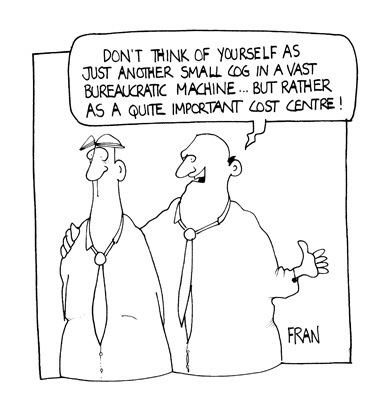
What is a cost centre?
If you type the above question into a Google search, you’ll get many answers. The one thing I found funny about the answers I looked at is they always mention costs – great – but some do not at all mention accountability.
So what is a cost centre? Well here is my definition. A cost centre is a unit, function, department or similar in an organisation for which:
1. Costs can be traced to
2. A manager is held accountable for those costs.
The second part of the definition is often forgotten, but it is probably the most important. The basic idea of responsibility accounting is that a manager is responsible for things like planning a budget or measuring performance against target. So in a cost centre, the manager is accountable for costs – but not revenue, profit or return on investment.
The cost of letting staff go……
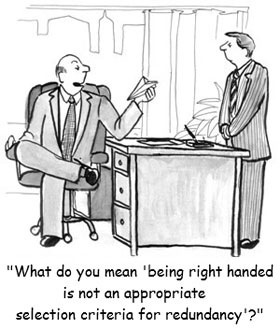
As an accountant, when we think of the costs of letting staff go, we probably think redundancy costs and so on. These can be quite substantial. But maybe these short run costs are better than longer term damage costs. I know the example I give here may be less likely to work in Europe for employment law reasons, but I’m just trying to think about costs, not the HR side.
I read recently that Amazon (and others) are offerings employees a cash sum of up to $5000 if they wish to leave. Maybe this is a bit strange, but there may be an argument which suggests such a payment actually saves money longer term – employees who are not engaged with their company are probably less productive. I don’t know if companies like Amazon have done a cost analysis on this, but it seems to make sense.
To give another example, a few tears ago an employer told me that a substantial redundancy payment made to an employee probably was a good deal. The employee in question was creating a poor image with customers, which was starting to effect turnover. Again, maybe no cost analysis was done, but the short term cost of redundancy was compared with unknown longer term effects.


 Martin's accounting blog