Early examples of tax avoidance
While we hear a lot about tax avoidance and tax evasion today, I think it is something we always have had and probably always will. To be clear avoidance is using legal means, evasion is the illegal one.
I can recall as a young kid being told by my father that old houses had less or smaller windows due to a window tax – see here https://www.nationalarchives.gov.uk/education/resources/georgian-britain-age-modernity/window-tax/. Or here is another example, a curved brick wall which used less bricks – and it’s also quite nice to look at https://www.linkedin.com/posts/historicengland_have-you-ever-heard-of-a-crinkle-crankle-activity-7169587666236215296-EIqu?utm_source=share&utm_medium=member_ios
Both of these examples essentially reacted to higher taxes to reduce the amount of tax payable – something we still do today, well at least corporates and high wealth individuals do.
Financial incontinence
Yes you have read the title correctly. It’s a new expression to me, but I do like what it describes. I first read it in an article by David McWilliams in the Irish Times. Rather than me define it, read the article here for yourself. While the article refers to costs of government, it could apply to any organisation I guess.
Taxes on unhealthy food products

I recall many years ago when I was studying for my accounting exams. One of the things we learned about Irish valued added tax (VAT) is that the rate of zero tended to apply to basic foods – milk, bread, for example – with higher rates generally applying to more “luxury” items.
Having had a recent article in the Guardian, it made me think about whether VAT would be a good way to increase taxes on unhealthy foods like sugar – unhealthy in that there tends to be too much in certain processed foods. It seems logical and sensible, and in the article, even a large food company is asking for such change. It is also quite efficient as the VAT system is well established in most European countries, so no need to create a new system to administer a new tax.
Flying in private jets
Typically the remit of the wealthy and political sphere, private jets are beyond the reach of most given their purchase price. Some corporates lease jets or hire them by trip. Of course, the question of how environmentally sound they are looms large. A recent Guardian article gives some good insights.

Rural electrification in Ireland – new book
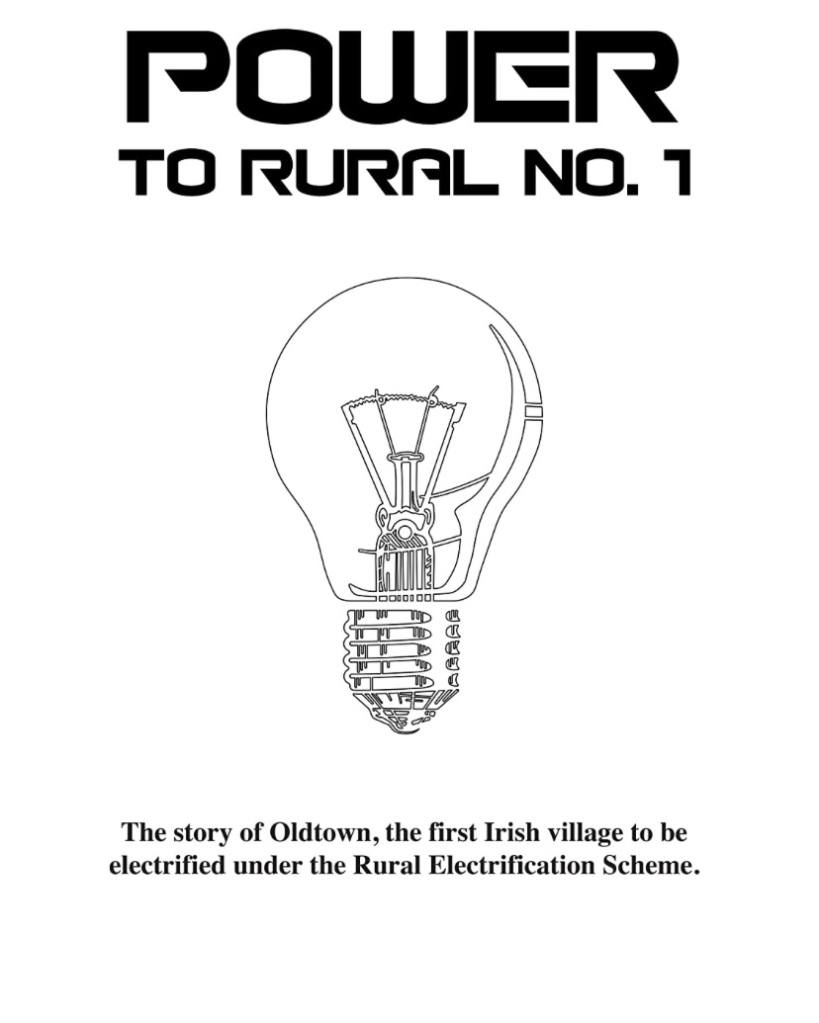
A slightly personal post.
I am from a small village in Dublin, whose claim to fame is that it was the first rural area to receive electricity back in 1947. It may be hard for us to imagine the effect this had on rural life, but it was a life changing event, a revolution.
That was 75 years ago. As part of Oldtown’s marking of this anniversary I had the honour of writing a short book about events around the arrival of power to my village. A key reason for writing the book was to ensure that knowledge is not lost, and to put some focus on Oldtown as the first step in this revolution which changed rural Ireland.
The book can be purchased in Kindle version here – Power to Rural No.1: The story of Oldtown, the first Irish village to be electrified under the Rural Electrification Scheme . A paperback copy is also available, you can complete this form. All proceeds/royalties from the book are donated to this charitable cause.
Free school transport?

Back in 1985 I took my first trip on a school bus to my new secondary school. At that time, school transport was free, and Ireland’s economy was not in great shape. The buses were honestly heaps of scrap, often breaking down, and very over-crowded. Then, at some stage before 1990, we had to pay for a ticket each term. I finished school, but could see school transport got better. Over time too the Irish economy got better. Until recently ticket price for school transport was about €350 per term.
In July, the Irish government announced school transport would again be free – see here. The scrapping of ticket charges was I guess an effort by the Irish government to help families with spiralling costs of living. While this is laudable, it must be remembered that nothing is free. The school transport scheme costs about €300 million per annum so this money must be found somewhere, likely from reductions in some other areas of spending.
Based on my own experience, what worries me most is we may go back to try 1980s. This was not a good time, buses were bad as I said, but the overcrowding was worst of all. Once a ticket charge was introduced, the numbers on my bus fell. It will be interesting to see if investment in school transport will be maintained, only time will tell. To me this blunt instrument of scrapping the charge is not ideal, and there have always been processes where free tickets were issued to families who could not afford them.
The end of low cost air fares?
Over the years, I have used lose cost airlines as examples in several of my blog posts. Carriers like Ryanair have always interested me – whether you love them or hate them they are successful.
A recent article on RTE’s business section gives a good summary of the low cost sector, but also considers how costs have and will increase, leaving no option but to increase fares. You can read the article here.

Increasing fuel costs – Repsol provide interesting approch

With recent events in Ukraine, the world has faced a sharp rise in fuel prices. This applies to individuals and business. Here in Ireland where I live, our government has reduced the taxes on fuels, which in turn reduce the at pump price.
Repsol, a Spanish company has taken an interesting initiative. They have reduced prices of fuel by 10c per litre, but only if you pay using their app Waylet. Thinking as a management accountant, I am thinking this is quite smart on their part. I am guessing, but I would assume that paying via the Waylet app reduces many costs – such as payment processing fees, or cash handling fees for example. Thinking as a manager with a more strategic hat on, maybe Repsol are attempting to make all payments cashless, and this is a way to move more people towards their Waylet platform. Regardless, I would be confident the reduction of 10c in price is compensated by an equal cost saving somewhere.
Safety as a cost centre in Facebook?

In October, a former Facebook employee Frances Haugen told the UK parliament that Facebook “views safety as a cost centre and not an investment for growth” (CNN). This made me think of two things.
First, what is a cost centre. A simple definition is some unit, part of function of an organisation for which costs can be identified and for which a manager can be held responsible. I am sure Facebook can identify the costs associated with keeping people safe online, and there could/should be a cost centre manager. Whether Facebook actually does have someone responsible for what it might define as “safety” on its platforms is questionable – and not a debate for here.
Second, it reminded me of lessons learned in manufacturing. I recall comments about safety being one of those things which did not deliver a readily visible “return”. However, the outcomes of not having a safe work environment would be visible – injuries, downtime, even death. Thus, drawing on Haugen’s words safety may have been an investment not for growth (in sales, profits), but an investment to saving greater costs – cost of legal claims in a financial sense, or the moral costs of having employees injured or worse. With this in mind, I wonder if part of the problem for social media companies is that the effects of “poor safety” are not visible as they happen in locations far removed from their offices. Of course, the content reviewers at social media companies are exposed to all forms of content and I really sympathise with them.
To take a line from the comedy Father Ted, “here is a mad idea” for all social media companies, thinking safety, costs, and revenue at the same time. It is a thought I have had for a while, but never considered writing about or developing. Everyone joining your platform must provide a credit card with a minimum limit of say $/£/€ 500 (maybe more). As AI is more able to filter content, if any content posted is unsafe, offensive, untrue etc, take a substantial charge from the card. This could reduce costs internally, put the onus back to the keyboard warriors to behave and make the social media world a safer place. I am sure someone will say this would reduce user numbers, but safe and responsible firms are the ones that tend to survive. Something to consider for Mr Zuckerberg and others perhaps
Accounting in farming

Whether you love or hate Jeremy Clarkson, the Clarkson’s Farm series on Amazon conveys many of the challenges faced by farmers. In the last ten minutes of the final episode of Season 1, the financial challenges are highlighted. As I watched this part of the show, I guessed a figure of £10,000 profit. The actual profit shown was £144 on arable farming in what was a weather affected year ( yields were down 40%). This would be increased by subsidies, but one has to question the viability, or more importantly the sustainability of farming if such low incomes are generated. Of course, as many farmers know, today profits are less from growing or rearing, and more in things like direct sales through farm shops or other items like tourism.
This made me think about what we teach (or do not) about accounting for farming. One might think it is something which should be covered in an accounting syllabus at university, but it in my experience it is not. I have never been taught or have I taught IAS 41 Agriculture. As an accounting standard, it is not very complex, so teaching it is not much effort. Perhaps what is more useful to teach is how to actually prepare accounts of farms. The Irish leaving certificate (an exam for entry to university) includes some more practical items, such as an “enterprise analysis account” – an account which shows revenues, costs and profits of each part of the farm/farm activity. Such an account is useful as it can be the basis for decision making in the same way that departmental accounts can be in other business sectors.
My previous post was on a new definition of accounting. Linking it to this post, I am wondering how farm accounting fits with the “enable the flourishing of organisations, people and nature” element of the definition. It is, or will be, difficult for people and nature to flourish (by being fed, having good farming practices) if the financial return on farming is poor or subject more risks from climate change. I could go on, but some food for thought here I hope.
A new definition of accounting.

It has been a while since my last post, busy times. I hope to be able to get back to more regular posting now.
When I teach accounting to students for the first time, I typically draw on definitions which used words like “economic” and “communication”. Such definitions are of course a bit dated, and I typically provide more current insights on what accounting actually is, bringing in accounting for non-financial items and accounting for resources. I am always keen to emphasise the communicative element of accounting – it is after all data, transposed to information, and information is of less value if not communicated.
Recently Carnegie et al. (2021) published a really great commentary on what accounting is. As well as giving some very useful historic background, they provide a definition of accounting as follows:
Accounting is a technical, social and moral practice concerned with the sustainable utilisation of resources and proper accountability to stakeholders to enable the flourishing of organisations, people and nature.
Hats off, I cannot argue with the above, it captures what accounting is, or perhaps should be. I have been lucky enough to hear Gary Carnegie speak about the above definition, and he really presents a great case. The paper also poses the definition as something for debate and future work.
For what it is worth, my contribution to the debate is a simple one. The definition is fine, but let us not forget the word communicate and/or communication. Decisions in business can only be made on the basis of information, which should imply communication. Thus, perhaps as part of the operationalisation of the above definition, some notes or comments could re-affirm that communicate/communication is a must for accounting. It could of course be argued that “accountability” in the above definition implies communication. However, as a management accountant I can recall times from industry when communication could have led to accountability. A chicken and egg point perhaps, so let me put it another way. Accounting is a (not the) language of business, and while languages and meaning of words evolve (like accounting), they die out if not used to communicate.
Thanks to Garry Carnegie, Lee Parker and Eva Tsahuridu for kicking off what is an interesting and worthy debate.
Tesla and bitcoin on the balance sheet
Not many large firms hold bitcoin as an asset, but Tesla is one of them. A recent article in the Wall Street Journal highlights how bitcoin is accounted for by Tesla.
According to the article, Tesla holds about $1.5 billion in bitcoin. This, like any currency holdings, is an asset on the company balance sheet. If you have read any media reports of late you may know that bitcoin hit some historic highs recently, but it’s value is volatile. From a balance sheet perspective, as an asset it must be tested for impairment at least annually and any gains or losses are reported immediately against earnings/profit. The WSJ article suggests some positive results reported by Tesla in recent times are a result of selling some bitcoin holdings – alongside sales of some other credits it holds.
As most companies do not yet sell products for bitcoin or other crypto currency, we do not get to see how volatility effects balance sheets. I am not sure it would be a good thing to have balance sheets subjected to such fluctuations, as is the case in some hyperinflationary economies with devaluing currency.
Lean processes – the Irish Covid-19 vaccination system

Lean if a termed usually used to describe process efficiency. There are various terms used in the field of “lean” such as lean thinking, lean manufacturing/production, lean management etc, but to me the easiest way to think of “lean” concepts is to think of the normal meaning of lean – fit, strong and without fat. In organisational terms we can think of lean as being about not only doing things in a lean way, but always looking for ways to improve (or kanban).
In my time as a management accountant I have been lucky enough to be involved in projects with a lean emphasis, mainly around lean production and the notion of a pull system – where orders are pulled through the production process to meet customer delivery dates.
It has been a while since my lean experience days, and yesterday I was vividly reminded of them through a LinkedIn connection. John O’Shanahan from LeanBPI wrote a wonderful blog post of his experience being vaccinated against Covid19 in one of Ireland’s large vaccine centres. You can read the post at the link in full, but some points made by John are classic examples of lean in action. One point was how those attending had their appointment time confirmed before being allowed to enter. If someone were permitted to enter earlier or late, this could upset the process which is designed to ensure full flow through the vaccination centre. A second point relates to a Covid history check. John noted:
At the Covid-19 history check, the checker was ready to record if there was an issue but was not recording the results for all persons checked. Most patients presenting for vaccine will pass the Covid-19 history check, it makes sense to only record the exceptions and turn these patients away before entering.
Finally, the use of technology to capture information is noted. Tablets used were prepopulated with certain information from the vaccine registration portal, and little new data was captured. However, what was captured simply adds to the exist data and does not create a new process or data. I have seen other comments noting that the only paper in the process was the small card given to each person at the end (like a Vaccine ID) and information leaflets distributed. This contrasts with eight pages of forms in German vaccine centres, for example.
Do read the full post by John if you have time.
Accounting in TV/film production

At one of my recent management accounting lectures, my students had the pleasure of been given a short talk by an accountant who worked in the TV/film sector. There is quite a lot going on in Northern Ireland in this arena (think Game of Thrones etc). While I have often noticed the “Production Accountant” title on movie/TV credits, I have never really thought about what the role entails.
As I learned from the talk, the one name on the credits typically hides a whole team of accountants. Another thing I learned is the vast range of tasks production accounting entails. The tasks include legal aspects (e.g. employment law), payroll, bookkeeping, planning costs, tracking costs and many more things (see here). Having heard what production accounting involves, it struck me that it is an amazing learning ground for early career accountants and/or accounting graduates, as you have to deal with all aspects of accounting.
To add to the broad role, production accounting will vary by location as filming locations can be in different countries/legal jurisdictions. Thus for example, you would have to require knowledge of local GAAP, local tax rules and local business law. Thus there is a potential to learn about international environments.
The Production Guild has prepared some useful resources for production accounting and you can find them here . These resources reflect the broad nature of the tasks, as mentioned. As an example, an asset register reflects that some production assets may be purchased and moved from one production to another – very similar to an asset used in a construction contract. Another example is a template to capture the budget and actual costs of artists (actors) in a production.
One downside to being a production accountant may be that you are typically self-employed. Having said that, if you are an accountant in practice you may be self-employed regardless.
Management accounting and sustainability

Throughout my professional and academic career as a management accountant/teacher of same, the issue of sustainability has always been something with just made intuitive sense to me. This may be due to my rural background which has instilled an appreciation of all things around me into my ways of working and thinking.
Of course, sustainability is a key issue for business and us all. I recently stumbled upon a CIMA Research Insight report on sustainable development which I had not read previously. The report focuses on the United Nations’ 17 Sustainable Development
Goals (SDGs) and the role of management accounting. Rather than summarise it here, it may be best to read the report yourself, but one quote from within the report really captures the important relationship between business and sustainability. The quote is:
“If business isn’t sustainable then society is at risk. And if society isn’t sustainable then business is at risk.” – Mark Wilson, Group Chief Executive Officer, AVIVA
What a clear and simple quote!


 Martin's accounting blog