Management accounting during WW1
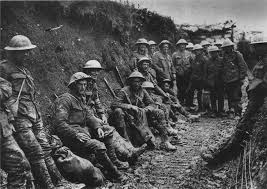
Image from wikipedia
As you know I’m sure, 2014 was 100 years since the outbreak of the Great War, or World War 1 as we know it today. Myself and a colleague were lucky enough to do some research on how management accounting was affected by the war. I will summarise our work here, but you can find the full paper here.
We studied how the war affected management accounting at Guinness – yes the world-famous stout. I had already carried out some research at Guinness, so I was aware that even before 1914 they had a relative complex management accounting system. They were quite good at allocating costs to various cost centres.
As the war broke out, the accountants and managers initially viewed it as a short-term event. It became apparent soon enough that would not be the case. Thus, Guinness started to view additional costs (such as extra insurance costs) as normal costs and allocated them to various cost centres. For example, if Guinness shipped to Liverpool or London, the freight costs were normally charged to the receiving depots owned by the company. With the war in full swing, the additional insurance costs for these trips was also allocated to the depots.
The company made other changes too, but the above example is a good case of existing practice being modified to deal with new business issues- something which management accountants still do a lot of today.
What does off-balance sheet mean – Vatican off-balance sheet cash

Image from wikipedia
In December 2014, the media (see here for example) noted how millions for euro were “off-balance” sheet. According to reports from the Vatican “some hundreds of millions of Euros were tucked away in particular sectional accounts and did not appear on the balance sheet”. So how can this happen, and what does off-balance sheet actually mean?
Let’s go back to basics first. A balance sheet shows assets, liabilities and equity. Assets are essentially something an organisation own’s or has use of like a owner; a liability is a claim against the business. Both must be measurable in monetary terms. So for example, many large firm’s brands have values in $billions put on them, but these are off-balance sheet assets which are off-balance sheet because the value cannot be measured accurately in money terms.
In other cases, such a the Vatican example, assets can be seemingly omitted from the balance sheet. This is of course not a recommended practice. How is this done? Well, it is a little bit more complex than this, but essentially something is omitted from the books of the organization. Remember, now matter how complex an organization is, underneath its accounting system is the good old double entry system of accounting. If a transaction (e.g. bank account) is omitted from the double entry accounts, that’s it, it does not appear on the balance sheet.


 Martin's accounting blog